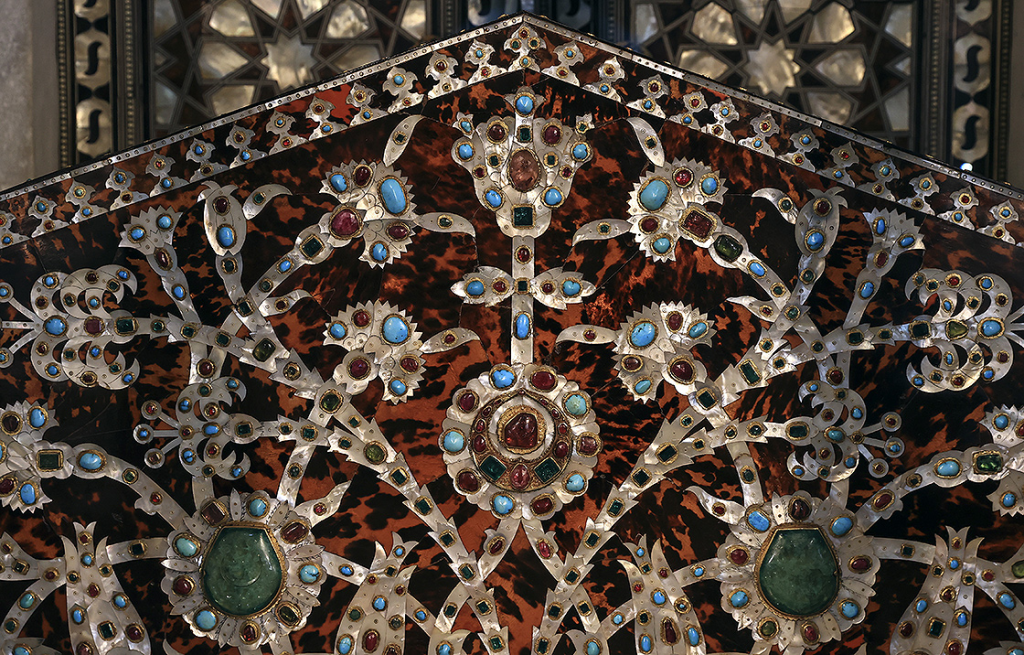

The Arife Tahtı, a richly adorned ceremonial throne crafted for Sultan I. Ahmed by Mimarbaşı Sedefkâr Mehmed Ağa in the early 17th century, stands today in the Revan Köşkü of Topkapı Palace as a rare material witness to Ottoman ceremonial life. Used on the eve of the great Bayram celebrations, this throne bore the sultan during intimate moments of bayramlaşma with palace residents and Enderun officials, a ritual blending splendor with sacred social connection.
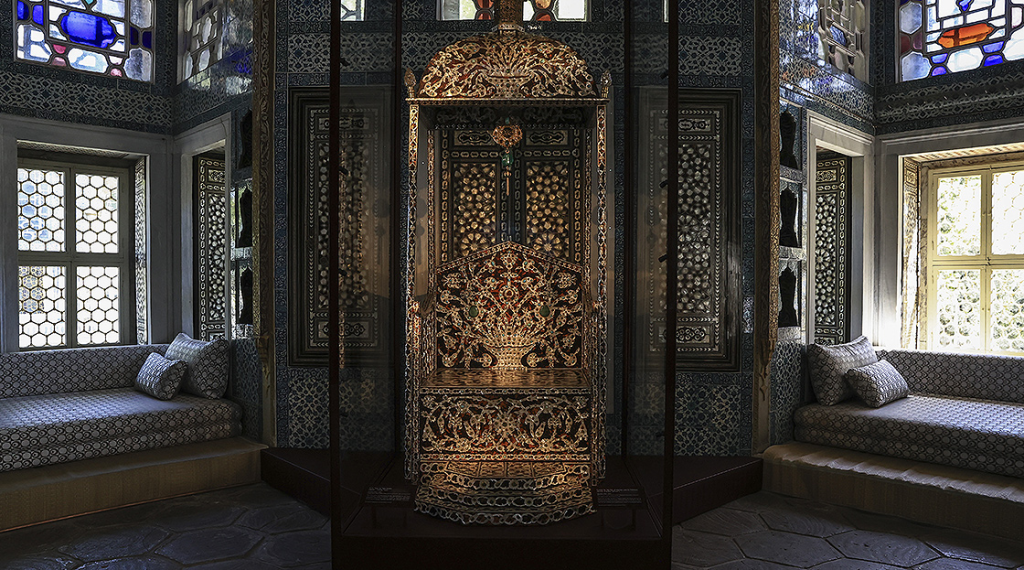
The throne’s sedef (mother-of-pearl), bağa (wood inlay), and jewel embellishments embody both the artistic mastery and symbolic weight that such objects carried anchoring political sovereignty in ritual and craftsmanship.

Evoking this layered legacy in sonic form, Didem Başar’s Echoes of the Throne Room reimagines the resonances of imperial presence through the kanun’s evocative voice, weaving together Eastern and Western musical traditions. Composed as part of a collaborative project featuring ensembles like Holland Baroque and Constantinople, the piece acts like an aural architecture, allowing listeners to inhabit a threshold between past and present, ritual and reflection.

Didem Başar is a contemporary kanun virtuoso and composer who reimagines Istanbul’s layered musical memory by bridging Ottoman makam tradition with a refined, modern sensibility.
Başar’s work suggests not only a homage to spaces of authority and ceremony but also the invisible harmonies that once filled them.