
“The spider spins the curtains in the palace of the Caesars,
The owl calls the watches in the towers of Afrasiyab.”Fatih Sultan Mehmet
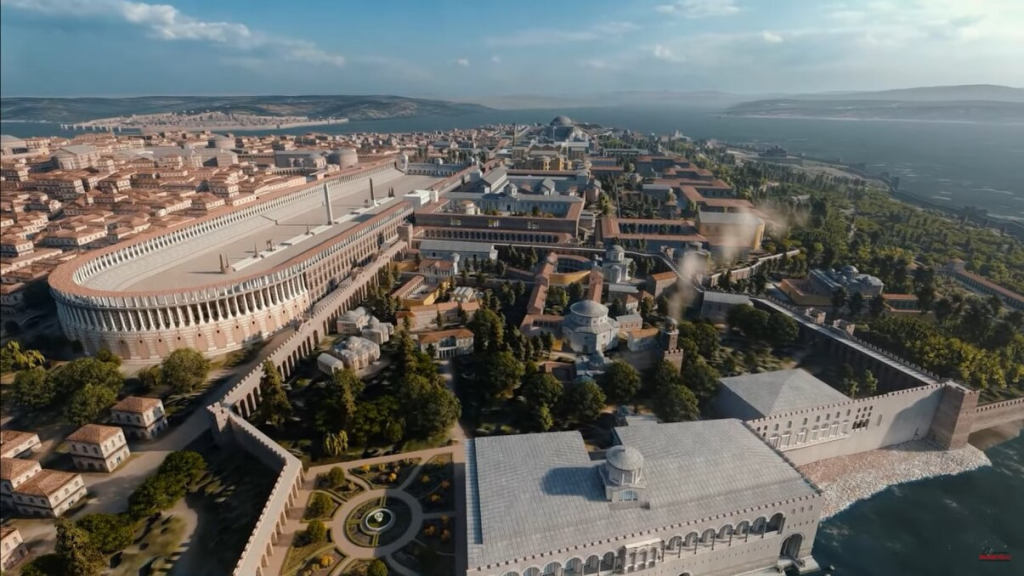
A reconstruction of Constantinople showing the Hippodrome and the Grand Palace Complex that stretches to the Sea of Marmara
Have you ever wondered where the Byzantine emperors and empresses lived? Although churches, monasteries, and cisterns from the Byzantine Era are scattered around the historical peninsula, you cannot see the remains of the Byzantine palaces—unless you look closer. In fact, it would not be exaggeration to say that we are literally walking, dining and ‘staying’ on the Grand Palace of Constantinople each time we visit Sultanahmet.

Reconstruction of the Grand Palace by Antoine Helbert
Constructed soon after the founding of Constantinople by Constantine the Great in 330 AD, the palace complex became one of the most significant architectural and political landmarks of the medieval world. Strategically located on the southeastern tip of Constantinople, the Grand Palace overlooked both the Sea of Marmara and the Hippodrome, symbolizing its central role in both governance and public life. The Grand Palace was more than a royal residence—it was the center of Byzantine court life. Here, elaborate ceremonies and processions reinforced imperial ideology, emphasizing the emperor’s role as God’s representative on earth. Byzantine court manuals, such as Constantine VII’s Book of Ceremonies, detail the intricate rituals held within its halls, from coronations to feasts and diplomatic receptions. It also housed key administrative offices, treasury functions, and even imperial workshops, making it both a political and cultural hub. Foreign emissaries marveled at its wealth, mosaics, and mechanical wonders, which served to project Byzantine prestige to the wider world.
I want you to imagine the vast area covering the Four Seasons Hotel up until the shore that reaches the Marmara Sea and think that this area was covered with a complex of halls, courtyards, chapels, and administrative offices, connected by corridors and ceremonial gates that were once a part of the Grand Palace. Beneath and around the Four Seasons Hotel in Sultanahmet lie parts of the Great Palace of Constantinople (Palatium Magnum), one of the principal seats of Byzantine power. Over years of excavations (especially from the late 1990s onward), archaeologists have uncovered a wealth of remains, from multiple historical periods (Hellenistic, Roman, Byzantine, Ottoman). The Turkish Ministry of Culture and Tourism has expressed that steps are being taken to restore and preserve the area and open it for public access.
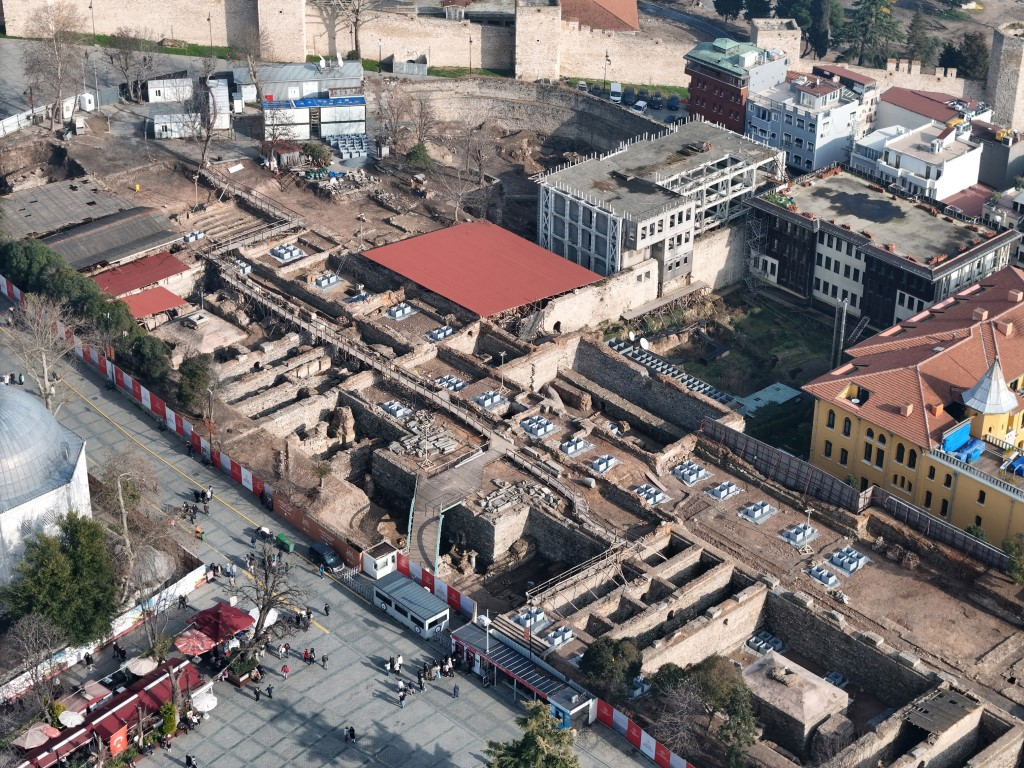
Looking from above, you can see the large excavation area next to the Four Seasons Hotel. If you want to look at this hidden gem which is currently behind closed gates, consider going up to the terrrace of the Four Seasons Hotel to have a glance at the area.
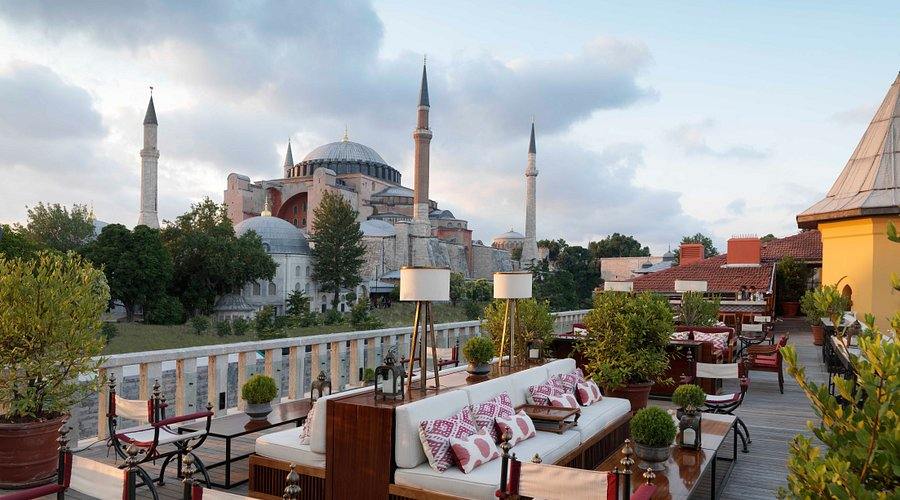
Four Seasons Hotel rooftop overlooking the excavation area
Today, bits and pieces of the Grand Palace is hidden underneath hotels, cafes and rug stores in Sultanahmet which can give you a glimpse of the Palace’s glory. There is also a ‘must-see’ museum which hosts only a small fraction of the Palace’s mosaics. Palace Mosaics Museum is in walking distance to the Four Seasons Hotel and hosts a rather humble collection of Byzantine Mosaics that covered the floors and the walls of the Grand Palace.
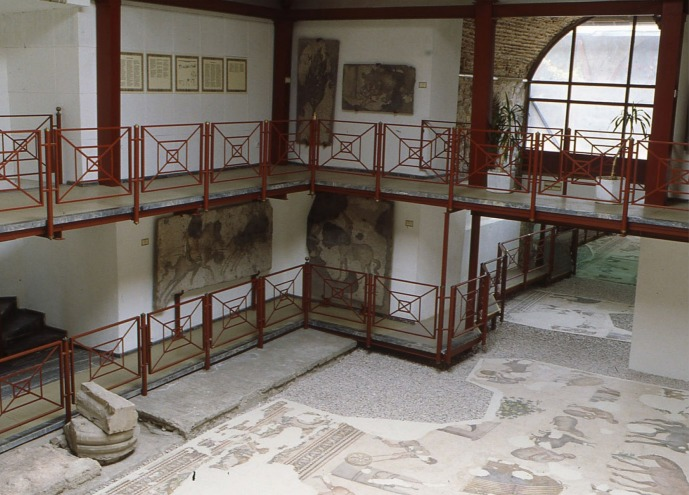
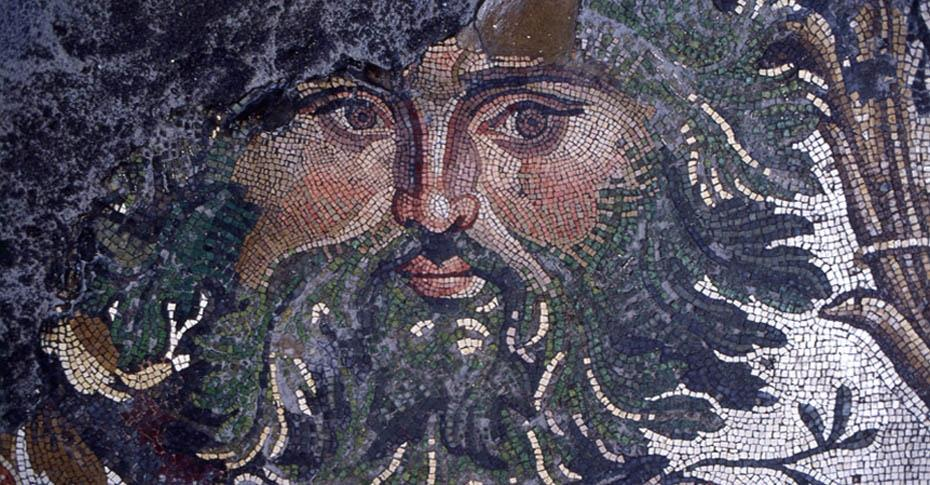
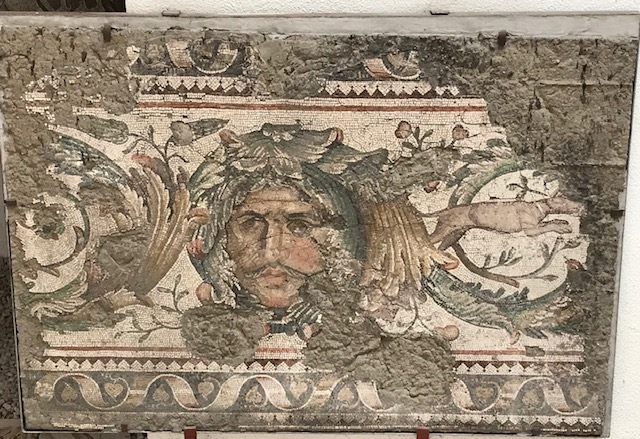
We know that Grand Palace lost most its function and glory by the 11th century and the final blow came with the crusaders who devastated the Grand Palace and the rest of Constantinople in 1204.
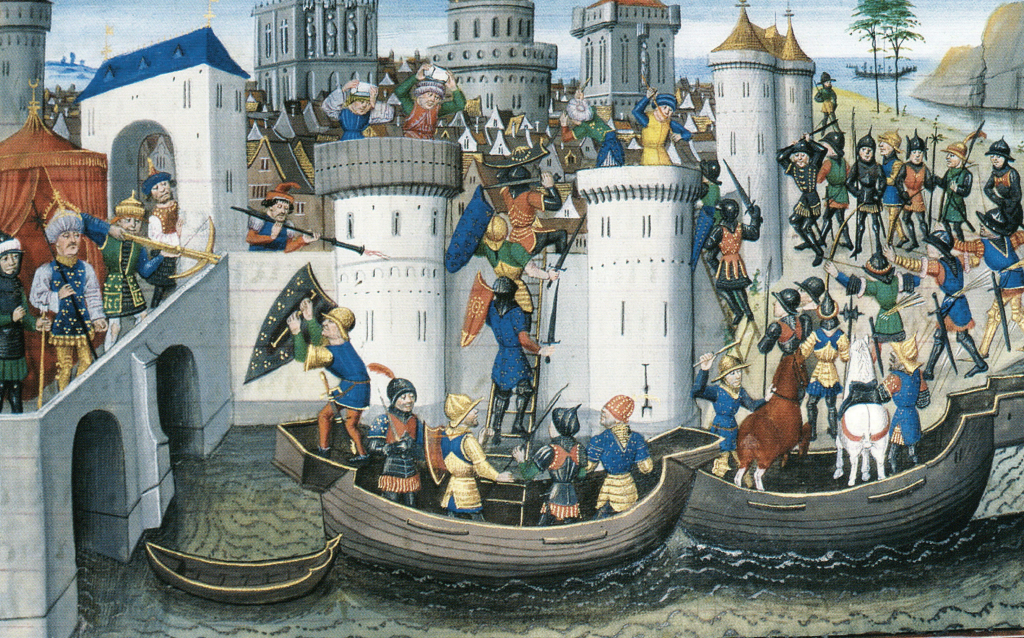
A 15th century mosaic depicting the conquest of Constantinople by the Crusaders
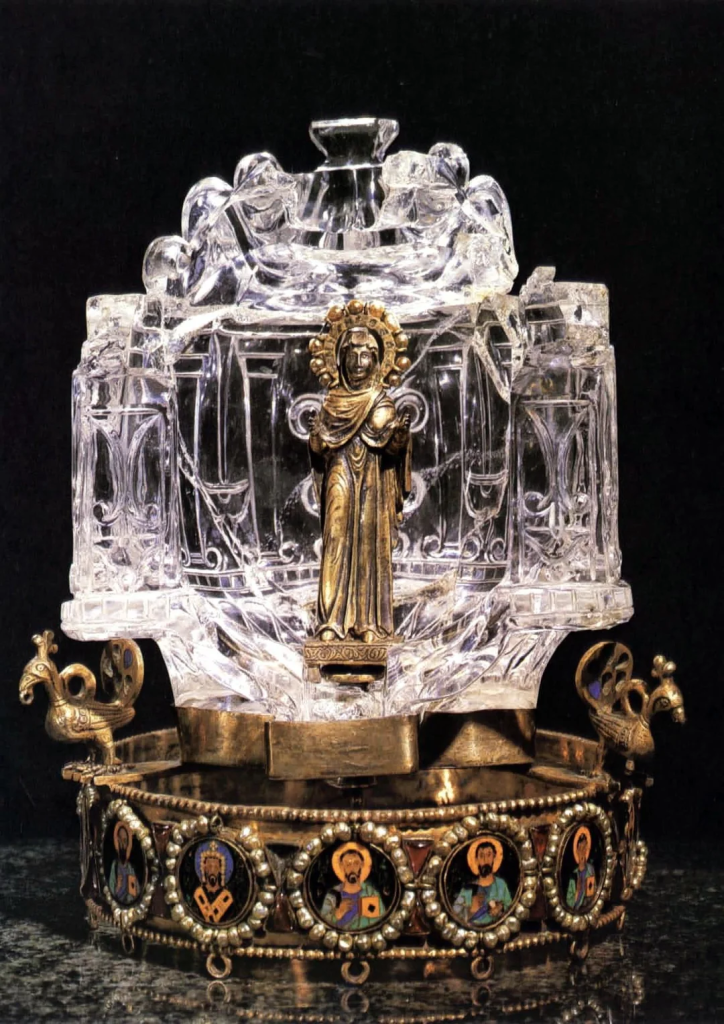
Crown of Emperor Leo VI, currently in the San Marco treasurey which is one of the many valuable objects stolen from Constantinople in 1204 by the Crusaders
When the Turks came to conquer the heart of the Eastern Roman Empire, only the remnants of this once-glorious palace remained, and Fatih Sultan Mehmed wrote these lines to express his sorrow at the condition of the Great Palace, which had become but a shadow of its former self.
“The spider spins the curtains in the palace of the Caesars,
The owl calls the watches in the towers of Afrasiyab.”