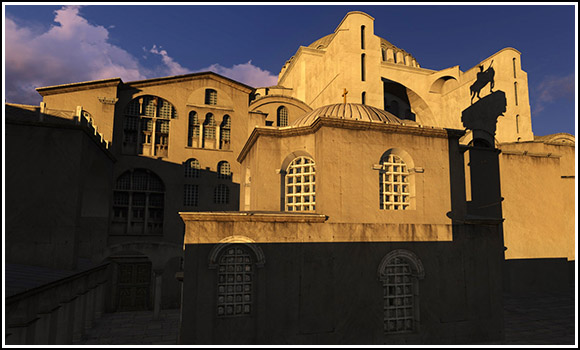

In 18th-century İstanbul, something subtle but powerful was happening: the city was changing faster than the ways people had learned to understand it. As Istanbul grew denser, more commercial, and more socially mixed, a certain kind of writing became more visible in the Ottoman world—short moral texts often gathered under titles like Risâle-i Garîbe, meaning “strange treatise.”
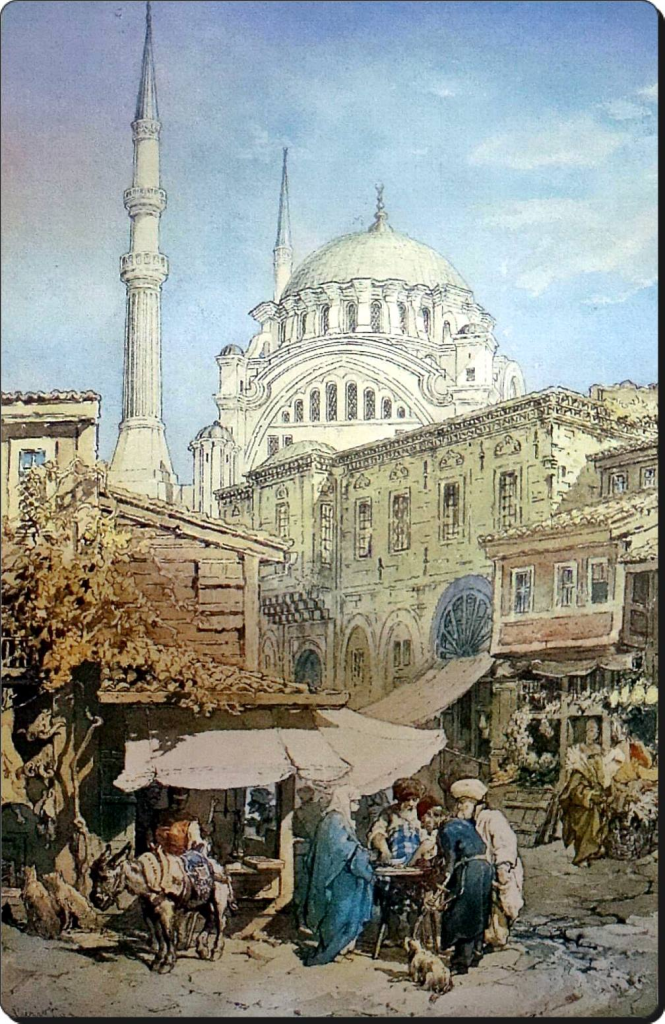
Istanbul by Amadeo Preziosi in 1800s
At first glance, these texts look like lists of complaints about improper behaviour. They talk about disorder in the streets, gossip, drinking, economic cheating, and what they describe as immoral sexual conduct. But if you read them less as moral handbooks and more as emotional documents of urban life, a different picture appears. They are not only about “bad behaviour.” They are about a city becoming harder to read.

Istanbul by Loui̇s-Françoi̇s Cassas, 18th century
Earlier Ottoman urban life was organized through relatively stable social worlds. People were embedded in neighbourhoods, guilds, and household structures where identity was visible and social roles were relatively clear. In that world, behaviour was not only regulated by rules, but by familiarity: people knew who belonged where, and reputation traveled slowly.
By the 18th century, this changes. Istanbul becomes larger and more mobile. Migration increases, commercial life intensifies, and people begin to encounter strangers constantly. In such a setting, what unsettles moral writers is not simply that people behave differently, but that social life becomes less predictable and less transparent. The city feels less “readable.”
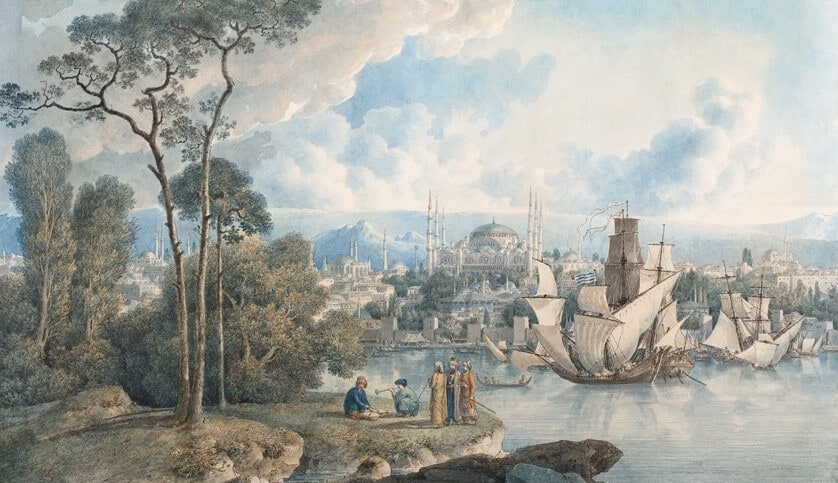
Istanbul by Loui̇s-Françoi̇s Cassas, 18th century
Coffeehouses become one of the clearest symbols of this shift. They are places where people from different backgrounds meet, sit together, and talk without the usual filters of hierarchy or household control. News, stories, gossip, and political commentary circulate quickly. From the perspective of moral writing, the anxiety here is not just about leisure or idle talk. It is about speech becoming mobile—detaching from authority and circulating freely through the city.
Economic life produces a similar unease. As trade expands and credit relations become more complex, economic trust becomes less personal and more mediated. Transactions no longer rely only on face-to-face familiarity but increasingly on money, intermediaries, and written agreements. In moral texts, complaints about fraud, bribery, and unfair trade reflect more than individual wrongdoing. They express a deeper uncertainty about how trust itself is changing in an urban environment where relationships are less immediate.

A scene from Tuhfet ül-Mülk (an 18th century Ottoman erotic manuscript)
Sexual behaviour is another central site of anxiety in these texts, and it is often misunderstood if taken as a simple list of prohibitions. What is most consistently marked as troubling includes extramarital relationships, prostitution or forms of commercialized sexuality outside socially regulated frameworks, and any perceived blurring of gender boundaries in public space. Adultery and illicit liaisons are also mentioned, especially when they threaten household order, lineage, or reputation. In some moral discourses, same-sex relations appear within broader categories of “deviation,” although they are not always treated separately or systematically.

A Meyhane (tavern) in Istanbul, 18th century
But what ties these references together is not a uniform legal code. It is the concern that sexuality becomes visible, talkable, and socially circulating. In other words, sexual morality is deeply connected to urban space. The worry is not only what people do in private, but what becomes observable in streets, markets, or shared urban spaces—and how quickly such behaviour can turn into gossip that spreads through the city.
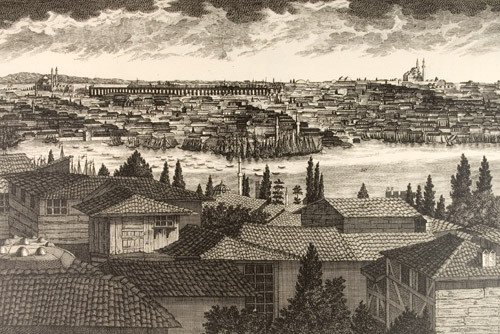
Istanbul houses in the 18th Century
When viewed together, these themes reveal a consistent structure of anxiety. The behaviours described in Risâle-i Garîbe-type texts—whether speech, economic action, or sexuality—are all linked to the same underlying concern: the loosening of boundaries that once made urban life more legible. The distinction between private and public becomes less stable. Social identities become less immediately visible. Trust, speech, and desire circulate more freely.
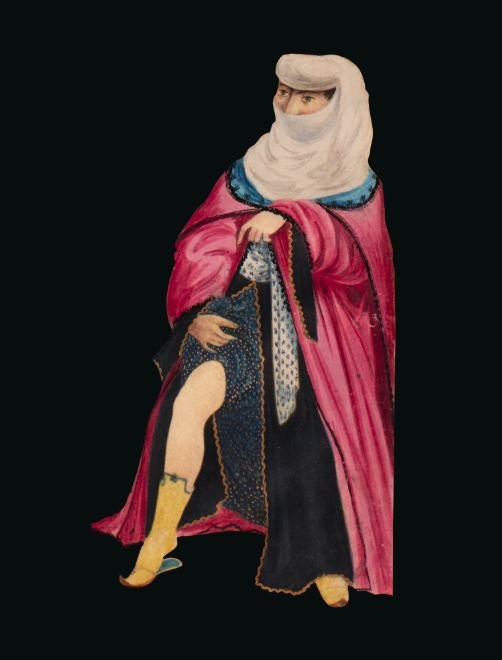
A scene from Tuhfet ül-Mülk (an 18th century Ottoman erotic manuscript)
In this sense, these texts are not simply moral judgments of “bad behaviour.” They are attempts to respond to a transforming urban reality. They try to reassert order by naming forms of disorder, but in doing so, they also reveal something important: 18th-century Istanbul was becoming a city where the older ways of knowing people, controlling space, and stabilizing social life were no longer sufficient on their own.
What remains, then, is not just a catalogue of prohibitions, but a portrait of a city in transition—trying, through moral language, to hold onto clarity in a world that is becoming increasingly fluid, crowded, and unpredictable.