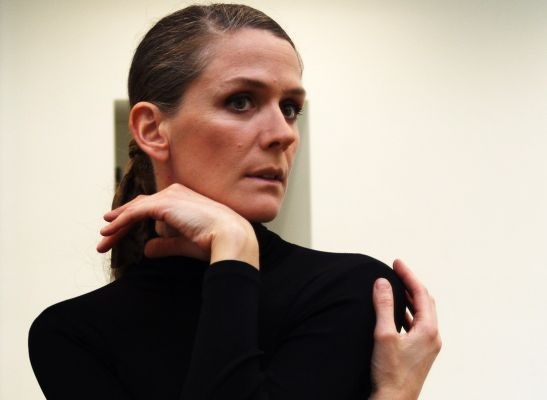


Halet Çambel on an excavation trip in Anatolia
Prof. Dr. Halet Çambel (1916–2014) occupies a unique place in the intellectual and cultural history of Turkey. She was not only one of the country’s pioneering archaeologists, but also a figure who redefined what it means to treat cultural heritage as a living, shared responsibility rather than a collection of objects stored behind institutional walls.
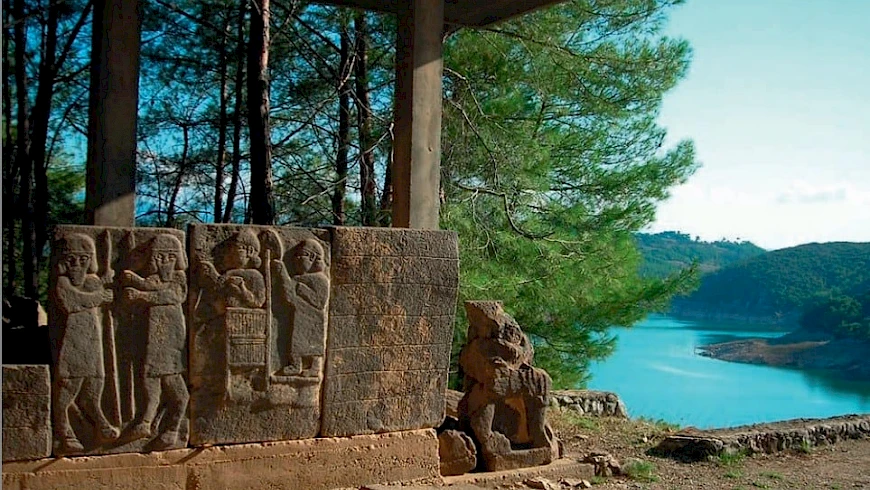
A snapshot from Karatepe-Arslantaş National Park, Osmaniye
Her academic legacy is inseparable from her fieldwork, especially at Karatepe-Arslantaş, where she played a decisive role in uncovering and interpreting Hittite inscriptions. The site later became one of Turkey’s earliest open-air museums, reflecting her belief that archaeology should not be separated from its landscape or communities. For Çambel, heritage was not something to be extracted and stored, but something to be preserved in place, within its own ecological and historical continuity.

Halet Çambel as a young woman
In Istanbul, her legacy is more intimate but equally significant. The house she shared with her husband Nail Çakırhan in Arnavutköy, known as the Kırmızı Yalı, was more than a residence. It functioned as an intellectual space where archaeology, architecture, and cultural memory intersected. The building, along with its extensive archive, photographs, field notes, and research materials, was later donated to Boğaziçi University. This was not a symbolic gesture; it was a carefully considered transfer of responsibility, intended to ensure that the archive would remain accessible, protected, and integrated into academic life.
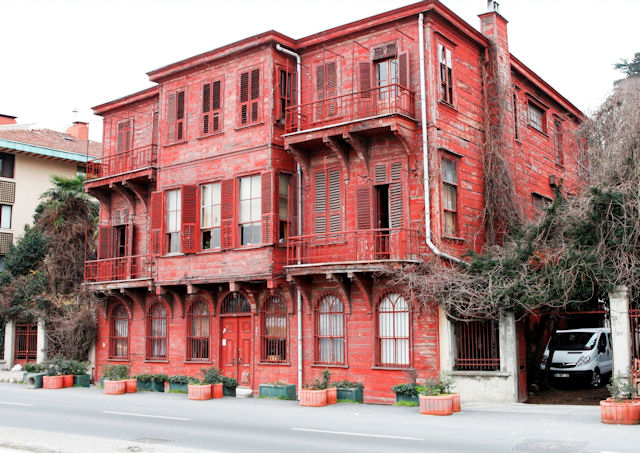
Halet Çambel’s Kırmızı Yalı donated to Boğaziçi University
The expectation surrounding this donation was clear: the archive and the building would serve as a research center dedicated to archaeology and traditional architecture, preserving not only physical materials but also the intellectual atmosphere that Çambel and Çakırhan had created. In other words, the gift carried a moral dimension as much as a legal one. It was a transfer of memory, not merely property.

Note that Halet Çambel was also one of the two sportswomen who represented Turkey at the 1936 Olympics.
However, in recent years, questions have emerged about how this responsibility has been handled. Reports and public discussions have raised concerns about delays in restoration processes, institutional ambiguity regarding the archive’s accessibility, and allegations that parts of the donated material may have entered circulation outside the intended academic framework, including claims of auction or sale. There are also reports that her house, donated to the university, is now set to be sold. These developments have generated unease among scholars and observers, who see the archive and Çambel’s house not as transferable assets but as a unified cultural whole.

Halet Çambel
I have learnt sadly today that that Prof. Dr. Halet Çambel’s personal archive—previously donated to Boğaziçi University along with other cultural assets—is now being fragmented and put up for sale at an auction house. It is so heart breaking to learn that Boğaziçi University where I spent five years of my life as an undergraduate student failed to protect a legacy that was handed down to it.
In a country where layers of history constantly overlap and compete for visibility, this case resonates strongly. The city’s intellectual heritage has often depended on private donations, academic custodianship, and fragile institutional commitments. When those arrangements falter, what is at stake is not only an archive, but a way of relating to our history.
Halet Çambel’s legacy remains active, even amid controversy. She will always be remembered as a child of the early Turkish Republic and one of the first female archaeologists of our country.