

History is often written through the lens of wars, treaties, and kings. But if you look closer at the 18th and 19th-century Ottoman Empire, you’ll find a much quieter, more colorful revolution taking place in the streets of Istanbul. It wasn’t fought with cannons, but with the width of a collar, the height of a headpiece, and the sheer transparency of a silk veil.

A miniature of an Ottoman woman by Levni, 18th century
This was the era of the Velvet Rebellion, where Ottoman women used fashion as a tool of soft power and subtle resistance.
For the Ottoman administration, clothing was a matter of state security. In a society structured on hierarchy and visual order, what you wore signaled your rank, religion, and gender. When women began experimenting with their attire, the state saw it as a “teşebbüs” (an attempt or audacity) against the established social fabric.
The 18th century, particularly the Tulip Era, brought a wave of aesthetic indulgence. Women began to push the boundaries of the traditional ferace (an outdoor overcoat). What was once a simple, utilitarian garment became a canvas for “Frank-style” (European) embroidery and vibrant colors that the state deemed “excessive.”
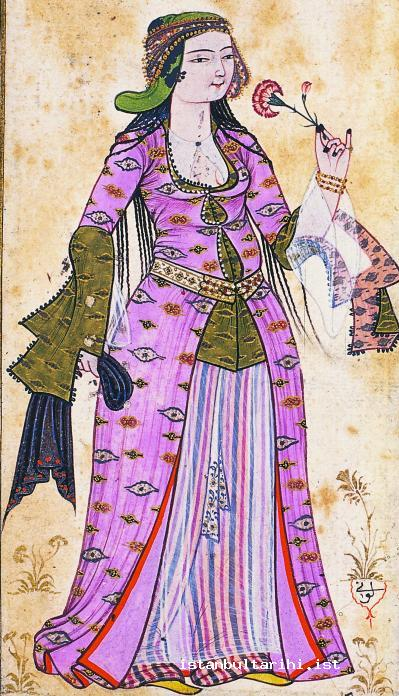
A miniature of an Ottoman woman by Levni, 18th century
One of the most fascinating battlegrounds was the hotoz—the elaborate headpieces worn by women. As fashion progressed, these headpieces grew taller and more intricate. To the Sultan’s court, these towering structures weren’t just headwear; they were symbols of vanity and public distraction.
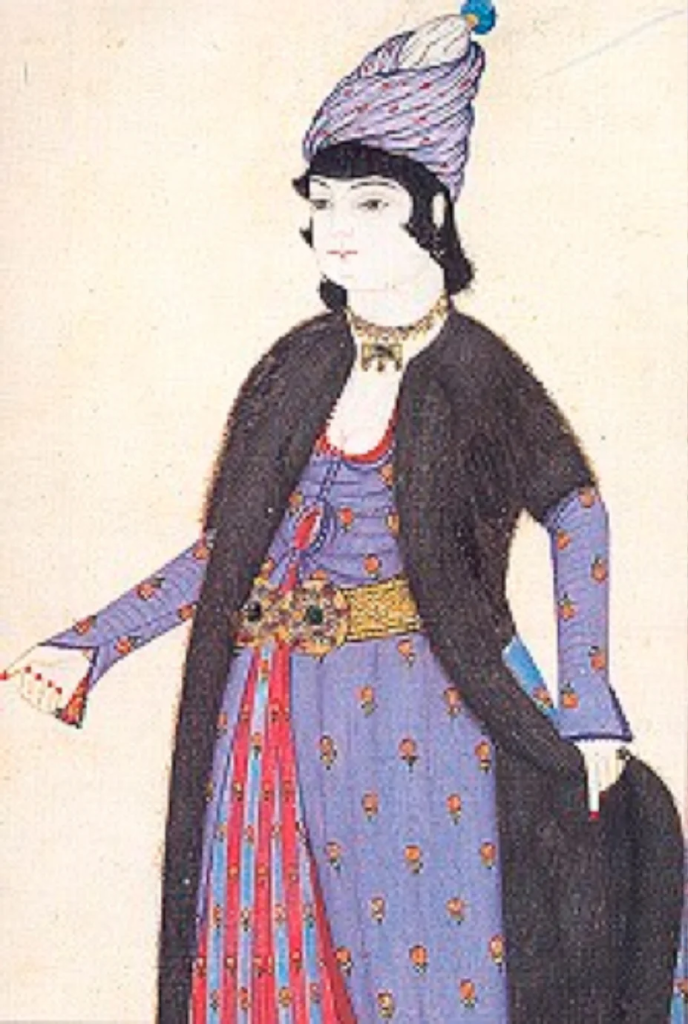
A miniature of an Ottoman woman by Abdullah Buhari, 18th Century
Ferman after ferman (imperial decrees) was issued, specifying exactly how many centimeters a hotoz could rise or how wide a ferace collar could be. These decrees often complained that women were “showing off” in public spaces, turning a simple walk through a park into a high-fashion runway.
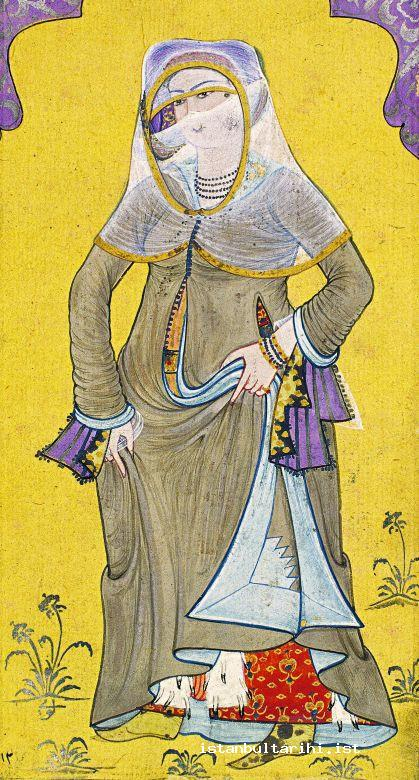
A miniature of an Ottoman woman with a face veil by Levni, 18th century
The yaşmak (veil) underwent a similar transformation. Originally designed for modesty, the veils of the 18th and 19th centuries became increasingly thin. By using ultra-fine silks, women complied with the letter of the law (covering their faces) while completely defying its spirit (remaining hidden).
These veils didn’t just cover; they framed. They accentuated the “almond eyes” and “rounded faces” that were the beauty standards of the time, often complemented by the artistic application of kohl and henna.
The tension between social life and state control reached a peak in the 1830s with a surprisingly specific ban: the dondurma (ice cream) prohibition. Ice cream shops in Galata and Beyoğlu had become the “third places” of the era—social hubs where women and men could engage in “ayaküstü” (fleeting) conversations. The state, alarmed by this spontaneous flirting, issued a ferman in 1836 strictly forbidding women from entering these shops to eat ice cream. It was a clear attempt to shut down the social avenues that fashion and modern lifestyle had opened.
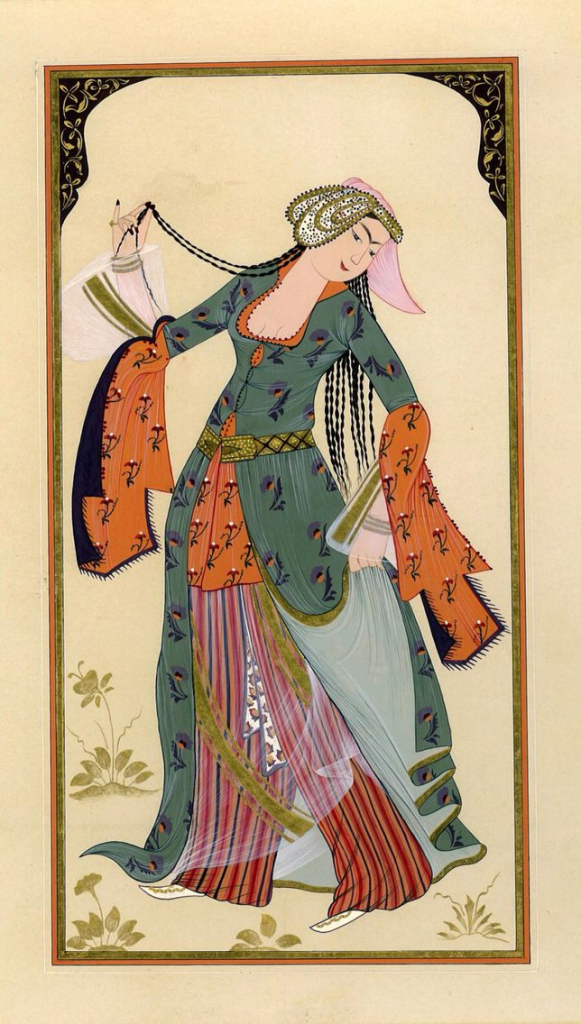
A miniature of an Ottoman woman by Levni, 18th century
What makes this “Velvet Rebellion” truly interesting is the failure of the bans. The fact that the same decrees were issued year after year, decade after decade, is proof of their ineffectiveness. Every time a Sultan tried to shorten a collar or thicken a veil, the women of Istanbul found a new, creative way to innovate.
By the time the Tanzimat reforms officially ushered in Westernization, the women had already laid the groundwork. They had proven that fashion was more than just fabric—it was a form of agency. They weren’t just following trends; they were negotiating their place in a changing world, one silk thread at a time.