
They shall leave as they came.’
Mustafa Kemal Atatürk

British Soldiers parading in Karaköy
For centuries, Istanbul had stood as the proud capital of the Ottoman Empire, a city where sultans commanded vast territories. Yet in the late 1910s, the city that once symbolized power and faith became a symbol of defeat. From 1918 to 1923, Istanbul endured a painful occupation that scarred its people but also ignited the fire of resistance that would lead to Turkey’s rebirth.
When the Ottoman Empire entered the First World War in 1914, hopes were high that alliance with Germany would restore lost prestige. The victory at Gallipoli in 1915, where Ottoman soldiers repelled the greatest naval powers of the age, gave Istanbul a brief moment of pride. Yet as the war dragged on, defeats on other fronts and internal hardship weakened the empire.
On October 30, 1918, the Armistice of Mudros was signed. Though called an “armistice,” its terms left the empire defenseless. Soon after, the heart of the nation felt the weight of foreign boots.
The day Istanbul was occupied remains etched in collective memory. On November 13, 1918, twenty-two Allied warships entered the Bosphorus. Residents watched in silence as British, French, Italian, and later Greek soldiers landed on the city’s shores. Sultan Mehmed VI stayed on his throne, but he was powerless; decisions were dictated by foreign generals.
For Istanbul’s people, the sight of foreign flags flying over their city was a deep humiliation. Cafés, streets, and even mosques were filled with foreign uniforms. The city that once led an empire was treated like conquered territory.
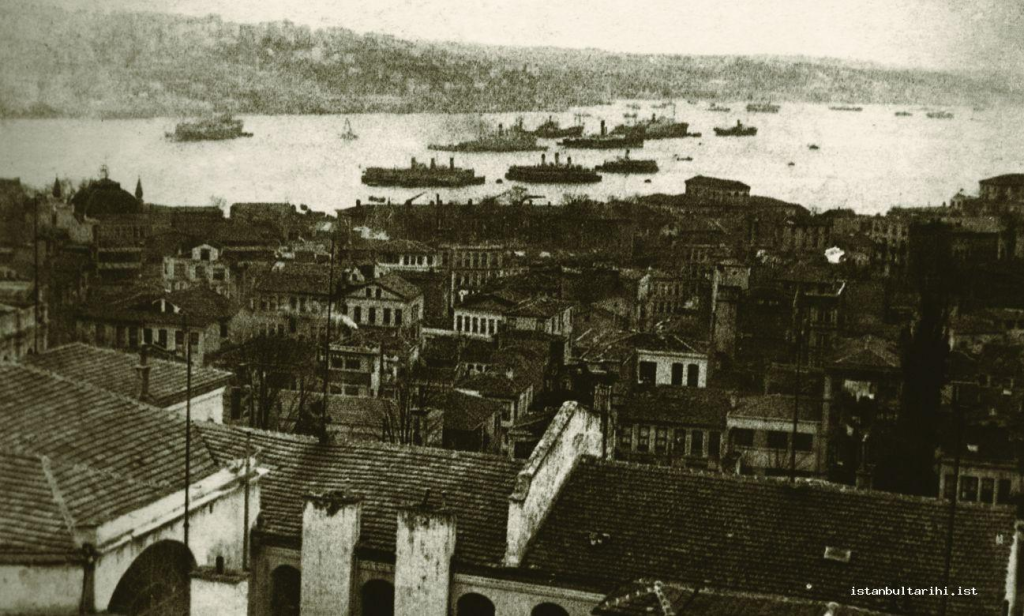

Occupied Forces in Istanbul
The occupation changed not only politics but also daily life. Alongside censorship, arrests, and constant military patrols, certain landmarks in the city became symbols of foreign domination and resistance.

British Forces in Beyoğlu

British soldier in Beyoğlu, policing the traffic
Now partly used as the Beyoğlu Öğretmenevi and Akşam Sanat Okulu, Grand Hotel Kroeger at the time was seized by the British during the occupation. It became the headquarters of British police and intelligence in Istanbul. The hotel’s basement was notoriously turned into interrogation and torture rooms, a grim reminder of the darker side of the occupation.
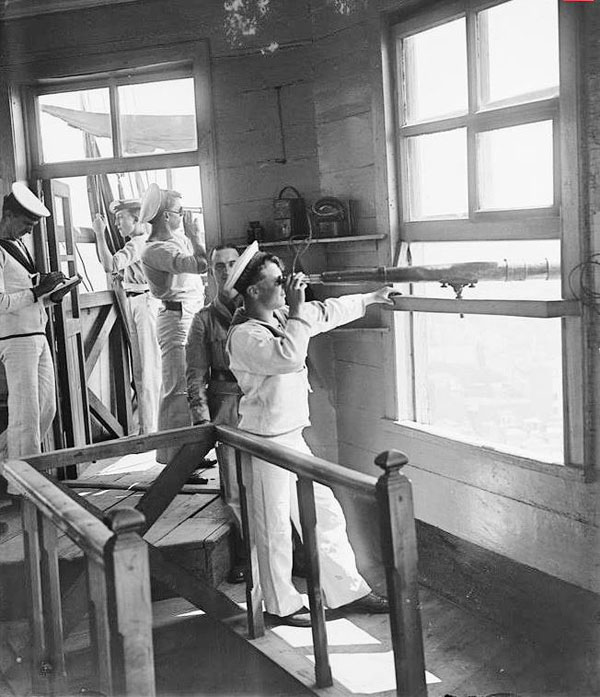
British soldiers in Galata Tower
The historic Galata Tower was transformed into a surveillance post by the British. Flying their flag at the top, they installed a wooden shack on its roofless crown, using it as a watchpoint to monitor the city. For Istanbulites, seeing a foreign flag above such a cherished landmark was a bitter insult.
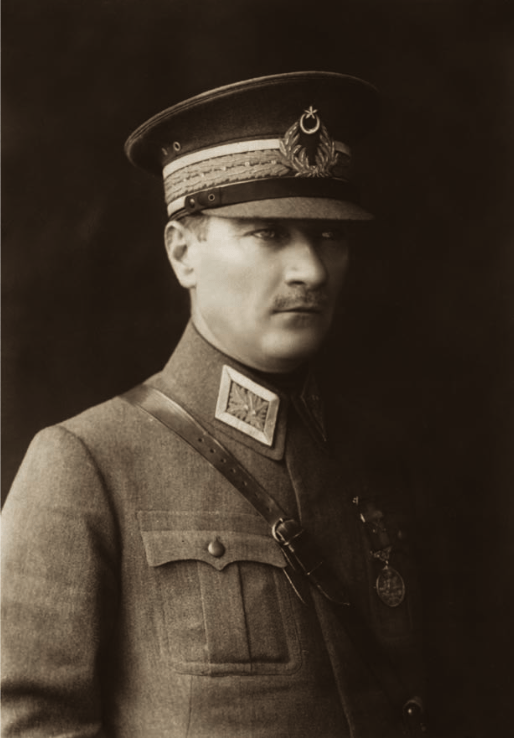
Mustafa Kemal Atatürk
During the occupation, Mustafa Kemal Atatürk once visited the Pera Palace Hotel. Some Allied commanders present in the hall invited him to their table. Atatürk, with characteristic confidence, replied with words that would be remembered for generations. ‘Although they may appear to be the masters of Istanbul for now, soon they will be gone. Therefore, they are merely guests here. And in our tradition, guests are treated with hospitality. So if they wish, they may come to my table.‘ His remark symbolized the determination that Istanbul’s occupation would not last forever.

Halide Edip Adıvar, leading the mass rally in Sultanahmet against the occupation forces on may 23, 1919.

Halide Edip Adıvar was the first Muslim graduate of the American College for Girls in Istanbul
Mass demonstrations protesting against the occupied forces shook the city and one particular woman, Halide Edip Adıvar led mass rallies in Sultanahmet. Halide Edip Adıvar, coming from an elite background was an Ottoman Intellectual and writer who also learnt to ride a horse and shoot a rifle to join the War of Indepence against the Occupation Forces.
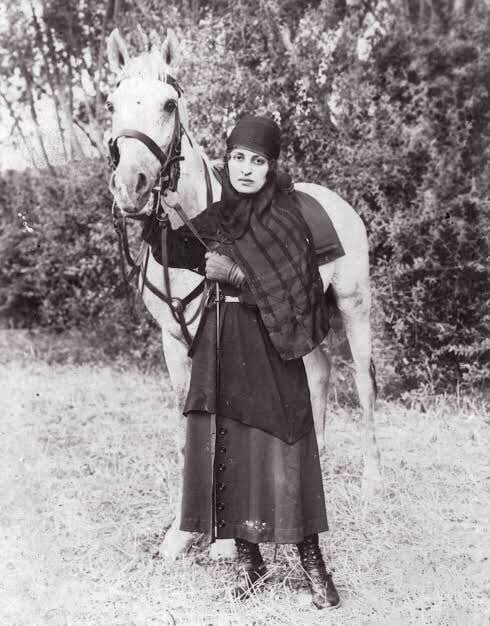
Halide Edip Adıvar
For Turks, the occupation of Istanbul was not merely a military episode but a wound to dignity and sovereignty.

Occupation Forces leaving
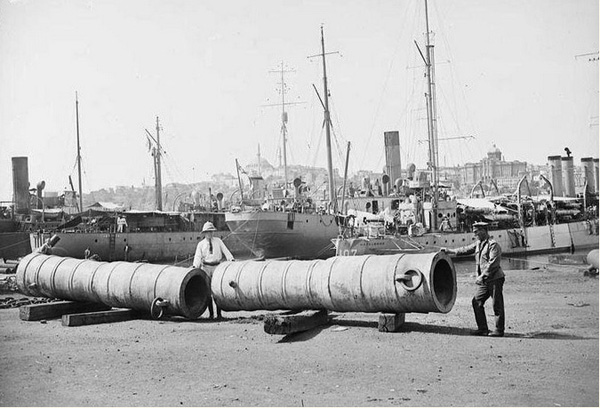
British soldiers looting two of the cannons used to conquer Istanbul in 1453, as they are leaving the city
The occupation ended not just with liberation, but with a transformation. A new capital rose in Ankara, and a republic was declared in 1923. Istanbul, though scarred, remained the cultural and spiritual heart of the nation—no longer as the seat of sultans, but as part of a free Turkey we proudly live today.
Visuals are taken from Istanbultarihi.ist and leventurk1961.wordpress.com.
Note that the video is embedded via YouTube and all rights belong to the respective rights holders.