

In the soft autumn light of mid-20th-century Istanbul, the city paused for a quiet farewell. On a cobblestone street, lined with trees and dappled sunlight, tram number 227 made its final journey. Flowers adorned its frame, and a small sign proclaimed simply: “SON TRAMVAY” (the last tram). Behind it, a bus idled, emblematic of a city moving forward yet leaving a piece of its soul behind.
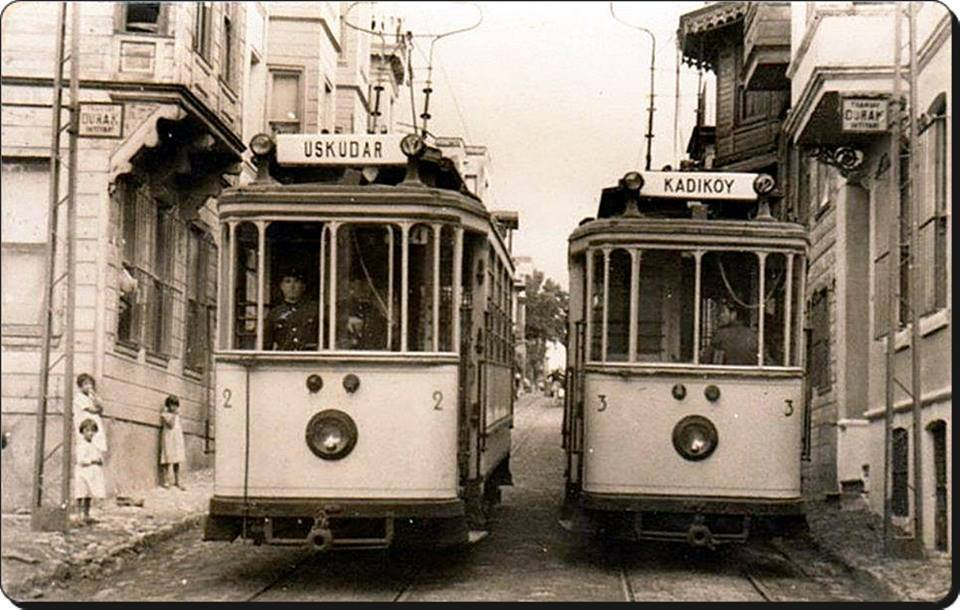
For decades, trams had threaded through Istanbul like veins, connecting neighborhoods, markets, and hearts. The rhythmic clatter of wheels over tracks was more than transport, it was the soundtrack of daily life. Shopkeepers called out greetings, children pressed their faces to the windows, and strangers shared brief moments of camaraderie as the city moved around them.

But by 1966, the siren song of modernization—cars, buses, wider roads had convinced the city that these iron carriages were relics. Urban planners dreamed of progress and speed, while the gentle pulse of the trams was deemed slow and old-fashioned. On that final day, as people paused to watch, there was both excitement and sorrow. Istanbul was racing toward a future it could not yet fully imagine, even as it let go of a cherished rhythm.
The last tram glided along its route, a humble hero of memory. Its wooden seats held stories of lovers, merchants, students, and dreamers; its steel rails had borne the weight of countless footsteps and conversations. When the final bell rang and the doors closed for the last time, a chapter of the city’s life ended, not with a bang, but with a gentle, reverent pause.

Decades later, Istanbul would rediscover the charm of trams, reintroducing modern lines that echo the past while moving into the future. Yet, for those who remember or for those who gaze at photographs like this one the last tram remains a symbol of a slower, more intimate Istanbul, where life was measured not just in hours, but in the rhythmic clatter of wheels over cobblestones.