
In 1982, at a family gathering, I met Prince Ali Vâsıb Efendi. As the younger grandson of Murad V, he would have been on the throne at that time had the monarchy continued and the Ottoman dynasty remained in power in Turkey. But the concern of this elderly man in his eighties, who had only recently been permitted to return to Turkey, was neither the throne nor political power. All he wanted was to be able to remain permanently in the country he could enter only with a foreign passport.’
Orhan Pamuk
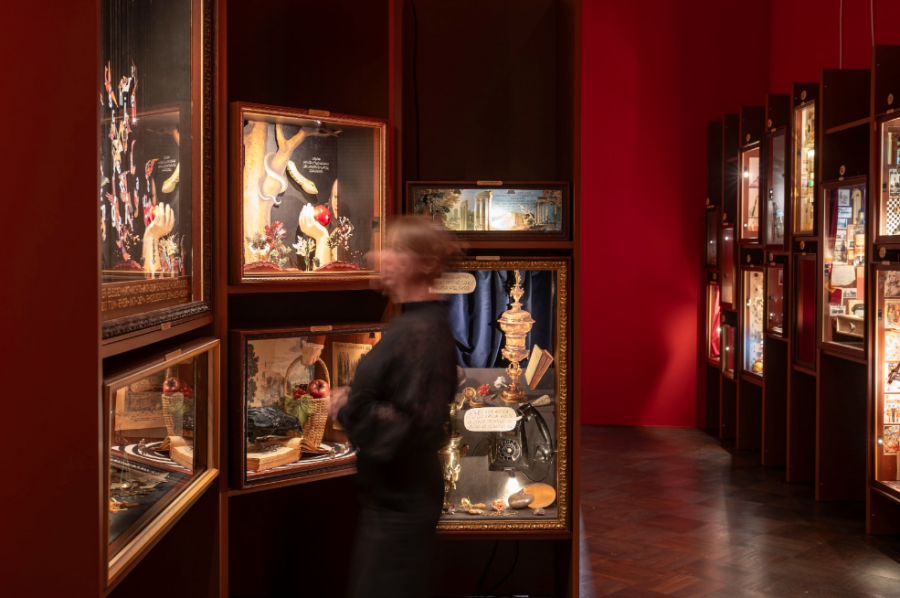
A glimpse at the Museum of Innocence
Imagine a museum where the tour guide leading you through the exhibits is the very person whose life is on display. He points across a velvet barrier at an ornate, imperial bed and says, “This is where the late Ottoman prince used to sleep.” Then, he turns to you and adds, “Because I am that prince, and this is exactly how I used to sleep in it.”
This profound existential question—can a person be both the object and the subject of a museum?—is the exact foundation upon which The Museum of Innocence was built.
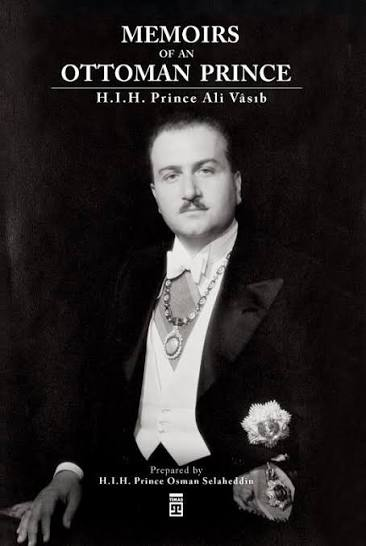
As Orhan Pamuk later detailed in the museum’s catalog, The Innocence of Objects, and reiterated in his interview with Murat Sabuncu, the initial spark for the novel came in early 1980s. Following the lifting of the ban exile on the Ottoman dynasty, Pamuk found himself sharing a dinner table in Nişantaşı with Prince Ali Vasıb Efendi—the man who would have been Sultan had history taken a different path.
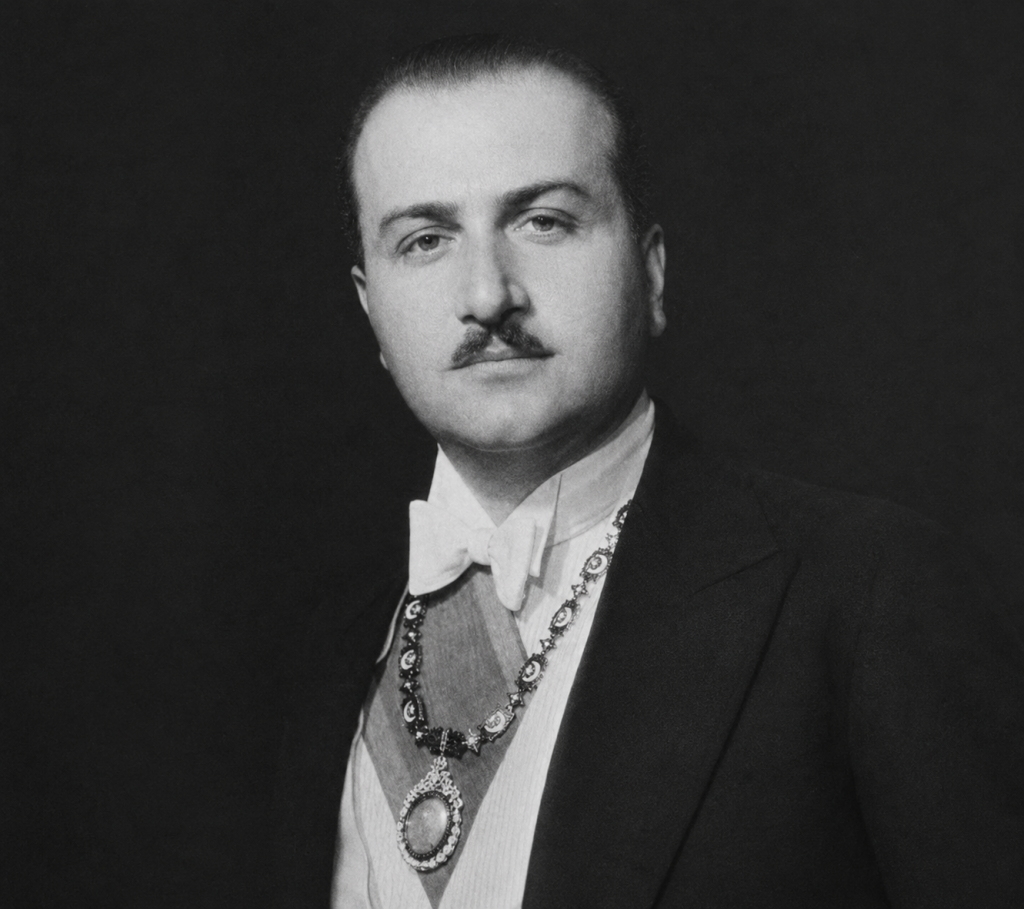
Ali Vasıb Efendi (1903-1983)
The prince had spent his exile in Egypt serving as the director of the Antoniadis Palace Museum in Alexandria. Now back in Istanbul and facing financial hardship, the people around him who loved and respected him were trying to help him find a job. During the dinner, the prince mentioned that he had spent his youth in Istanbul’s Ihlamur Palace.
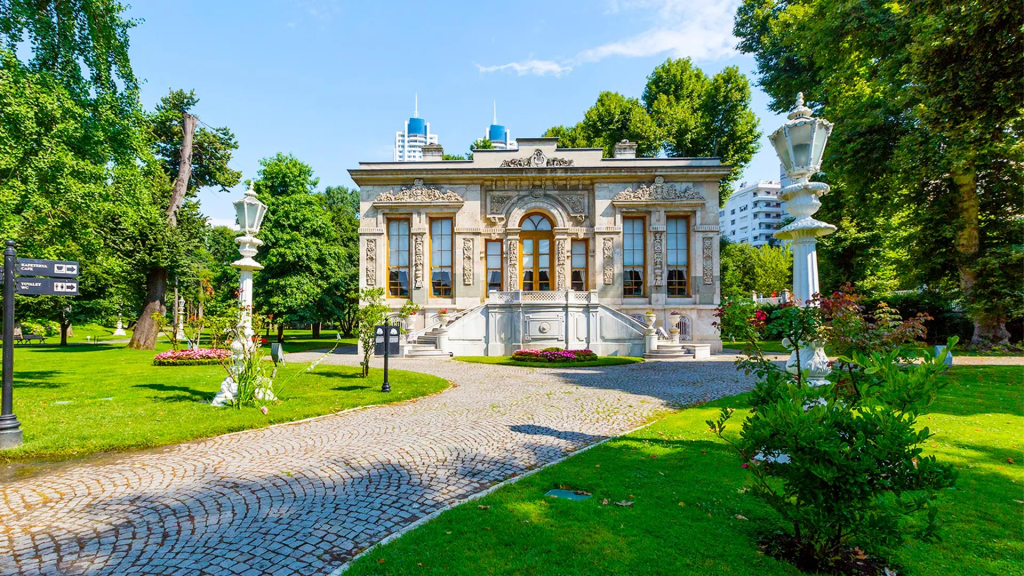
Ihlamur Palace
Hearing this, a brilliant idea flashed in Pamuk’s mind: What if this grandson of an Ottoman Sultan was appointed as the director of the very palace he grew up in? (Much like Puyi, the last Emperor of China, who famously became a gardener at his own former palace).

Orhan Pamuk
For an experimental novelist like Pamuk, this triggered a deep creative realization. If the prince became the director, he would be guarding his own past. The items on display—the furniture, the clothes, the everyday trinkets—would be the objects, but the voice guiding the visitors would be the subject. Pamuk decided to create a museum where the narrator exhibits the objects of his own life—how he fell in love with a woman and the things he gathered because of that love. The voice Kemal Basmacı uses to welcome visitors and guide them through his heartbreak is the first-person singular voice born from that conversation with the prince.

Prince Ali Vasıb Efendi with his wife Mukbile Hanım
For me, however, this isn’t just a mesmerizing piece of literary history. Prince Ali Vasıb Efendi’s story is inextricably bound to the lives of two extraordinary women from my ancestry.
The Gilded Cage: Life as Royal Prisoners
Nomina nuda tenemus.’
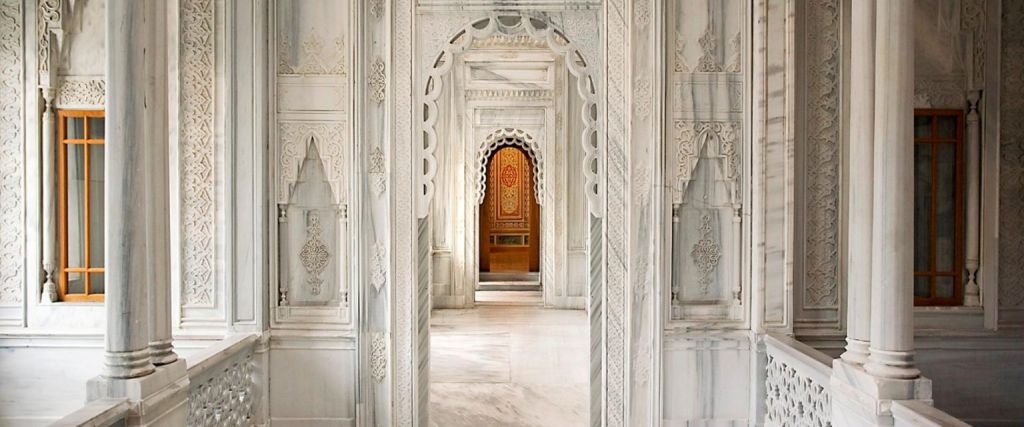
A glimpse at Çırağan Palace
To understand the royal background of the prince who inspired Pamuk’s narrative voice, you have to look further back into the majestic, high-walled world of the Çırağan Palace on the Bosphorus.
Ali Vasıb Efendi was born there in 1903. His father was Prince Ahmet Nihat Efendi, the grandson of the deposed Sultan Murad V. Following Murad’s dethronement, his entire lineage was placed under strict, permanent house arrest inside Çırağan by Sultan Abdülhamid II.

Circumcision ceremony of Ali Vasıp Bey, with his father Prince Ahmet Nihat Efendi by this side
For nearly twenty-eight years, Ahmet Nihat Efendi and his family lived a paradoxical existence: a life of absolute material luxury, yet completely stripped of freedom. They were royal prisoners. Cut off from the outside world, they turned inward, filling the silent marble halls with art, education, and music. Murat V and Prince Ahmet Nihat Efendi composed musical pieces, while Prince Ali Vasıb Bey studied languages and mathematics under the watchful eyes of palace guards. They grew up surrounded by mother-of-pearl inlaid tables, French porcelain, and heavy silver—objects that carried immense weight because they were the boundaries of their entire universe.
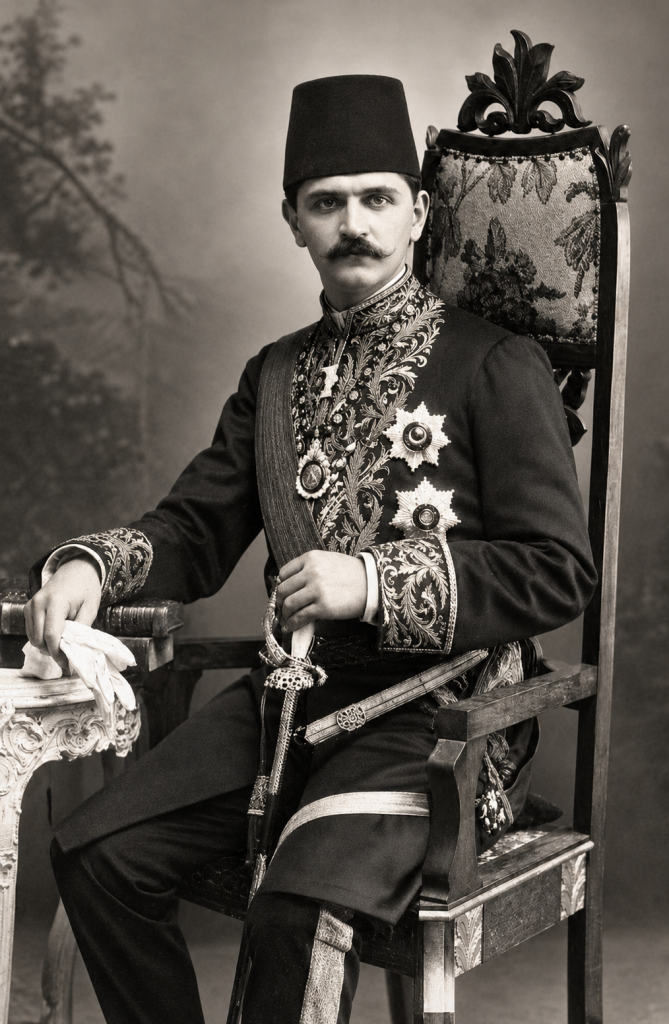
Prince Ahmet Nihat Efendi (1883-1954)
You can pay a visit to the musical world of Prince Ahmet Nihad Efendi through this composition:
It was into this confined, intensely melancholic world of fading empire that my family history stepped.
Two Sisters from the Harem
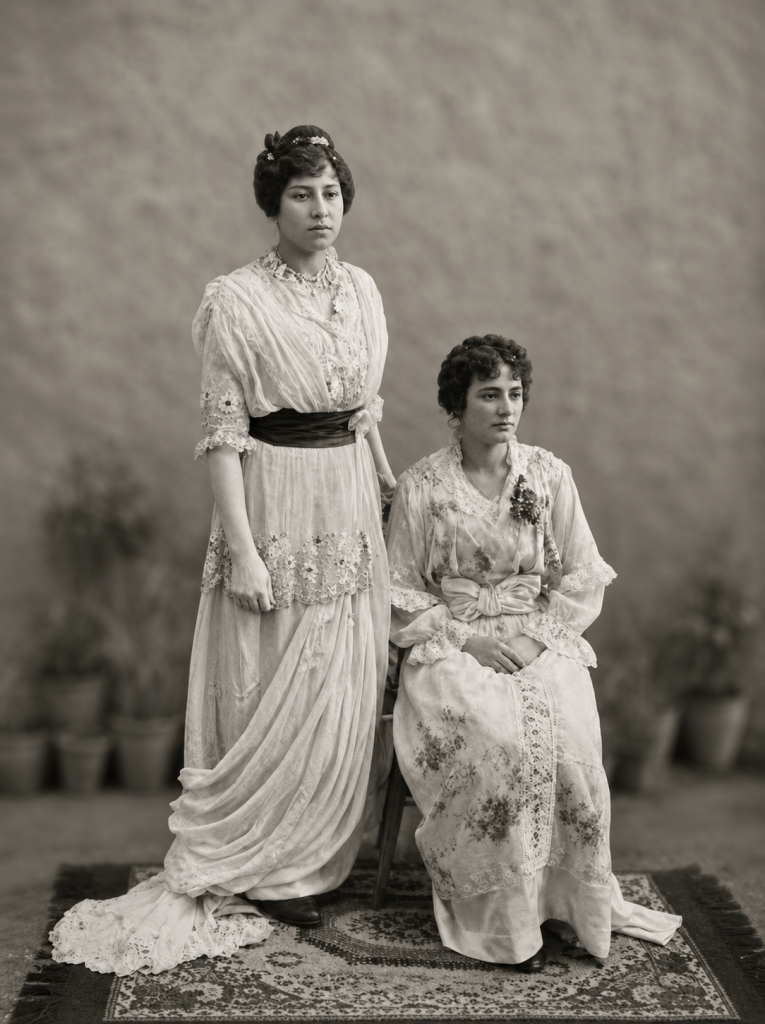
Nevrestan Osmanoğlu with her older sister Nezihe Hanım, my paternal grandmother
Our family’s journey to the center of the Ottoman dynasty began in the Caucasus. Belonging to the Atzamba family, a royal Abkhazian dynasty, my ancestors were forced to flee the Russian persecution of 1864, crossing the Black Sea to Istanbul.
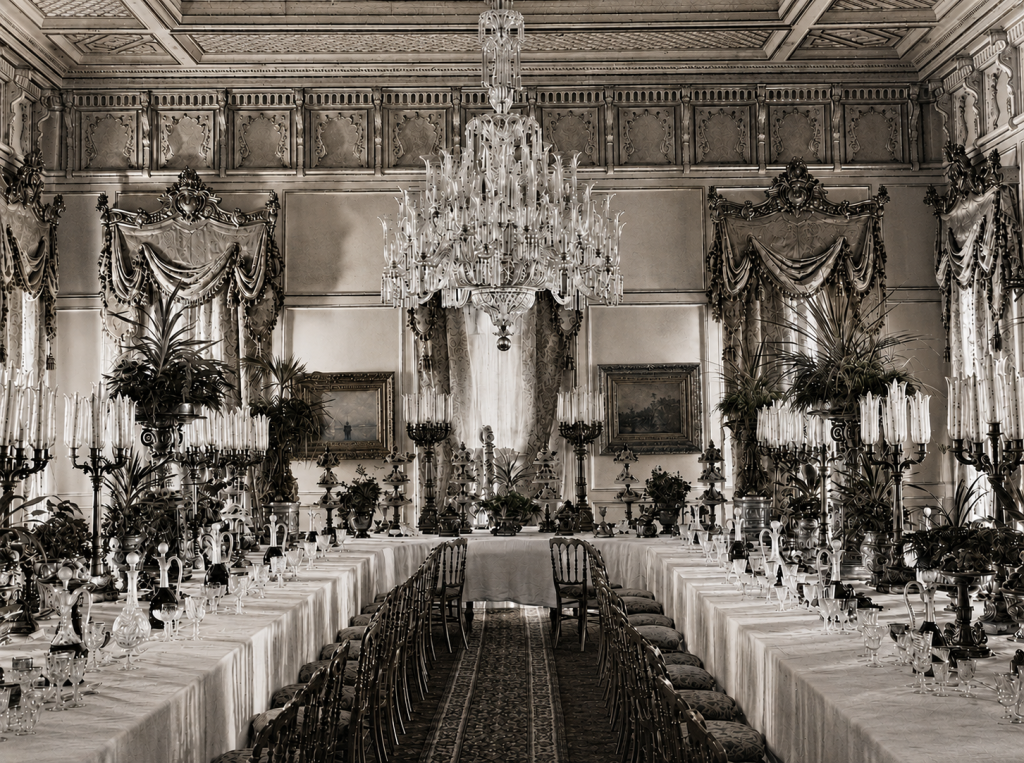
Once upon a time in Yıldız Palace
My great-grandmother, Fatma—known inside the palace walls as Şazende—rose to become the Head Kalfa (manager) of the harem at Yıldız Palace. Under her wing, her two daughters grew up immersed in the elite, highly disciplined world of the imperial court. They were my paternal grandmother, Mrs. Nezihe, and her sister, Nevrestan.
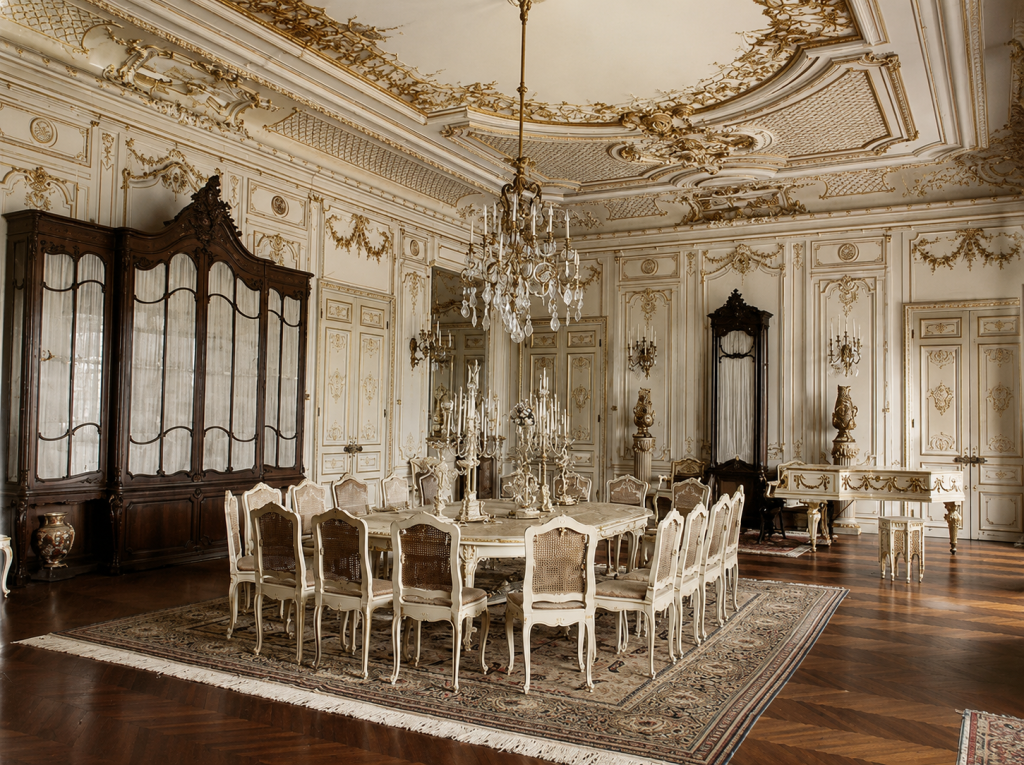
A glimpse at Yıldız Palace
Far from Western orientalist fantasies, the harem functioned as a rigorous school. Both sisters became highly literate, fluent in French, and deeply trained in classical Turkish music. Nevrestan was a talented instrumentalist, playing the oud and violin in the 60-woman harem chorus, while my grandmother Nezihe was celebrated for her breathtaking singing voice and her talent for piano and violin.
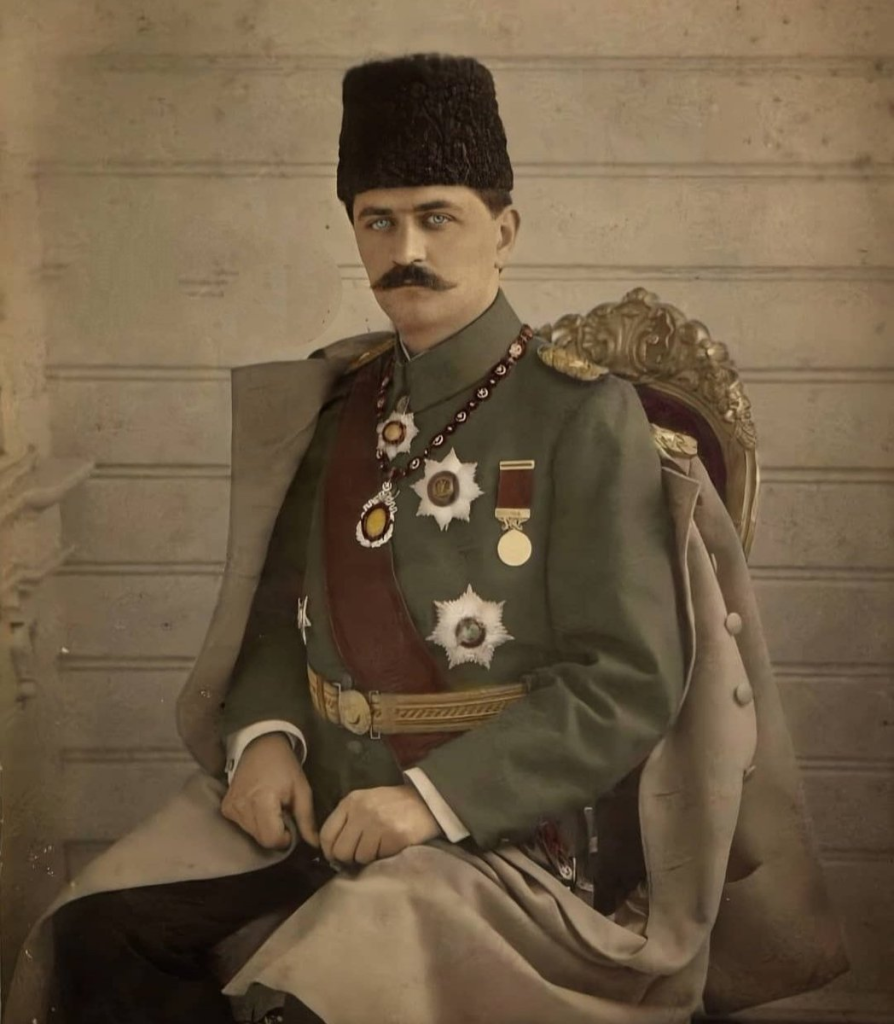
Prince Ahmet Nihat Efendi
Eventually, these two talented sisters married into the inner circle of the captive dynasty. While Prince Ahmet Nihat had his son, Ali Vasıb, with his other wife, Mrs. Şafiru, my grandmother Nezihe became his second wife, filling the echoing rooms of Çırağan with her violin.

Mrs. Safiru writes on the picture “To my sister Nezihe”, dedicating it to my grandmother
Later, as the tides of history turned, Prince Ahmet Nihat wished to marry my grandmother’s younger sister, Nevrestan Hanım. This deeply hurt my grandmother and ultimately led to their divorce. Following the declaration of the Turkish Republic, Prince Ahmet Nihat remained with Nevrestan Hanım until his death in exile.
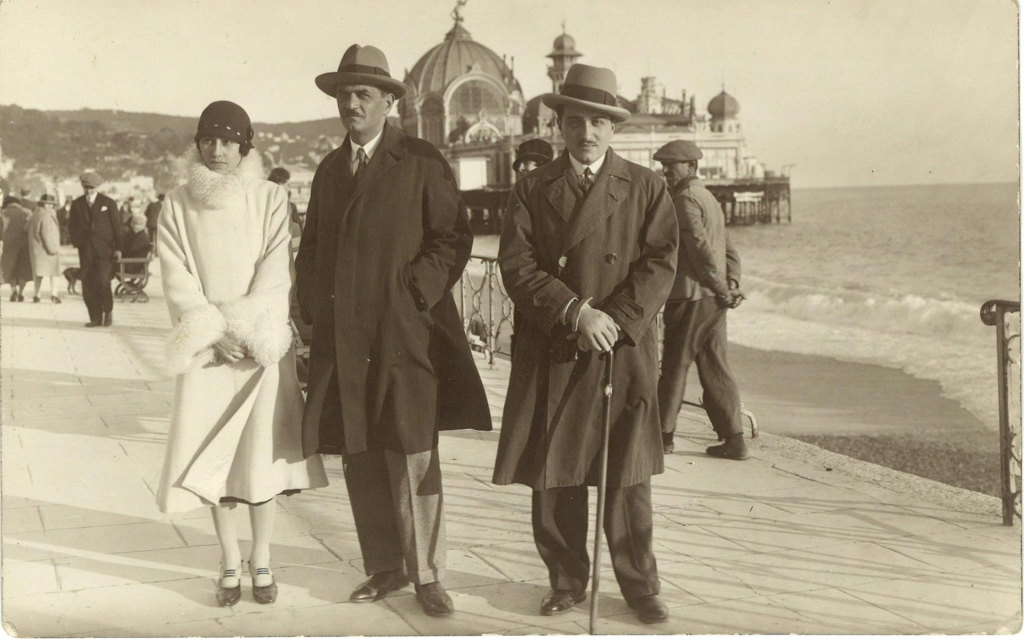
My great aunt Nevrestan Hanım, Prince Ahmet Nihat Efendi, and his younger brother, Osman Fuat Efendi, in Nice following the exile of the Ottoman dynasty after the establishment of the Turkish Republic in 1923.
The Preservation of Innocence
When the Turkish Republic was founded in 1923, the gilded cage of Çırağan was shattered, replaced by the harsh reality of immediate exile. Prince Ali Vasıb Efendi’s exiled path eventually led him to Egypt, where he became the director of the Antoniadis Museum, preserving the objects of another fallen regime until his eventual return to Turkey.
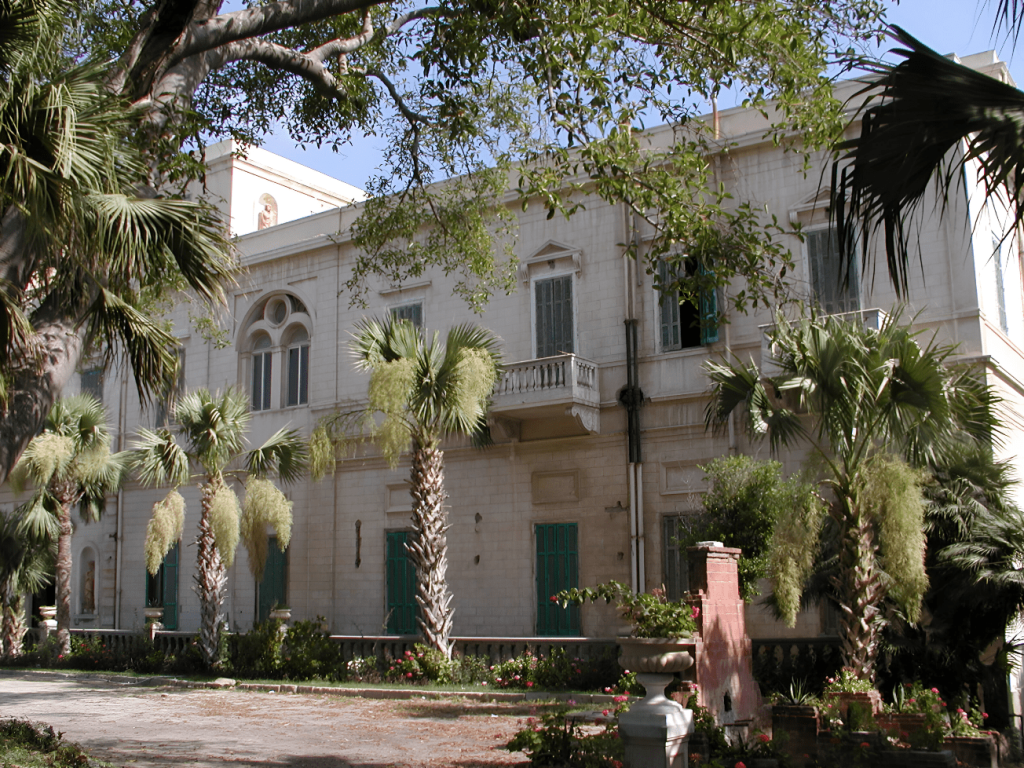
Antoniadis Palace Museum in Alexandria.
When you walk through the physical Museum of Innocence in Çukurcuma today, you are looking at an archive of mid-century Istanbul. Every object—Füsun’s stubs of cigarettes, the daily salt shakers, the pots and pans, the old photographs—stands as a silent, physical witness to a life. But beneath the fiction of Kemal’s longing lies the real, historical ghost of Prince Ali Vasıb Efendi.

Museum of Innocence
The next time you look at the glass cases of Pamuk’s museum, remember that its very narrative soul belongs to an exiled prince who inspired a writer to ask how a man could step inside his own exhibit and become both the object and the subject of his own history.
Note that the video is embedded via Youtube and all rights belong to the respective rights holders.
for further reading:
references:
Açba, L. (2010). Bir Çerkes prensesinin harem hatıraları. Timaş Yayınları.
Ali Vâsıb Efendi. (2004). Bir şehzadenin hatıratı (O. S. Osmanoğlu, Ed.). Yapı Kredi Yayınları.
Barisch, K., & Barisch, L. (1976). Richtig reisen: Istanbul. DuMont.
Bardakçı, M. (2008). Son Osmanlılar. İnkılap Kitabevi.
Candemir, M. (2007). Yıldız’da kaos ve tasfiye. İlgi Kültür Sanat Yayınları.
Mansel, P. (1988). Sultans in splendour. Oriental Press.