

Few would have imagined that a story beginning on the shores of the Bosphorus would one day help shape the course of American music history. Born in Istanbul, Ahmet and Nesuhi Ertegun are best remembered as the visionaries behind Atlantic Records and as passionate champions of jazz, rhythm and blues, and rock music.
Yet their story is about far more than music. It is also the story of a diplomatic family shaped by the cosmopolitan culture of late Ottoman and early Republican Istanbul, and of how two young Turkish brothers responded to the racial segregation they encountered after moving to Washington, D.C. In an America divided by race, the doors of the Turkish Embassy would become an unlikely meeting place where music transcended social barriers, laying the foundation for a legacy that would leave a lasting mark on American culture.
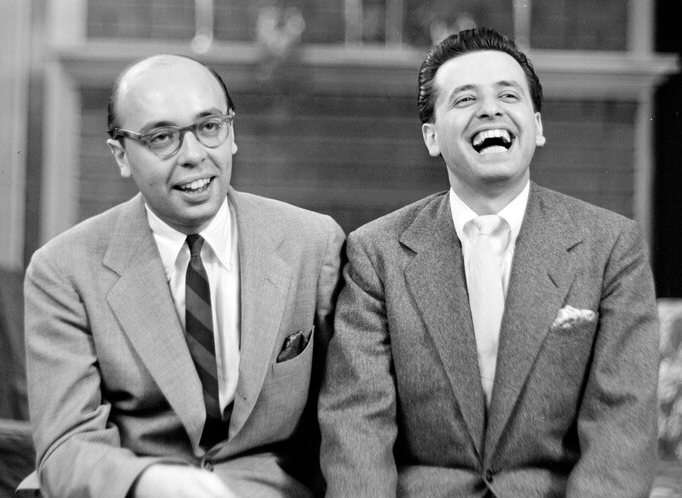
Ertegün Brothers
A Diplomat’s Family in Segregated America
In 1935, Mehmet Münir Ertegün was appointed Ambassador of the Republic of Turkey to the United States by the founding father of Turkey: Mustafa Kemal Atatürk. A respected diplomat and lawyer, he moved with his family to Washington, D.C., where his sons Ahmet and Nesuhi were introduced to a world very different from the cosmopolitan environment in which they had been raised.
America was then a nation divided by racial segregation. In Washington, as in much of the country, Black Americans faced legal and social barriers that restricted where they could live, dine, study, and perform.
Yet it was precisely within this environment that the Ertegün brothers discovered jazz. Captivated by the music of Duke Ellington, Louis Armstrong, Count Basie, and countless other artists, they became passionate admirers of a musical tradition that was deeply rooted in African American culture. The more they listened, the more difficult it became for them to reconcile the brilliance of these musicians with the discrimination they faced in everyday life.
The Turkish Embassy as a Cultural Refuge
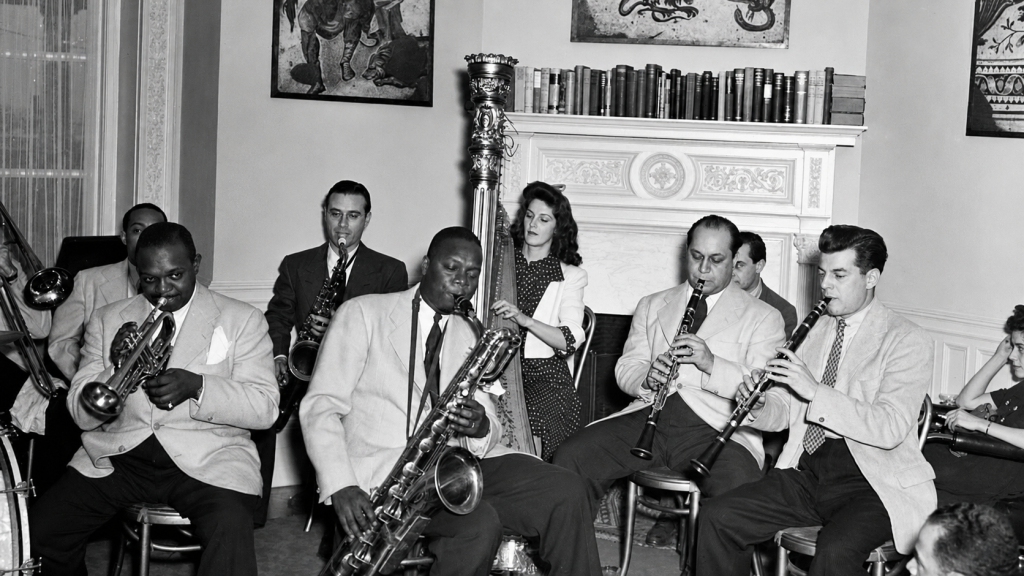
Jazz musicians in the Turkish Embassy in Washington
One of the remarkable aspects of the Ertegün family’s story is the role played by the Turkish Embassy. Because diplomatic residences occupied a unique legal and social position, the embassy became one of the few places in Washington where Black and white guests could gather without the restrictions that existed elsewhere.
The Ertegün brothers began inviting musicians, friends, and jazz enthusiasts to the ambassadorial residence. Informal gatherings and jam sessions brought together people who, outside those walls, would often have been separated by racial barriers.
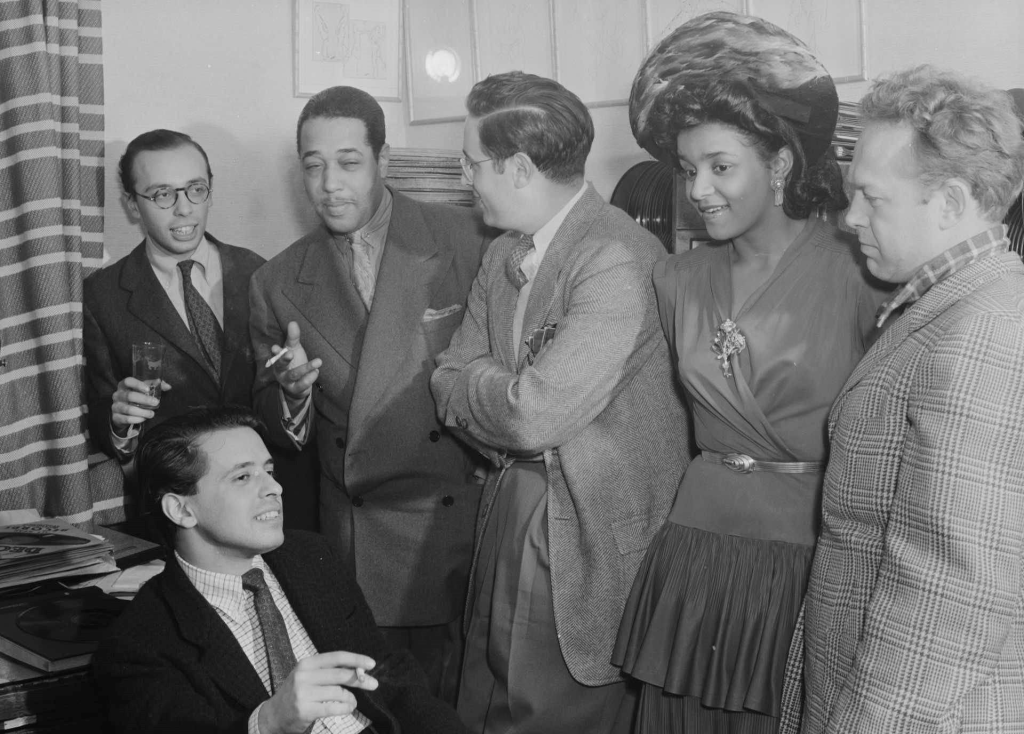
Ertegün Brothers with Jazz musicians at the Turkish Embassy in Washington
Their father supported this openness. Ambassador Münir Ertegün reportedly rejected the notion that guests should be treated differently because of race. In doing so, he offered his sons an enduring lesson in dignity and equality.
‘One day, a Southern senator passed by the house and was outraged to see Black guests entering through the front door. He wrote a letter to Ambassador Ertegün, complaining about what he had witnessed. Ambassador Münir Ertegün replied with characteristic wit and dignity: “Senator, thank you for your letter. We always welcome our guests through the front door. If you would like to visit us as a guest, our door is open to you as well.”‘ (quote is taken from dergivirgul.com)
What occurred at the embassy may not have been political activism in the conventional sense, but it was a quiet act of resistance against segregation. Music created a space where social divisions could temporarily disappear.
From Jazz Fans to Music Industry Legends
The death of Ambassador Ertegün in 1944 marked a turning point for the family. While some family members returned to Turkey, Ahmet and Nesuhi chose to remain in the United States, determined to pursue their passion for music.
A few years later, Ahmet co-founded Atlantic Records, a label that would become one of the most influential forces in modern music. Nesuhi later joined the company and played a crucial role in shaping its artistic direction.
Together, they helped launch and support the careers of some of the greatest musicians of the twentieth century. Their work contributed not only to the success of individual artists but also to the broader recognition of African American musical traditions. Rhythm and blues, jazz, soul, and later rock music reached audiences around the world through the efforts of Atlantic Records.
What distinguished the brothers was not merely their business acumen. They possessed a genuine love for the music and profound respect for the artists who created it. They understood that these musicians were not simply entertainers; they were innovators whose work deserved recognition and respect.
Leave the Door Open
The documentary Leave the Door Open revisits this extraordinary chapter of cultural history. More than a biography of two successful music executives, the film explores the broader themes that shaped their lives: immigration, identity, racism, friendship, and artistic passion.
The title Leave the Door Open originates from a family story recalled by Nesuhi Ertegün. During one of the informal jazz sessions held at the Turkish Embassy residence in Washington, D.C., his father, Ambassador Mehmet Münir Ertegün, was hosting an official reception elsewhere in the building. Concerned that the music might be disturbing the guests, Nesuhi expected his father to object. Instead, the ambassador was captivated by what he heard and reportedly asked that the door be left open so that those attending the reception could enjoy the music as well. The anecdote captures something fundamental about the Ertegün family: a spirit of curiosity, hospitality, and openness. Long before the title acquired any broader symbolic meaning, it referred to a simple moment when a diplomat chose not to shut out an unfamiliar sound, but to welcome it in.
The film reminds viewers that social change often occurs not only through legislation or public protest, but also through human relationships. Sometimes it begins when people gather in a room, listen to music together, and discover a common humanity.
A Legacy Beyond Music
Today, the legacy of the Ertegün brothers extends far beyond the recording industry. Their story stands as a testament to the transformative power of cultural exchange and to the role that outsiders can play in challenging injustice.
As Turks living in America, they occupied a unique position. They were neither participants in the country’s racial system nor entirely detached observers. This perspective allowed them to see contradictions that many Americans accepted as normal. Their response was not ideological but deeply human: they opened their doors, welcomed people in, and let the music play.
In an age still marked by division and polarization, the story of Ahmet and Nesuhi Ertegün remains strikingly relevant. It reminds us that culture can build bridges where politics often fails, and that sometimes a simple act of hospitality can leave a lasting mark on history.
A Return to Istanbul
In a sense, the Ertegün story ultimately came full circle. Although Ahmet and Nesuhi Ertegün spent much of their lives in the United States and left an indelible mark on American music, their family’s roots remained firmly planted in Istanbul. Those roots were embodied in the historic Özbekler Lodge (Özbekler Tekkesi) in Üsküdar, a place with deep ties to the Ertegün family that would eventually become the final resting place of father and sons alike.

Özbekler Tekkesi, Üsküdar
Visuals are taken from yetkinreport.com, istanbulmodern.com, istanbultarihi.ist.
Note that the video is embedded via YouTube and all rights belong to the respective rights holders.