
Dedicated to my paternal grandmother Nezihe Doğrusöz and all the Circassion women who found a second home in Imperial Istanbul in the 19th Century
When hundreds of thousands of Circassians were driven from the Caucasus by the Russian conquest in the nineteenth century, especially after 1864, their arrival transformed the social and cultural landscape of the Ottoman Empire. Many refugees were settled across Anatolia and the Balkans, while others reached Istanbul. Their influence on the capital extended beyond demography and politics: it entered the palace, the grand households and, more subtly, the world of women’s beauty and fashion.
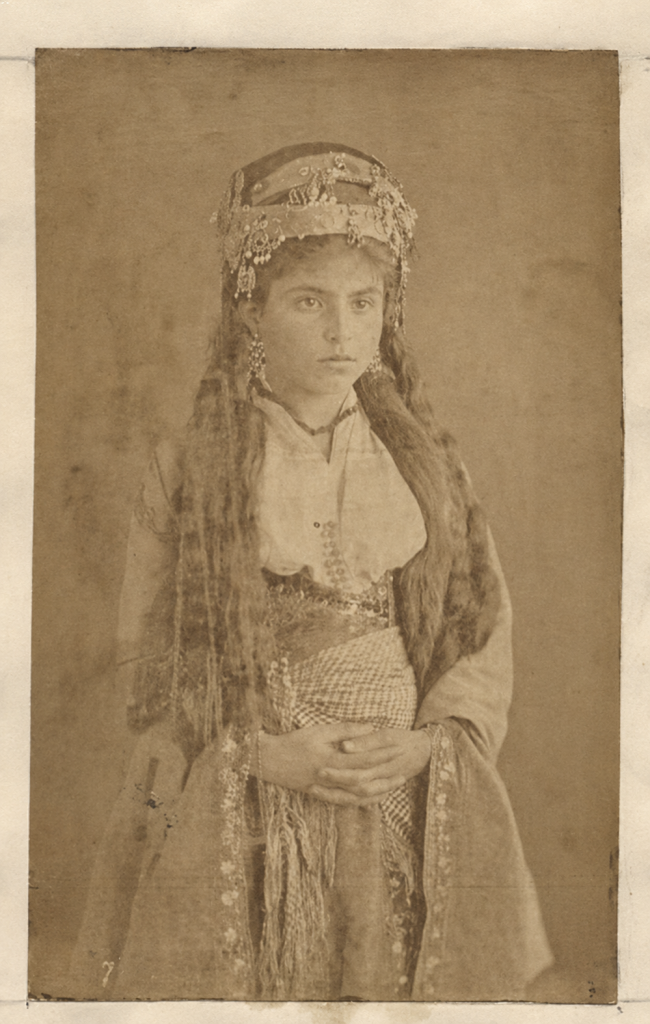
A Circassian girl, early 20th Century
Circassians were not entirely unfamiliar to Istanbul before the great migrations. For centuries, Circassian, Abkhazian and Georgian women had entered elite Ottoman households through the slave trade. Some became attendants, consorts and mothers of members of the dynasty. By the nineteenth century, Circassian women occupied a particularly visible position within the imperial household and the mansions that imitated its customs. The mass displacement from the Caucasus nevertheless intensified this presence, bringing Circassian speech, manners, bodily ideals and forms of dress into closer contact with the inhabitants of the capital.
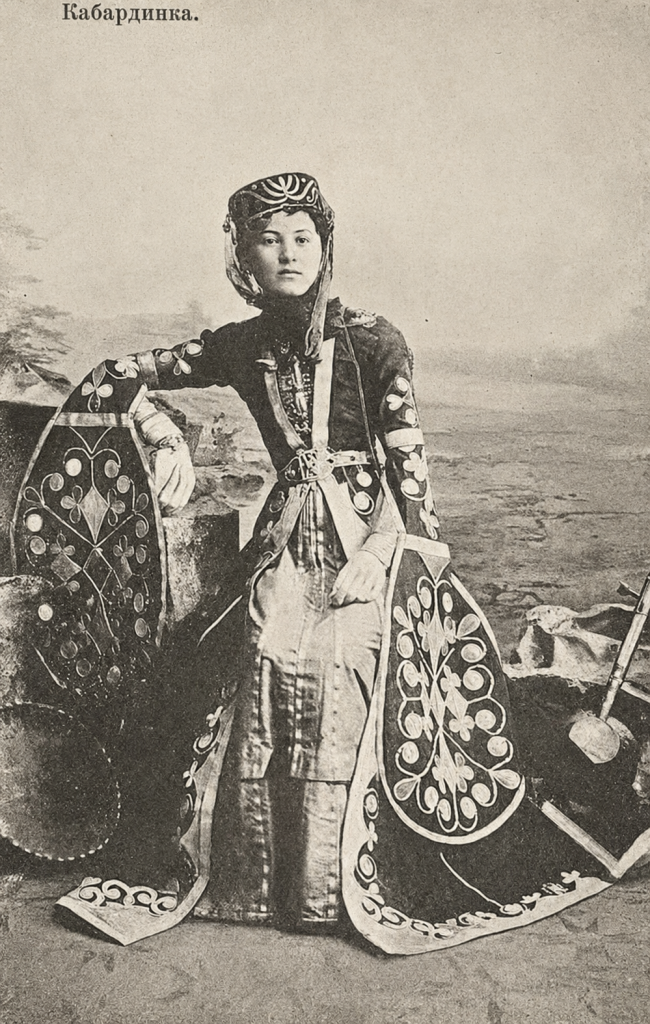
A Circassian lady with a dress of intricate details, early 20th Century
The traditional Circassian woman’s costume differed markedly from the loose outer garments associated with Ottoman street dress. Its principal form was a long, flowing gown fitted closely around the upper body and waist before opening into a broad skirt. It was often worn over a fine underdress and completed with elongated sleeves, silver fastenings, delicate embroidery and an ornamental belt. The silhouette emphasised height, a narrow waist and an erect posture. Some young women also wore restrictive undergarments that trained the body into the upright, slender form admired in Circassian society.
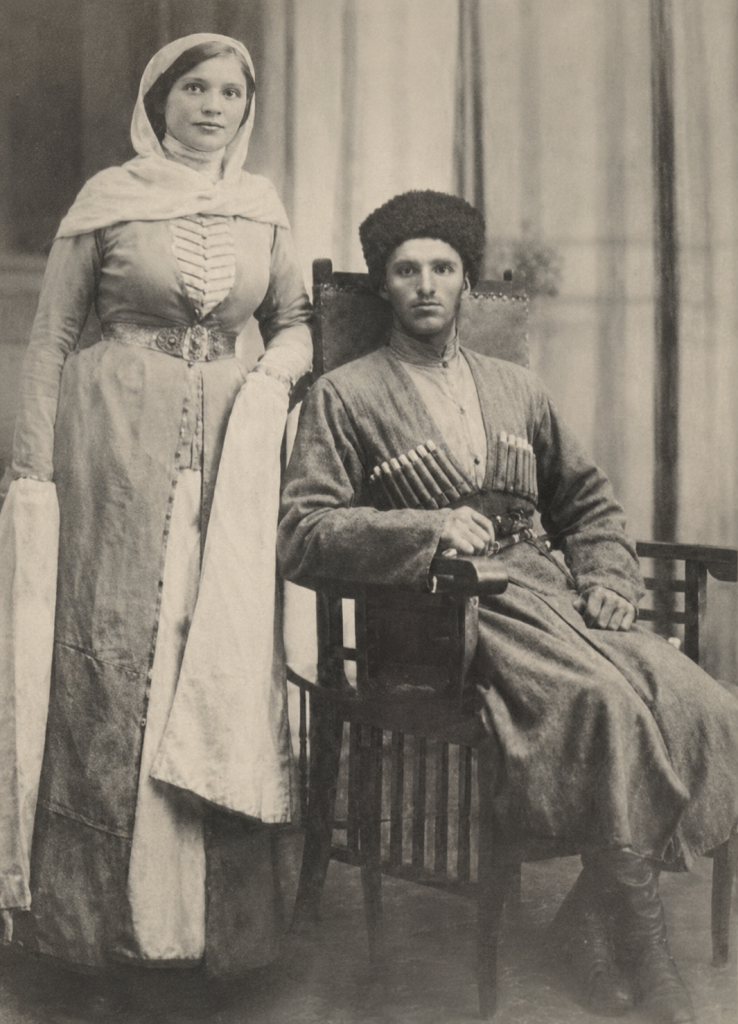
A Circassian couple with traditional costumes, early 20th Century
This aesthetic harmonised with an image already circulating throughout the Ottoman Empire and Europe: that of the “Circassian beauty.” Circassian women were conventionally described as tall, pale-skinned, fine-featured, graceful and poised. The image was heavily romanticised and inseparable from the disturbing history of enslavement and displacement. Yet it became extraordinarily powerful. “Circassian” ceased to denote ethnicity alone and gradually became an adjective suggesting refinement, beauty and aristocratic femininity. In Europe and America, products were marketed under names such as Circassian hair dye, Circassian lotion and Circassian curl. In Istanbul, the association was more immediate, because Circassian women were present within the households where elite taste was produced.
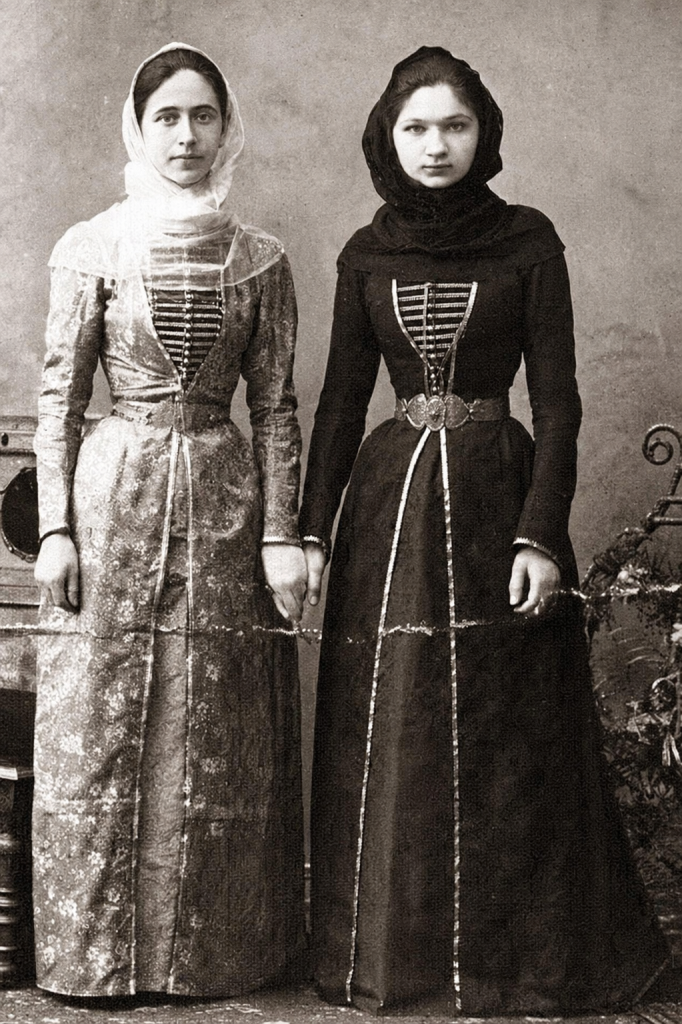
Circassian ladies in traditional dresses, early 20th Century
Their influence did not mean that Ottoman women simply adopted Circassian national costume. Certain elements entered the visual vocabulary of elite dress: a more clearly defined waist, a fitted bodice, long and narrow sleeves, trailing skirts, ornamental belts and a preference for a tall, composed silhouette. Circassian attendants and women raised in the palace also transmitted particular ways of arranging the hair, carrying the body and combining garments. In the intimate world of the harem—where women dressed, embroidered, observed and assisted one another—such details could circulate without ever being formally identified as foreign borrowings.
The effect was especially visible in indoor and ceremonial clothing.
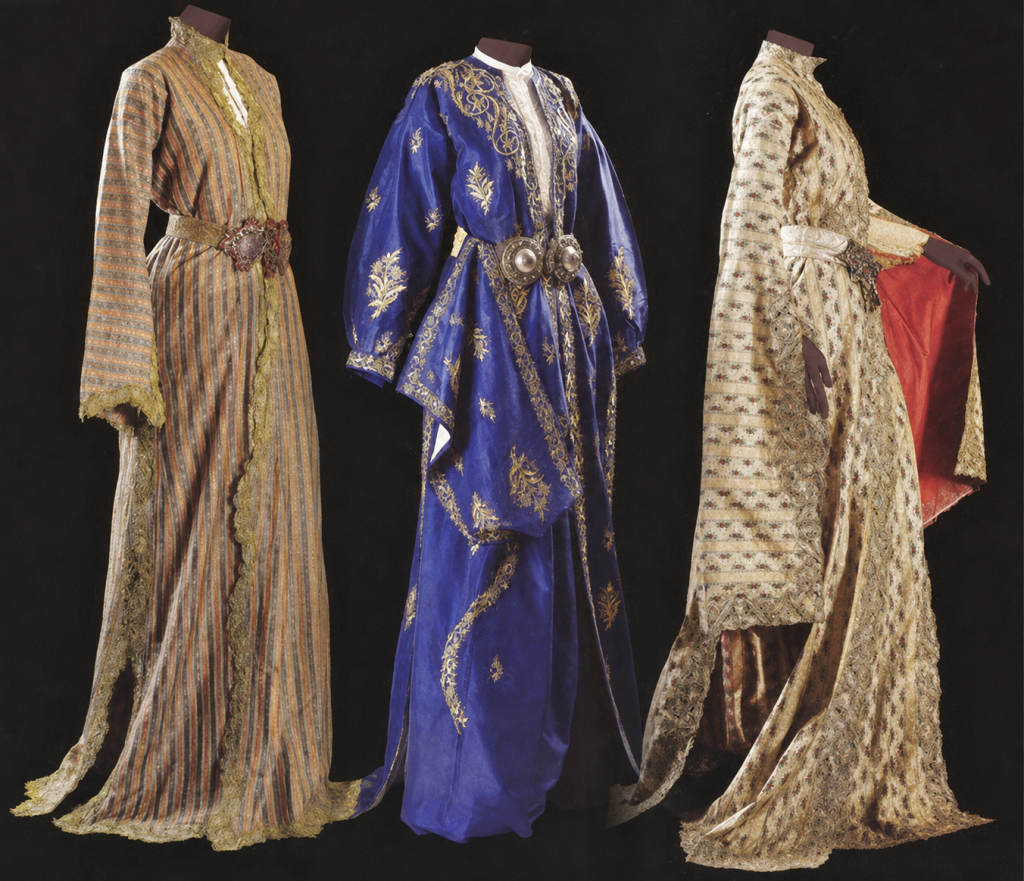
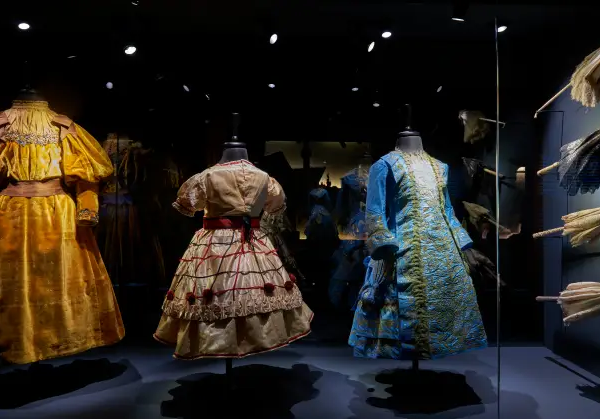
Late Ottoman indoor dresses displaying stylistic affinities with Circassian costumes
Circassian migration did not give Ottoman Istanbul an entirely new form of women’s dress. Its legacy was subtler. It helped shape the city’s imagination of feminine grace—the slender waist, dignified posture, restrained ornament and almost architectural movement of the body. These elements entered an already complex world where Ottoman, Caucasian and European styles met and transformed one another.
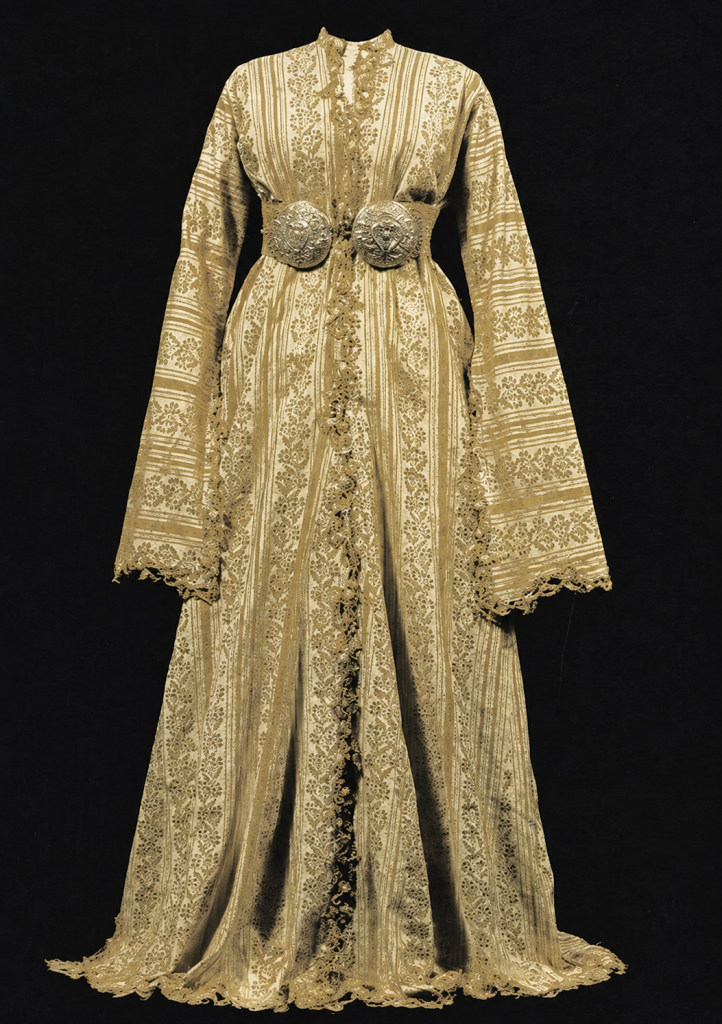
Late Ottoman ceremonial dress displaying Circassian influences
Let me end with the Circassian lament of exile Ystanbulako, which gives voice to the grief of leaving their homeland and the fear of travelling to an unknown city: Istanbul—a city they would ultimately transform through their customs, manners and aesthetics.
Visuals are taken from pinterest, indyturk.com and wikipedia.com.
Note that the video is embedded via YouTube and all rights belong to the respective rights holders.