
Within its sacred rites, I find life,
At the ascetics, I laugh.
A servant bound in devotion,
I am a follower of Ali, a follower of Ali.’
verses traditionally attributed to Münire Bacı
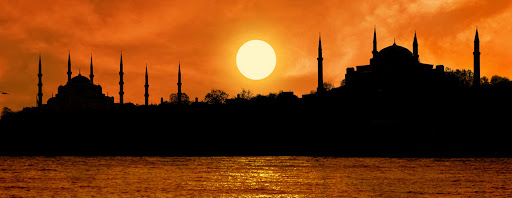
In the history of Ottoman Istanbul, women are often remembered as mothers, wives, sultanas or benefactors. Yet beyond the palace walls and the grand mosques, there existed another world in which women could participate in spiritual life alongside men, compose poetry and earn recognition as members of a religious community.
This was the world of the Bektashis, one of the most intriguing mystical traditions of the Ottoman Empire.
Although Bektashism is commonly associated with the Janissaries, its history also offers a fascinating, and often overlooked, perspective on the place of women in Ottoman society.
A Tradition That Recognised the Soul Before Gender
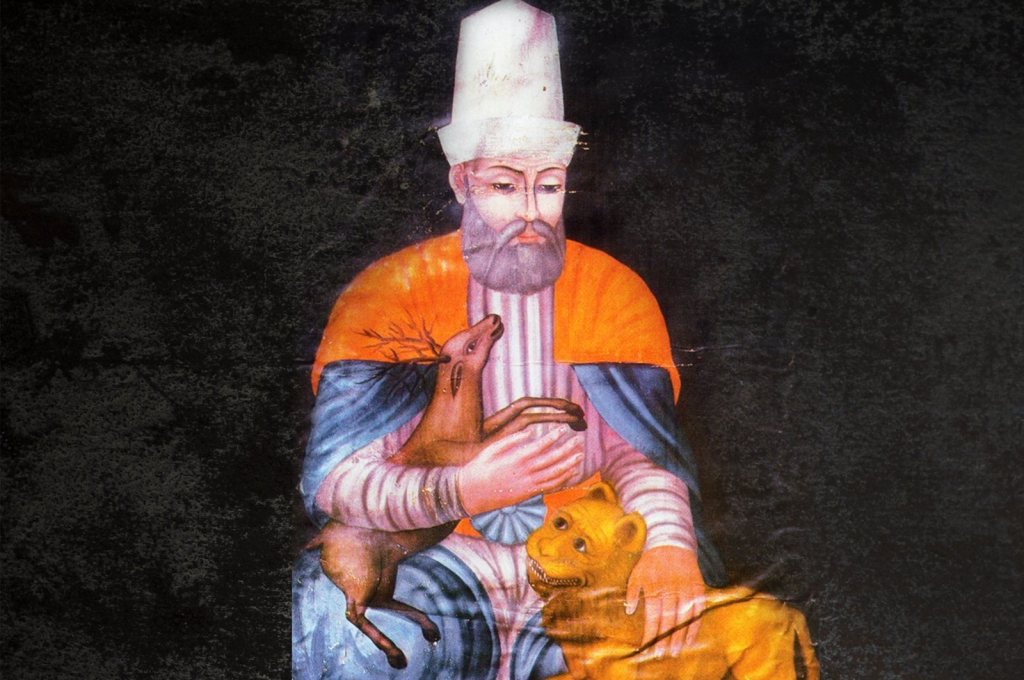
Hacı Bektaş Veli
Bektashism developed from the spiritual legacy of Hacı Bektaş Veli, a thirteenth-century mystic who lived in Anatolia. Over the following centuries, his teachings evolved into an organised Sufi order, incorporating Islamic mysticism, devotion to Ali and the Twelve Imams, and elements of Anatolian religious culture.
One of its distinctive characteristics has been its emphasis on spiritual equality. In Bektashi thought, the essential identity of a human being is not simply male or female, but the soul or living spiritual being. What matters is the individual’s capacity for love, wisdom and spiritual development.
Women and men can participate together in certain religious gatherings, listening to devotional poetry known as nefes, sharing communal meals and taking part in spiritual ceremonies which involves dancing.
This does not mean that women enjoyed complete equality in every aspect of Bektashi life in history. The formal leadership of the order remained largely male. Nevertheless, the tradition has offered women forms of religious participation and recognition that deserve closer examination.
Fatma Bacı: A Woman Among the Saints
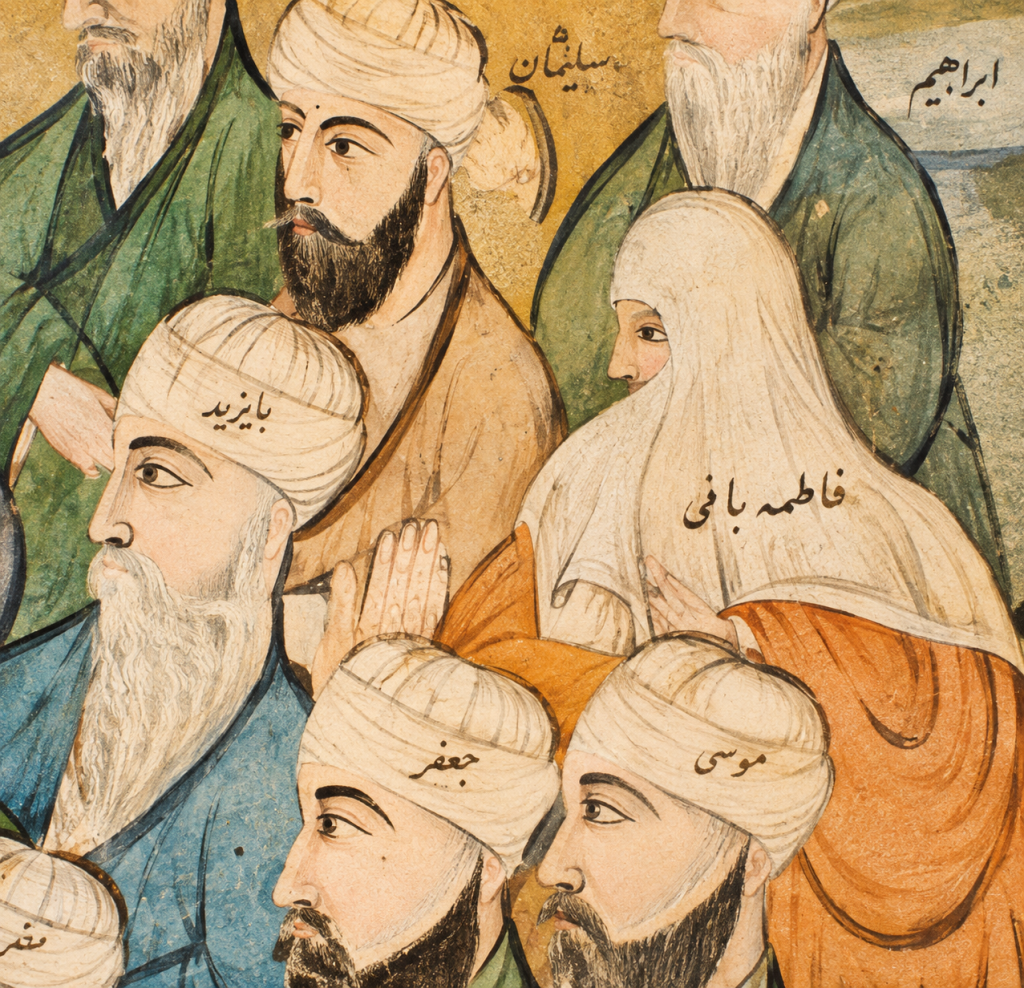
Visual depicting Fatma Bacı also known as Kadıncık Ana is taken from https://hacibektasmobil.com/gezirehberi/kadincik-ana-evi/
One of the most remarkable female figures associated with early Bektashi tradition is Fatma Bacı, sometimes identified with Kadıncık Ana, although whether the two names refer to the same historical woman remains a matter of debate. According to Bektashi narratives, Kadıncık Ana belonged to the close spiritual circle of Hacı Bektaş Veli and played an important role in the transmission of his legacy. Her historical identity remains partly obscured by legend. Yet the significance attributed to women in these early narratives is unmistakable.
A painting depicting an assembly of Anatolian saints includes a female figure identified by an inscription as Fatma Bacı. Surrounded by male spiritual figures, she appears as a member of the same sacred gathering. The painting is not an authentic portrait of a thirteenth-century woman. Rather, it reflects the way later generations imagined and remembered the spiritual world associated with Hacı Bektaş Veli. What makes the image particularly interesting is that Fatma Bacı is not depicted outside the gathering or relegated to a separate scene. She belongs to the same spiritual assembly. It is a small but revealing detail: a woman remembered among the saints.
The Bektashi Lodges of Istanbul
By the Ottoman period, Bektashism had established a significant presence in Istanbul. Its lodges, known as tekkes, were places of spiritual instruction, hospitality, music and communal life. Among the best-known were the Şahkulu Sultan Lodge in Merdivenköy, the Nafi Baba Lodge near Rumelihisarı and the Karyağdı Baba Lodge in Eyüp. These establishments formed part of the city’s religious and cultural landscape.
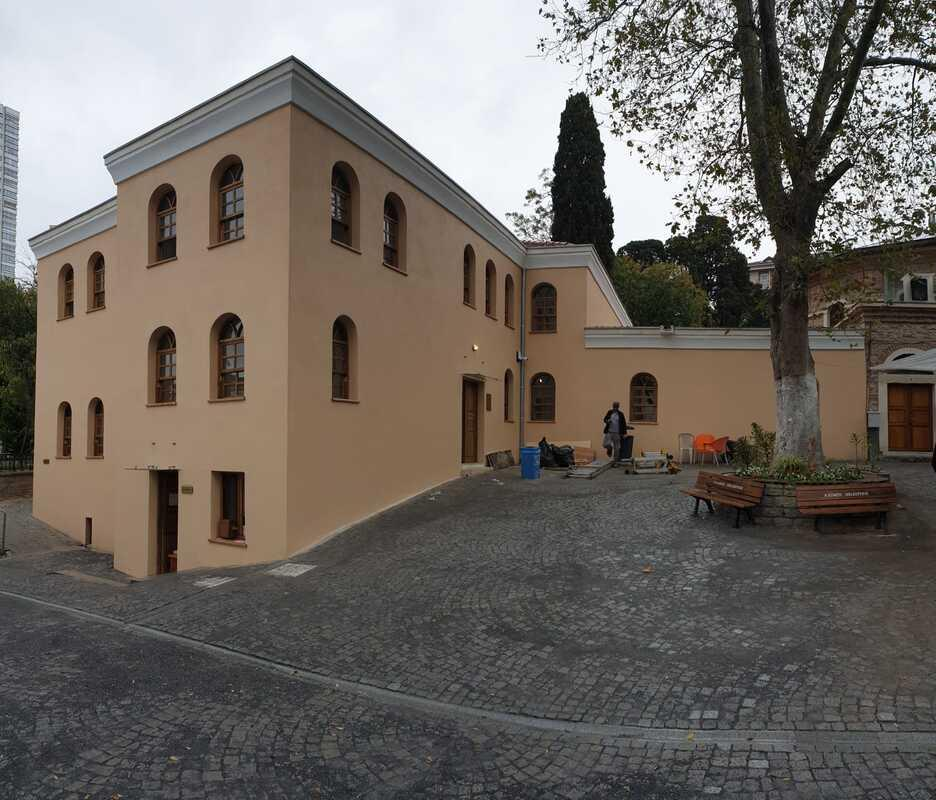
Şahkulu Lodge
Women were not entirely absent from this world, although the surviving records tell us far more about male sheikhs and dervishes than about their female counterparts. Occasionally, however, a name emerges from the historical silence.
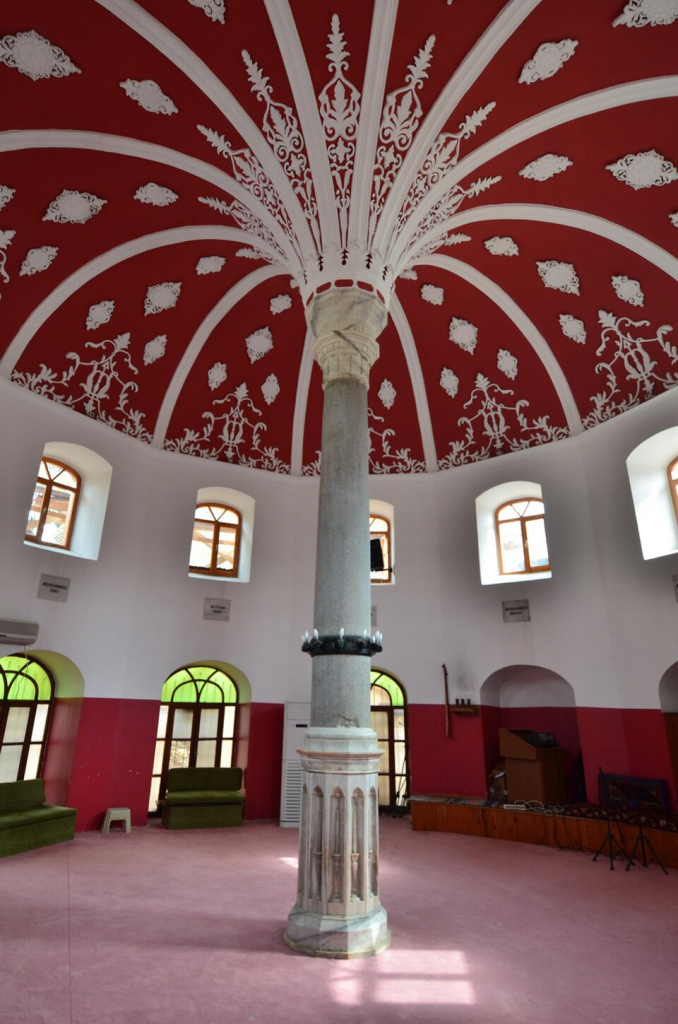
Interior of Şahkulu Lodge
The Women Who Wrote Poetry
Perhaps the most evocative evidence of women’s participation in Bektashi culture survives through poetry.
Ottoman Istanbul was home to women who expressed their spiritual experiences in verse, using the language of divine love, longing and devotion.
Among them was Münire Bacı, who lived approximately between 1852 and 1912. Born in Istanbul and associated with Kasımpaşa, she became a follower of Nuri Baba, the sheikh of a Bektashi lodge in Çamlıca. Her poetry belongs to the tradition of the nefes, devotional compositions that occupy an important place in Alevi-Bektashi religious culture. Some of her verses have survived in manuscript collections, while a composition associated with her name has also entered the musical repertoire.
One of the poems traditionally attributed to Münire Bacı, “Haktır Allahım”, survives as a Bektashi nefes, beautifully performed here by Nezih Uzel, whose interpretation evokes the spiritual atmosphere of Istanbul’s Bektashi lodges.
Another figure was Hayriye Bacı, an Istanbul-born Bektashi poet believed to have lived during the nineteenth and early twentieth centuries. Little is known about her life, and only a small part of her poetry has been identified. Yet even these fragments are significant.
They remind us that women were not simply passive participants in religious ceremonies. They contributed to the intellectual, emotional and artistic life of their communities.
There is something particularly moving about this form of historical survival. We may know almost nothing about a woman’s appearance, her home or the circumstances of her daily life. Yet generations later, her words may still be read or sung.
The Destruction of the Lodges
The history of Istanbul’s Bektashi communities took a dramatic turn in 1826. That year, Sultan Mahmud II abolished the Janissary Corps, an institution historically associated with the Bektashi order.
The consequences extended far beyond the military. Bektashi lodges were closed, some were demolished, and others were transferred to different Sufi orders, particularly the Naqshbandis. Religious leaders faced exile and persecution, while the order’s institutional life was severely disrupted.
For women associated with these communities, the consequences are especially difficult to reconstruct. The historical record does not allow us to determine precisely how many women lost their spiritual communities or what happened to their personal networks.
Nevertheless, the suppression of the lodges affected the environments in which Bektashi religious and cultural life had flourished. The tradition survived, sometimes discreetly, and gradually re-emerged during the nineteenth century.
The Women Remembered in Stone
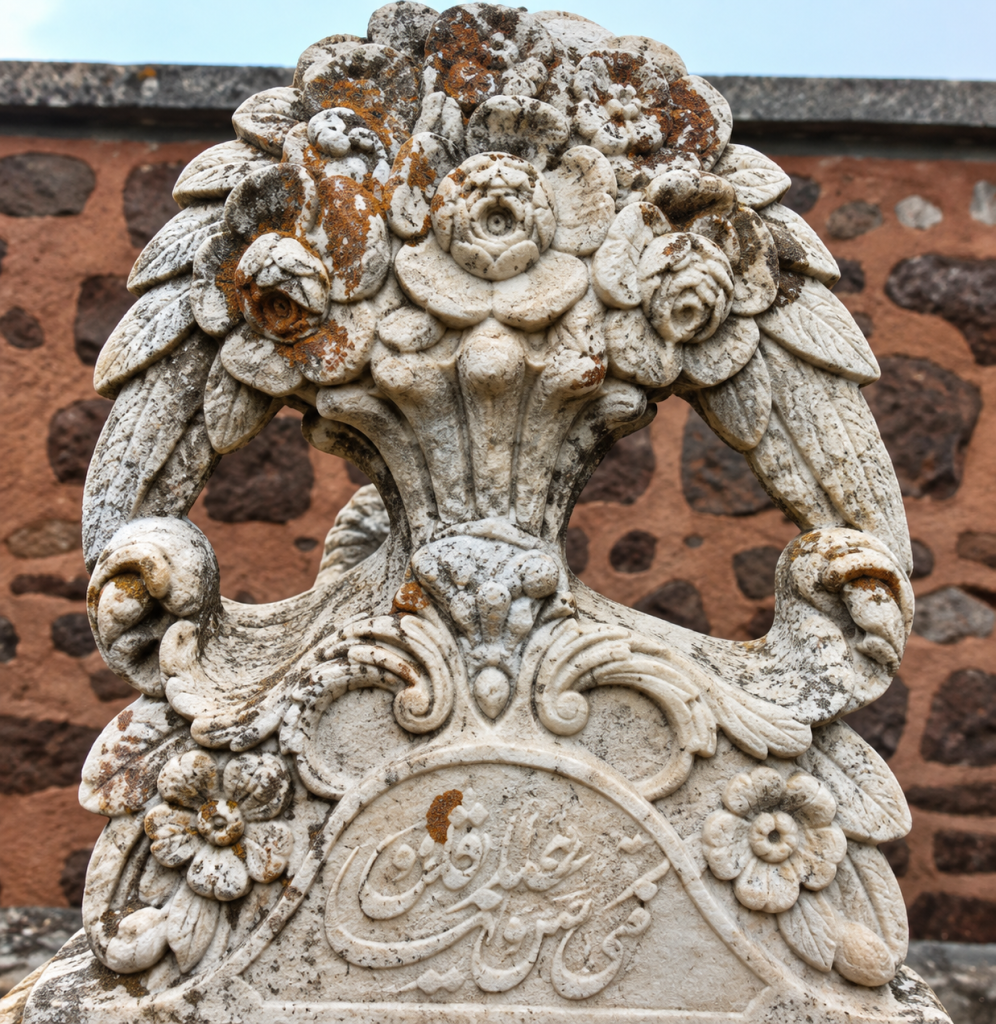
The gravestones of female Bektashi dervishes could be richly adorned with floral motifs, including roses, leaves and ornamental vases, reflecting the broader decorative traditions of Ottoman women’s funerary monuments. Visual is taken from https://hacibektasmobil.com/gezirehberi/haci-bektas-veli-turbesi-ve-muzesi/isiklar-icinde-uyuyanlar/.
Not all the traces of Bektashi women survive in poetry or manuscripts. Some remain in the cemeteries of old lodges.
In Istanbul, the gravestones associated with Bektashi communities offer valuable evidence of women’s participation in their spiritual world. Among the examples discussed in academic studies is the gravestone of Dervişe Fatma Hanım, recorded in the cemetery of the Murat Paşa Mosque in Aksaray.
The very designation Derviş is significant. It identifies a woman through her association with a spiritual path rather than solely through her family relationships.
At the Karyağdı Baba Lodge in Eyüp, researchers examining the cemetery have also identified gravestones commemorating women associated with the Bektashi community. One belonged to Nuriye Hanım, the wife of Mustafa Paşa. Her inscription included the designation dervişe, meaning a female dervish. Although her inscription also identified her through her marriage, the designation dervişe acknowledged her personal affiliation with the Bektashi tradition. It does not necessarily indicate that she held an official position within the order. Nevertheless, it suggests that her religious identity was considered important enough to be recorded on her gravestone.
In a society where women were frequently identified through their fathers or husbands, such details offer valuable glimpses into their individual spiritual lives.
Elsewhere, at the Hacı Bektaş Veli complex in Anatolia, women’s gravestones preserve names such as Zarife Kadın and Fatma Hatun.
These monuments offer a different kind of testimony from official chronicles. They tell us that women belonged to these spiritual communities, even when their individual biographies have been forgotten.
A gravestone may preserve little more than a name, a date and a prayer. Yet sometimes these fragments are all that remain of an entire life.
Equality, Ideals and Everyday Reality
It would be tempting to portray Bektashism as an entirely egalitarian religious tradition, centuries ahead of its time. The historical reality is more complicated.
Although Bektashi spirituality placed considerable emphasis on the equality of souls, its institutional hierarchy was largely dominated by men. Women could become respected dervishes, poets and spiritual figures without necessarily enjoying equal access to formal leadership.
The distinction matters. Yet it does not diminish the significance of the women whose names have survived. Rather, it invites us to look beyond the ideals expressed in religious teachings and ask how those ideals were experienced in everyday life.
Who were the women who entered Istanbul’s Bektashi lodges? What did they learn there? What friendships did they form? What songs did they sing? And how did their spiritual lives influence the world beyond the lodge walls? For most of them, we may never know the answers. But the fragments that remain are enough to suggest a richer history than the one traditionally told.
The Voices That Remain
Istanbul is a city that remembers its sultans, generals, scholars and saints. Its streets are filled with monuments commemorating the men who shaped its history.
The women of its Bektashi lodges have left a quieter legacy. A name carved into a gravestone. A devotional poem preserved in a manuscript. A female figure seated among the saints in a painting. These traces may seem modest, but together they reveal a world in which women sought spiritual knowledge, participated in religious communities and found ways to express their own understanding of the divine. Their stories remind us that the history of Istanbul was not written only in palaces, mosques and imperial decrees.
Sometimes, it was also written in the verses of a forgotten woman who called herself simply Bacı — sister.
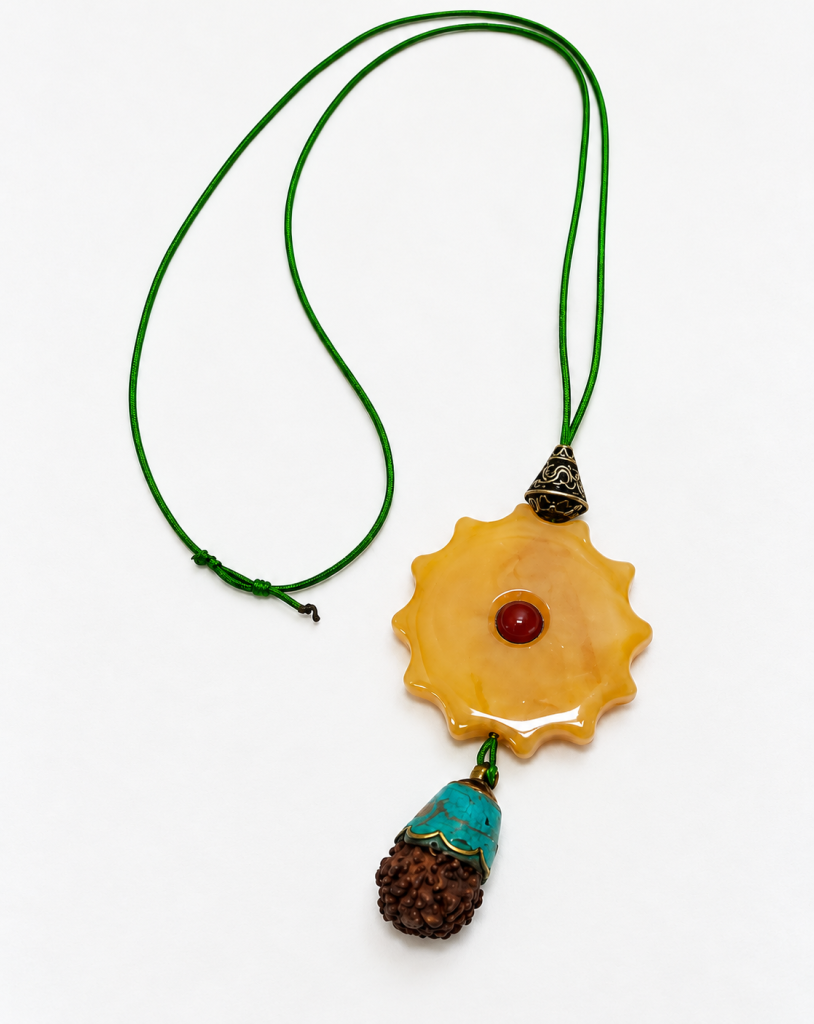
The Teslim Taşı (Stone of Submission), traditionally worn by Bektashi dervishes, symbolises spiritual devotion, humility and surrender to the divine will.
References
- Yılmaz, Gülay (2015). “Bektaşilik ve İstanbul’daki Bektaşi Tekkeleri Üzerine Bir İnceleme.” Osmanlı Araştırmaları / The Journal of Ottoman Studies, 45, pp. 97–136.
- Uçar Özkurt, Zeynep (2024). “Eyüp Karyağdı Baba Bektaşi Tekkesi Mezar Taşları.” Erdem, 87, pp. 105–151. https://doi.org/10.32704/erdem.2024.87.105
- Doğanbaş, Muzaffer (2016). “A Pictorial Representation in the Hacı Bektaş Veli Museum.” Eurasian Art & Humanities Journal, 6, pp. 22–32.
- Çal, Halit (2022). “17–20. Yüzyıl Mezar Taşlarında Bektaşilik.” [Publication details to be confirmed.]
- Türk Edebiyatı İsimler Sözlüğü (TEİS). “Münire Bacı.” Ahmet Yesevi University.
- Fedakar, Pınar (2015; updated 2020). “Hayriye Bacı.” Türk Edebiyatı İsimler Sözlüğü, Ahmet Yesevi University.
Note that the videos are embedded via YouTube and all rights belong to the respective rights holders.