
Sometimes they are turquoise skies, adorned with delicate clouds that recede into incredible depths…
— Théophile Gautier, Constantinople (1853), “Le Palais du Bosphore — Sultan Mahmoud — Le Derviche”
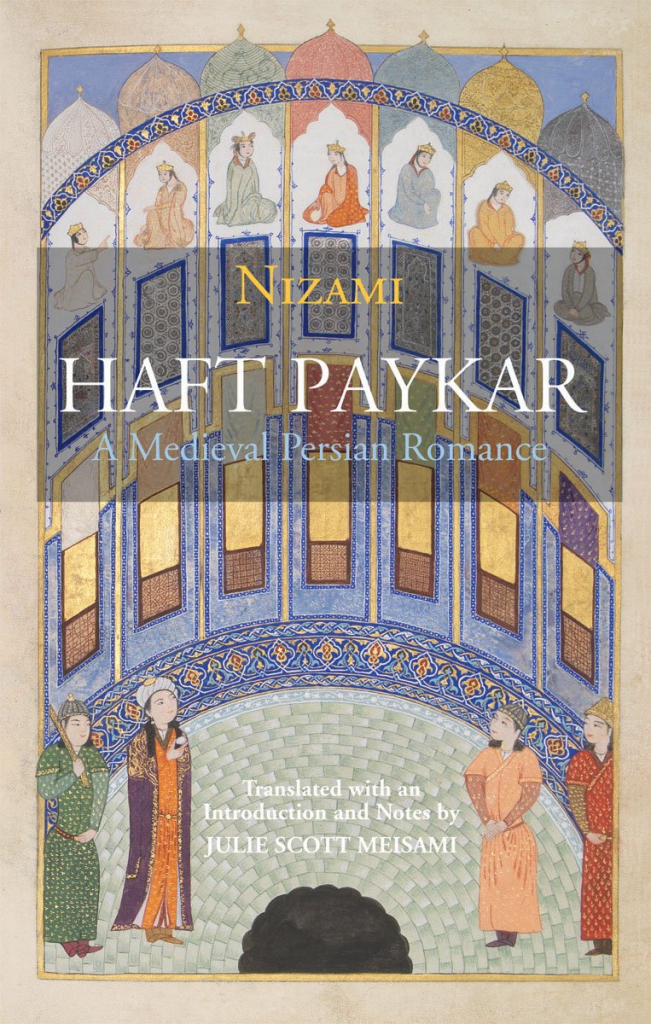
I recently discovered the story of my own name in The Story of Mahan, an episode from the twelfth-century Persian literary masterpiece Haft Paykar (The Seven Beauties), written by Nizami Ganjavi in 1197. Narrated by Princess Azargun in the Turquoise Pavilion, the tale introduced me to the rich symbolism of medieval Persian literature.
What particularly caught my attention was its reference to turquoise.
I have always been drawn to this colour. Neither entirely blue nor green, it seems to belong simultaneously to the sea and the sky. Curious about its history, I began exploring the origins of the word turquoise, a journey that eventually brought me back to Istanbul.
A Stone Named After the Turks
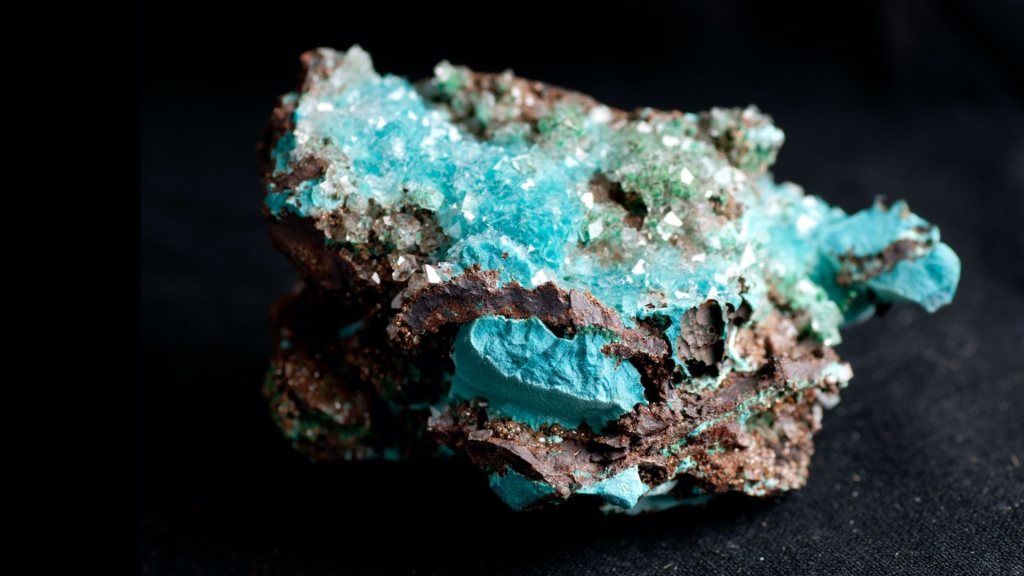
The word turquoise comes from the French pierre turquoise, meaning ‘Turkish stone’. Its name reflects the medieval trade routes through which the gemstone reached Europe.
Interestingly, some of the world’s most celebrated turquoise deposits were not in Anatolia but in Persia, particularly around Nishapur, in present-day Iran. The Sinai Peninsula was another important source, dating back to ancient Egyptian times.
So why did Europeans call it Turkish? The answer lies in commerce. Turquoise travelled westwards through trading networks connecting Persia and the eastern Mediterranean with Europe, including routes passing through Turkish-controlled territories and Levantine ports. European merchants often named commodities after the places through which they encountered them rather than their actual origins.
Thus, a Persian stone became known in Europe as the Turkish stone.
Istanbul at the Crossroads
For centuries, Constantinople was one of the great meeting points between the commercial worlds of East and West. Venetian and Genoese merchants participated in networks connecting the eastern Mediterranean with European markets, while the city itself became a centre of cultural and artistic exchange.
Yet Istanbul’s relationship with turquoise goes beyond trade. The colour found one of its most beautiful expressions in Ottoman architecture.
The sixteenth-century flourishing of İznik ceramics introduced an extraordinary palette of cobalt blue, turquoise, green and white into Ottoman decorative art.
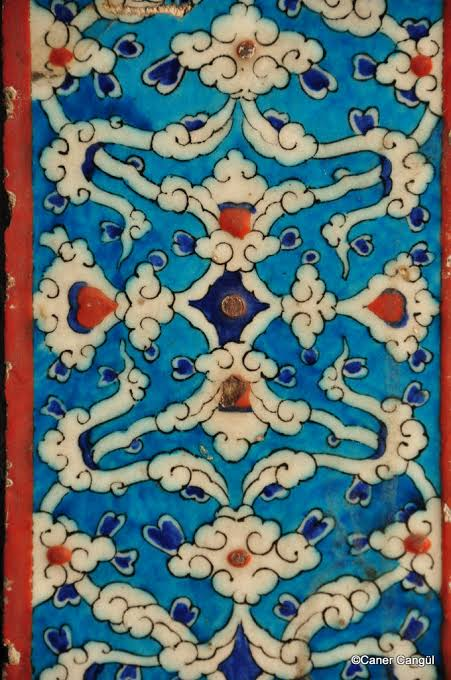
Detail from The Rüstem Pasha Mosque
The Rüstem Pasha Mosque, designed by Mimar Sinan and completed in the 1560s, is one of the finest examples. Its interior is adorned with exquisite İznik tiles, where turquoise and blue intertwine with tulips, carnations and delicate floral patterns.
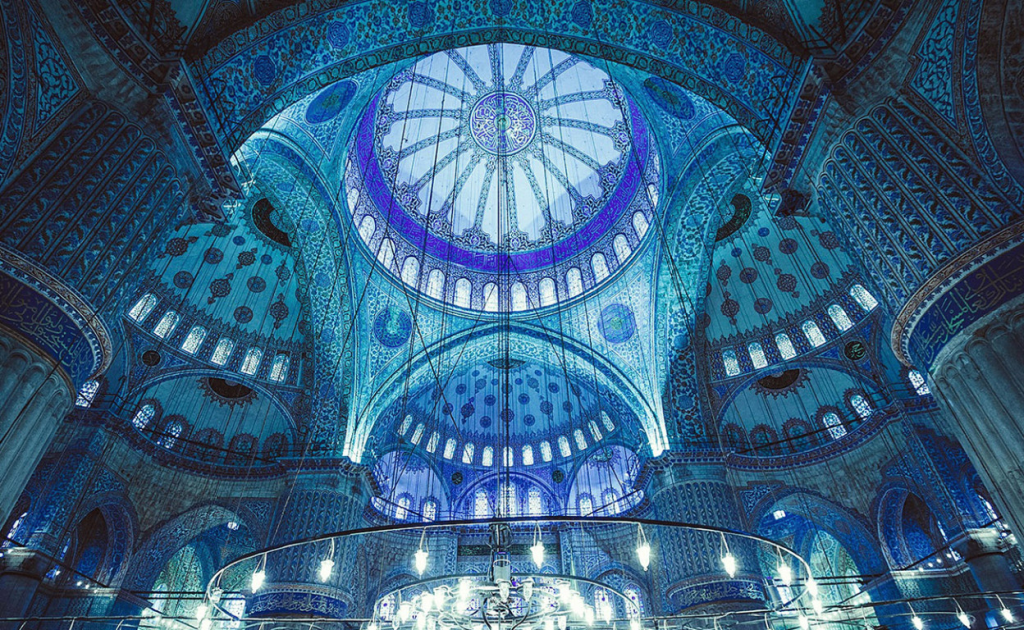
The Sultan Ahmed Mosque
The Sultan Ahmed Mosque, internationally known as the Blue Mosque, offers another remarkable example. Built in the early seventeenth century, its thousands of ceramic tiles create an enchanting atmosphere through their shades of blue, turquoise and green.
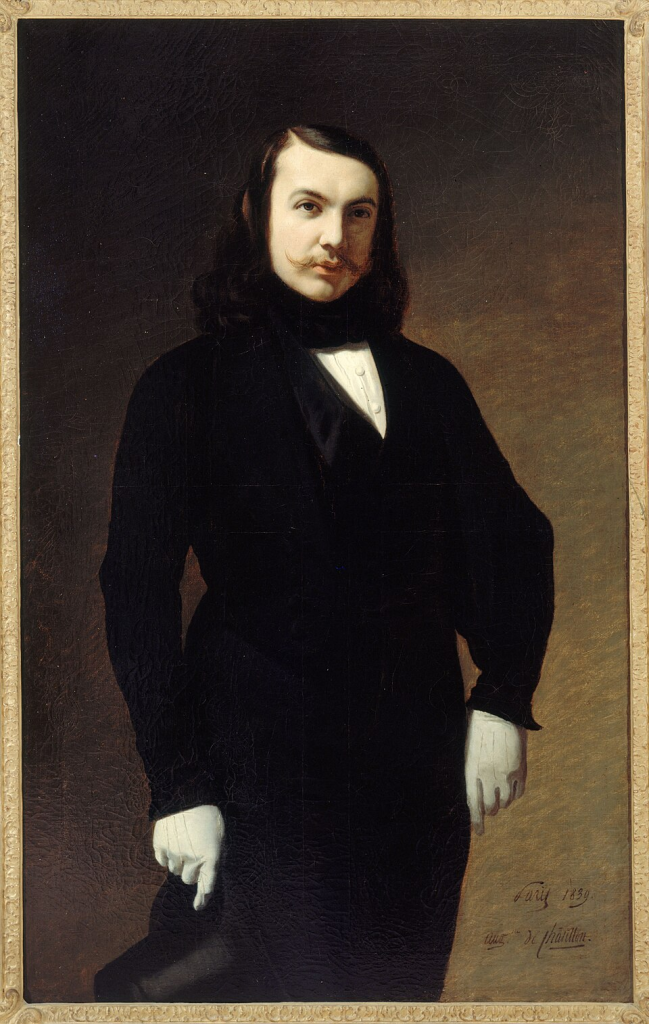
Théophile Gautier
Nineteenth-century French travellers, including Théophile Gautier, were captivated by Constantinople’s architecture, colours and decorative arts. Their writings helped shape Europe’s fascination with the city and its extraordinary visual heritage.
There is a particular irony in this connection: a colour whose European name recalls Turkish trade routes had become one of the most distinctive features of Istanbul’s own artistic heritage.
Firuze: A Word That Travelled Back
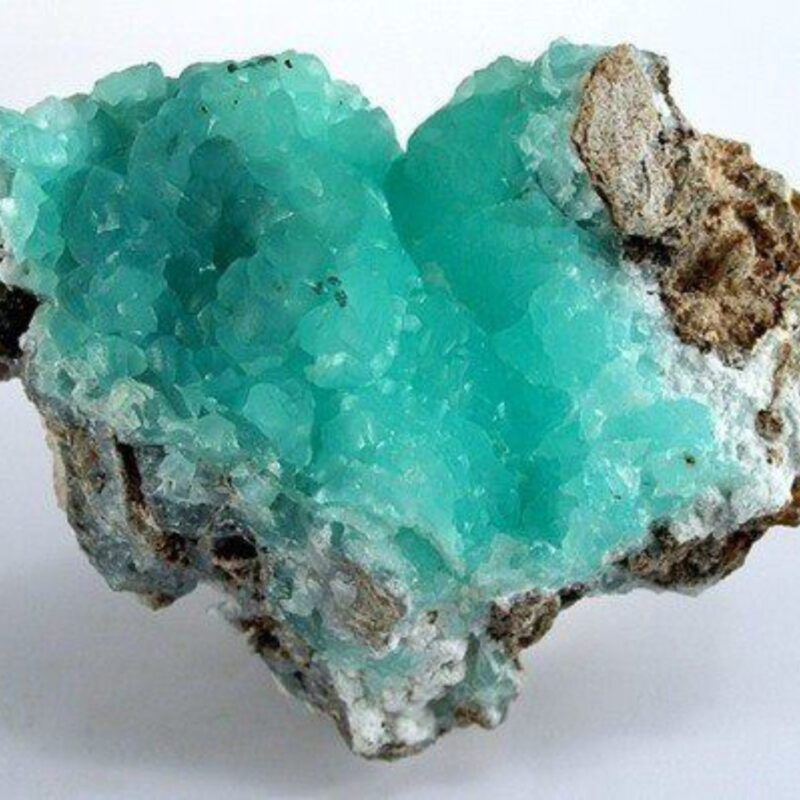
There is also a charming linguistic irony. In Turkish, the traditional name for the gemstone is firuze, derived from Persian fīrūza. The word turkuaz, meanwhile, entered modern Turkish through French.
We therefore have two names for the same stone, each preserving a different historical journey: one Persian, the other European, carrying the memory of the Turkish trade routes.
A Colour That Carries History
Turquoise is more than a colour or a gemstone. It connects ancient Persian mines and Sinai with medieval trade routes, the Mediterranean world, Ottoman craftsmanship and the European imagination of the East.
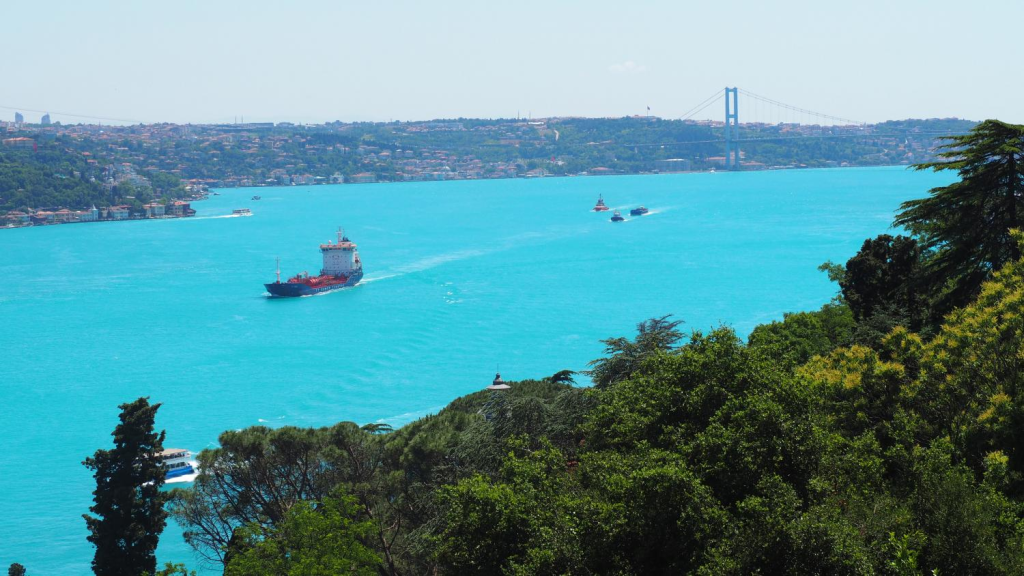
Bosphorus on a bright day
Perhaps this is why I have always felt such an affinity with turquoise. It evokes the Bosphorus on a bright day, the glazed surfaces of İznik ceramics and the extraordinary interiors of Istanbul’s Ottoman mosques.
A colour that travelled through the world carrying the name of the Turks eventually found one of its most beautiful expressions in Istanbul.
Sometimes, the history of a word can lead us to a place. And sometimes, the discovery of a name can lead us to a colour and to a little more of our own history.
Note that the video is embedded via YouTube and all rights belong to the respective rights holders.