

‘O most merciful fount of all hope,
Father of the son whose weeping mother I am:
I come to complain before your sovereign court,
about your power and about human nature,
which have allowed such grievous harm to be
done to my son, who has honored me so much.’
Lamentatio Sanctae Matris Ecclesiae Constantinopolitanae (Lament for the Holy Mother Church of Constantinople) is a Latin lament composed in the aftermath of the fall of Constantinople in 1453, an event that signified not merely the loss of a city, but a profound rupture in Christian historical consciousness. The text is anonymous, though its rhetoric and themes strongly resemble the writings of Cardinal Bessarion, the Byzantine-born humanist and churchman who, after the conquest, lived in exile in the Latin West and warned Europe of the civilizational consequences of Constantinople’s fall.

Written in the voice of the Church personified as a grieving mother, the lament belongs to a long tradition of Christian mourning literature. It draws heavily on the Book of Lamentations, in which Jerusalem appears as a desolate widow, abandoned and humiliated. In a similar symbolic gesture, Constantinople is presented not simply as a political capital, but as a sacred body, violated, silenced, and stripped of its spiritual centrality. Through this maternal voice, historical catastrophe is transformed into existential bereavement.
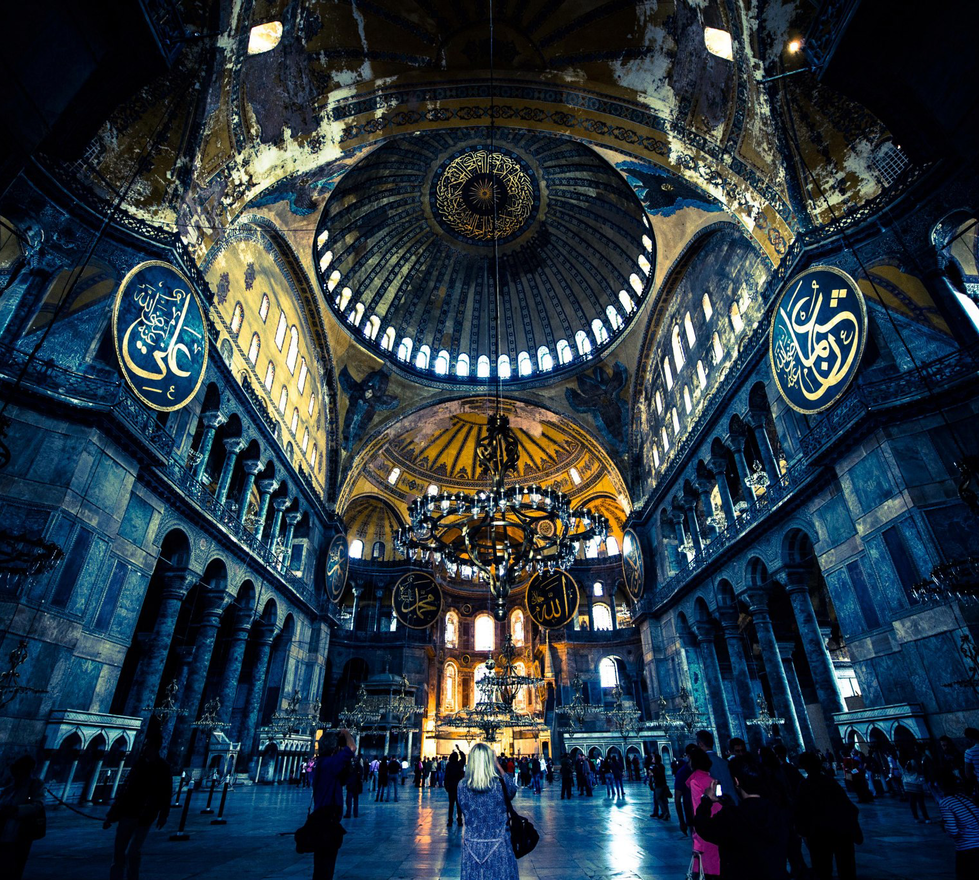
Haghia Sophia, Interior
The lament does more than grieve; it also reproaches. The sorrow of the Mother Church is directed not only toward the conqueror, but toward the fragmentation, hesitation, and indifference of Western Christendom. In this sense, the text reflects a late medieval moral theology in which disaster is interpreted as the consequence of disunity, spiritual negligence, and failure of responsibility.
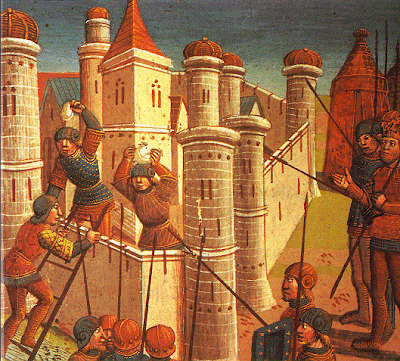
Fall of Constantinople by Dionysios Hatzopoulos
Beyond its immediate historical context, Lamentatio Sanctae Matris Ecclesiae Constantinopolitanae offers insight into how civilizations narrate loss. By allowing the Church to speak as a wounded mother, the text preserves the fall of Constantinople not merely as an event, but as a trauma embedded in cultural memory. It stands as a voice rising from the ruins of one world order, articulating grief at the very moment when medieval continuity gives way to an uncertain future.
The lament was composed by the medieval composer Guillaume Du Fay. His polyphonic motet, Lamentatio sanctae matris ecclesiae Constantinopolitanae, has survived to this day and continues to be performed by musicians such as Jordi Savall. Let us lend an ear.