
“It is certain…that ignorance, allied with power, is the most ferocious enemy justice can have.”
James Baldwin
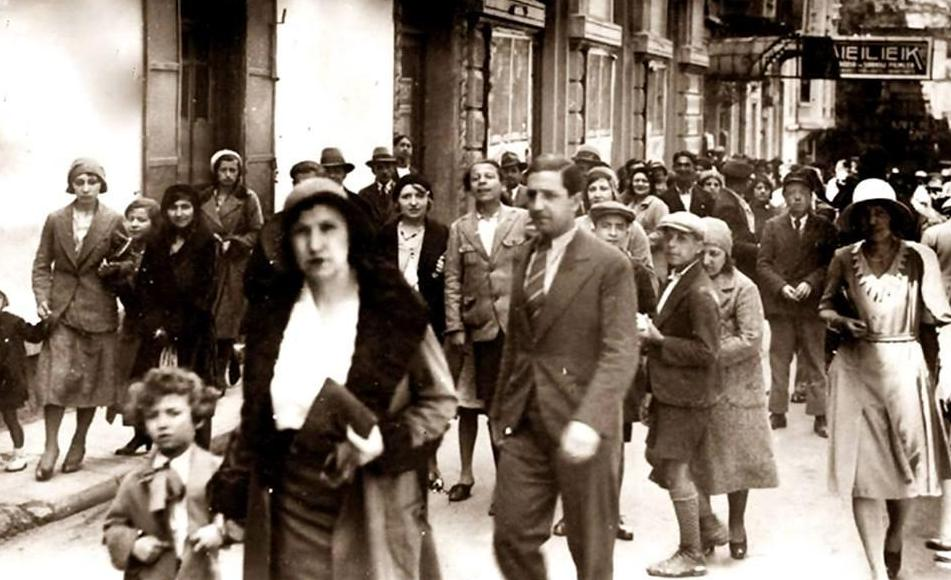
Pera, 1940s
In the first half of the twentieth century, Istanbul’s bourgeois culture lived in hotels, cafés, patisseries, and salons, places where economic capital translated into manners, language, and public life. Institutions such as the Tokatlıyan Hotels and Lebon Patisserie were among the clearest expressions of this world. They were not merely successful businesses but anchors of an urban bourgeois public sphere, sustained largely by non-Muslim citizens—Armenians, Jews, Greeks, and Levantines—whose capital and expertise had shaped the city for generations.
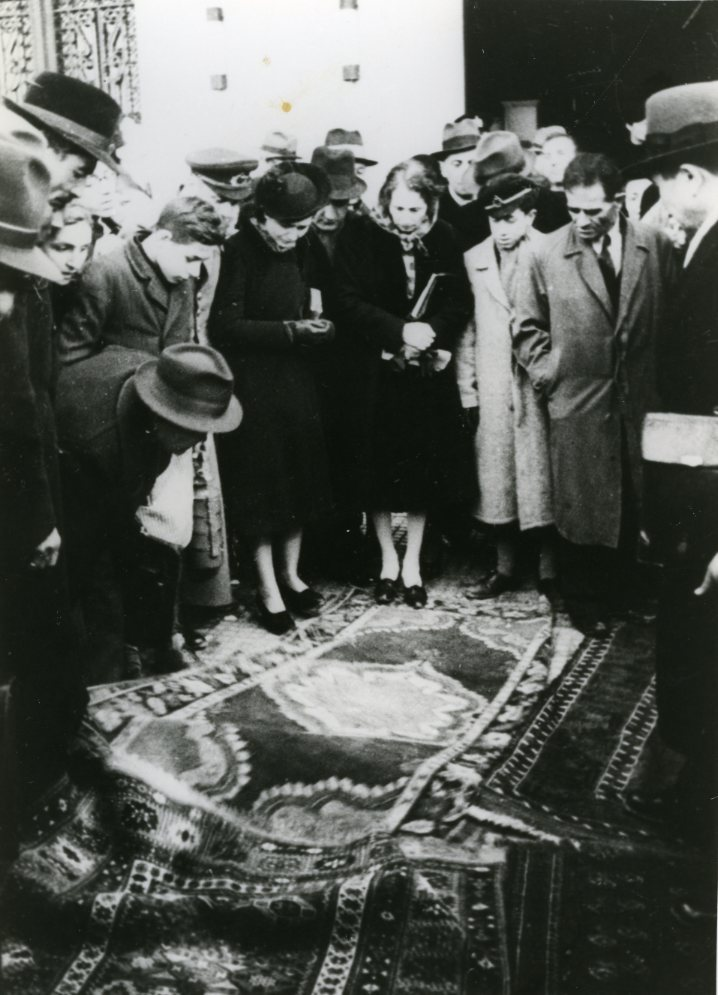
A photo from 1942 in Istanbul in which one can see the furniture and carpets of those who were unable to pay the Wealth Tax were sold at public auctions.
This world entered irreversible decline with the introduction of the Varlık Vergisi (Wealth Tax) in 1942. Officially presented as an extraordinary wartime tax to curb inflation and prevent profiteering during World War II, the law appeared neutral on paper. In practice, it functioned as a discriminatory mechanism of capital transfer, and nowhere more intensely than in Istanbul.
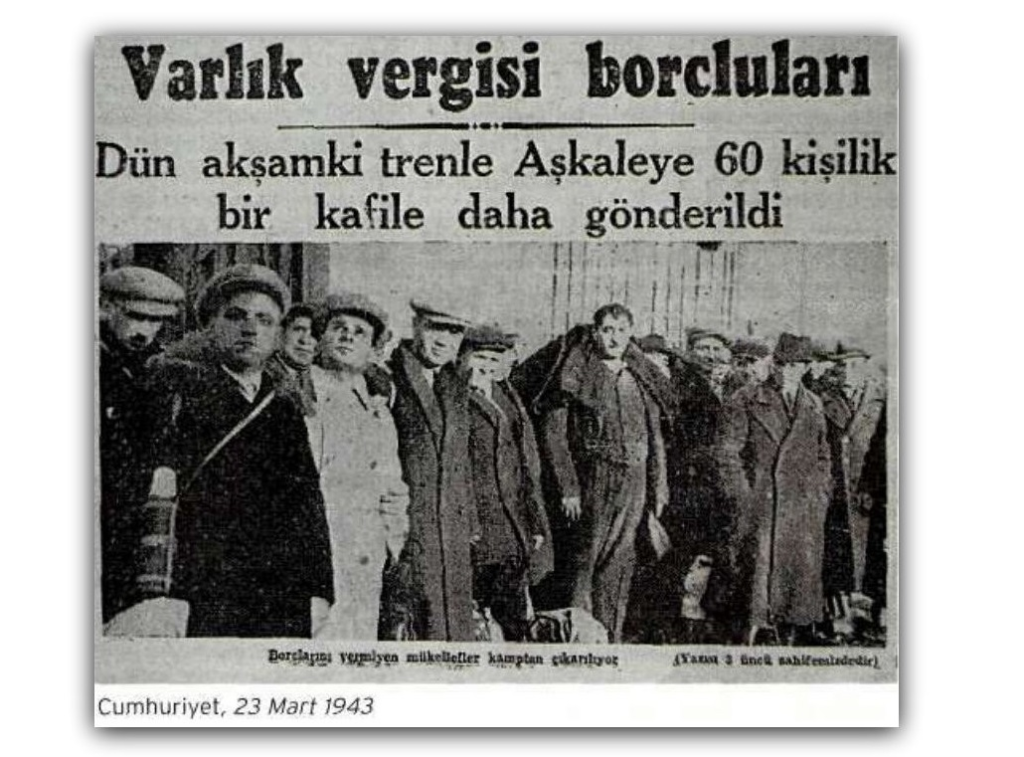
A tragic scene showing a group of 60 men sent to work camps in 1943
The tax was administered by local commissions with no transparent criteria, no right of appeal, and extremely short payment deadlines, often just fifteen days. Taxpayers were classified into categories: Muslims (M), non-Muslims (G), converts (D), and foreigners (E). This categorization was decisive. Non-Muslims, particularly in Istanbul, were assessed five to ten times more heavily than Muslims with comparable assets. For many, the sums demanded exceeded total liquid wealth, making payment structurally impossible.
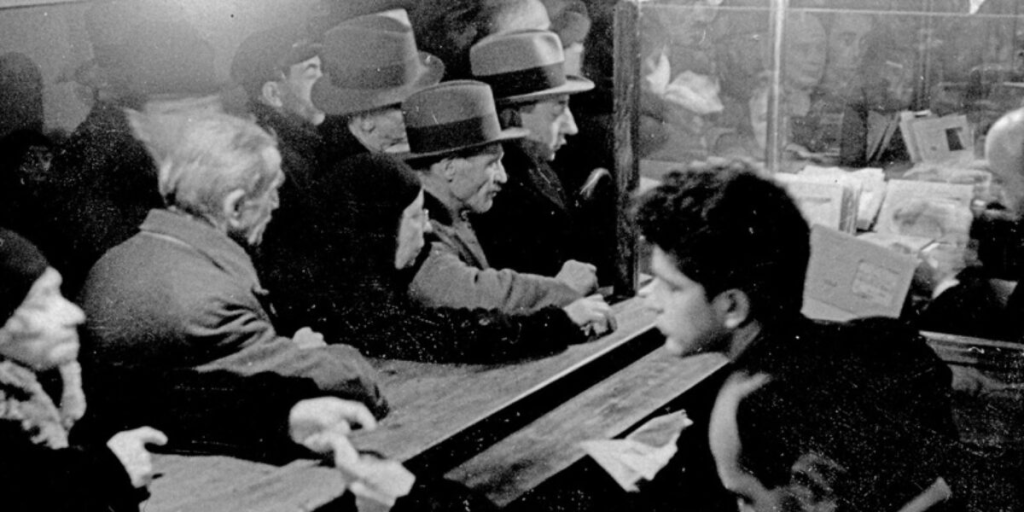
A line up of minorities rushing to pay the Wealth Tax, 1942
The consequences were swift and devastating. Minority citizens were forced to liquidate businesses, sell properties, and surrender goods at public auctions, often at a fraction of their value. Those unable to pay were sent to forced labor camps in eastern Anatolia, most notoriously Aşkale. Although the tax was abolished in 1944 and later acknowledged as unjust, the damage to capital, trust, and continuity was irreversible.
While Armenians and Greeks were deeply affected, Jews were especially exposed in Istanbul. They were highly visible in trade, wholesale commerce, textiles, and finance, precisely the sectors targeted by the tax. Moreover, wartime public discourse increasingly framed Jewish economic presence through familiar antisemitic tropes: profiteering, disloyalty, excess. The inclusion of a separate Dönme category, taxing even those legally Muslim but of Jewish origin, revealed that suspicion was ethnicized rather than purely religious. This was not genocidal antisemitism, but a form of economic and civic exclusion, aimed at removing Jews from the commanding heights of the urban economy.
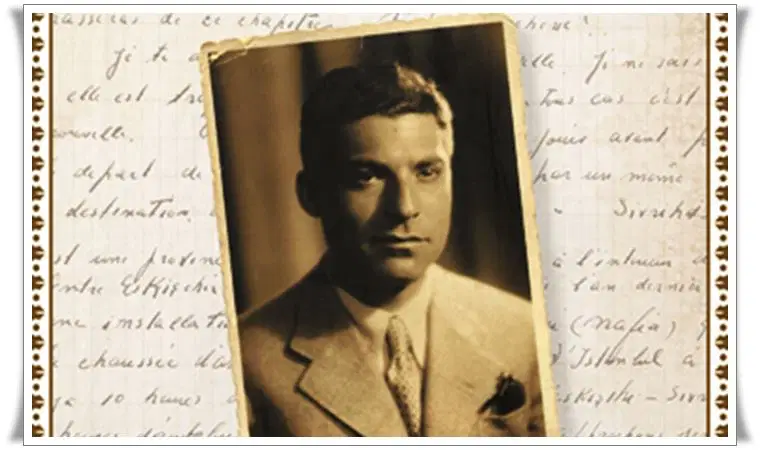
Leon Bahar
A jewish merchant Leon Bahar recalls those days with the following words:
‘The course of events and the government’s mode of conduct have thoroughly departed from reason and conscience. On the one hand, there is incessant talk of rebuilding the world from now on upon principles grounded in human freedom and humanism. Yet on the other hand, the innocent and the helpless are being pursued and attacked. Just look at the principles and beliefs on which the humanist worldview is supposedly founded. It is well known that the strong prevail over the weak. To them, whether people are innocent or not is of no importance at all… Their only concern is to demonstrate before the nation that they are powerful, to prove that they can crush anyone who comes before them, starting with the weakest. This is nothing other than an inhuman frailty, a baseness. But what can we poor wretches do? One might think that the conditions imposed by discipline in a military order are temporary. Yet that such a tragic, such a terrible event could occur in a civilian state and in civilian life is something I would not have believed even if I had seen it in a dream. And yet it happened. It follows, then, that the fundamental principles of civilization, and the philosophers who wrote them, have been deceiving the world all along. Quietly, they are preparing new victims to deceive. This latest storm of betrayal has struck us. If we manage to remain strong and patient, one day the rule of law will surely prevail.’
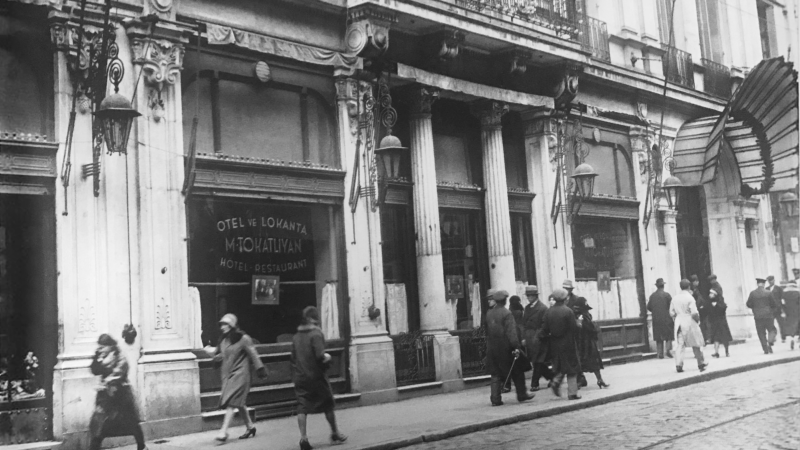
The Tokatlıyan Hotel in Pera
Death of Beyoğlu is the death of İstanbul.’
Demir Özlü
It is within this transformed landscape that the fate of Tokatlıyan and Lebon becomes legible.
The Tokatlıyan Hotels, founded by Armenian entrepreneur Mıgırdiç Tokatlıyan, once embodied Pera’s international bourgeois ideal: multilingual, orderly, outward-looking. Although their decline had begun earlier, the post-1942 environment marked by the erosion of minority capital and legitimacy made recovery impossible. The building survived; the institution did not.
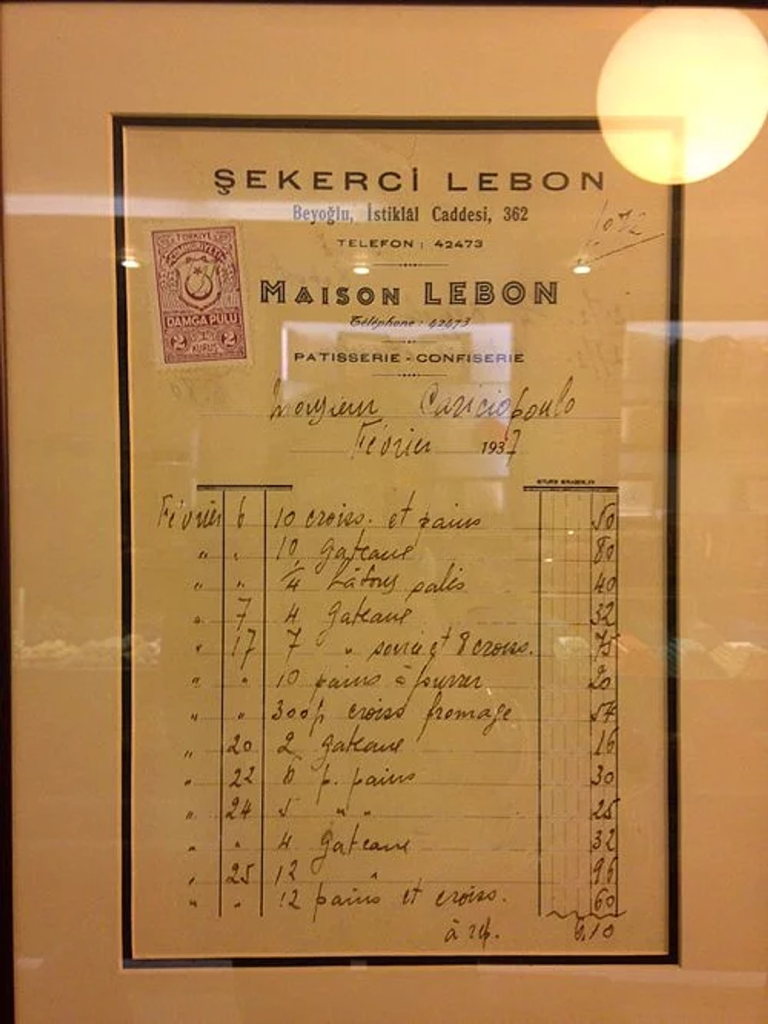
Lebon Patisserie tells a quieter but equally revealing story. It was not confiscated, nor directly destroyed by the tax. Yet it depended on a bourgeois class whose economic base and social confidence were steadily undermined. Lebon thrived on everyday rituals such as meeting, reading, lingering that require stability and intergenerational continuity. Its eventual disappearance signals not a market failure but the evaporation of the social world that sustained it.
Together, Tokatlıyan and Lebon stand as urban symbols of a deeper transformation. The Varlık Vergisi (Wealth Tax) did not merely redistribute wealth; it dissolved the conditions under which Istanbul’s bourgeois culture could reproduce itself. Capital remained, buildings remained, consumption continued but continuity was broken.
Istanbul did not simply become poorer. It became less layered, less plural, and more fragile in its institutions. The city moved on, but it did so without the bourgeois culture that had once given its streets density and duration.
Seen this way, Tokatlıyan and Lebon are not nostalgic footnotes. They are symptoms of a historical moment when economic policy, nationalism, and antisemitic imaginaries converged to quietly but decisively reshape Istanbul’s social and economic life.
The city endured. But a way of inhabiting it did not.
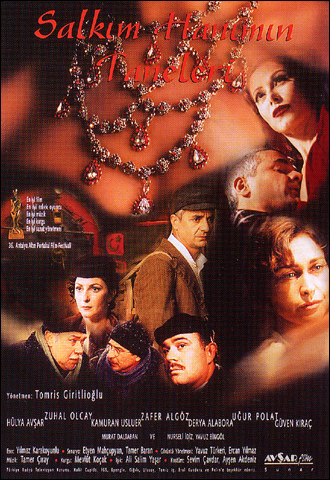
The social and personal devastation caused by the Varlık Vergisi (Wealth Tax) has been vividly represented in popular culture, most notably in the 1999 Turkish film Salkım Hanımın Taneleri, which dramatizes the forced liquidation and humiliation experienced by minority families. Make sure to watch it to have a deeper understanding of how 1940s Turkey was no less innocent than its contemporaries in wartime Europe.