
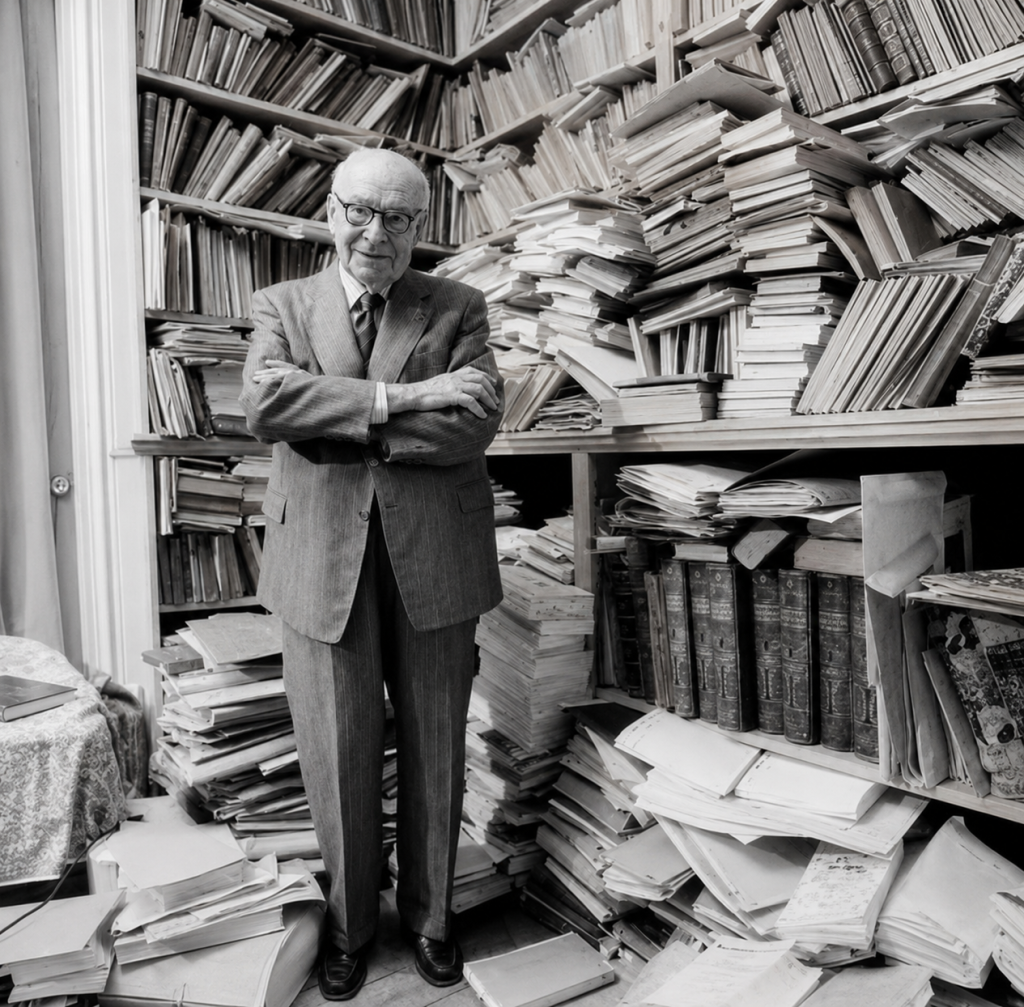
Georges Dumézil (1891-1986) in his later years
In 1925, a young French scholar arrived in Istanbul at a moment when the city itself was learning to speak a new language.
The Ottoman Empire had fallen. The Turkish Republic had been proclaimed only two years earlier. Ankara was the new political capital, but Istanbul remained something more elusive: the old imperial city, a wounded cosmopolis, a place where languages, religions and displaced peoples continued to live side by side. Into this world came Georges Dumézil, not yet the famous comparative mythologist he would later become, but a brilliant, restless philologist looking for a place outside the narrow corridors of the French academy.

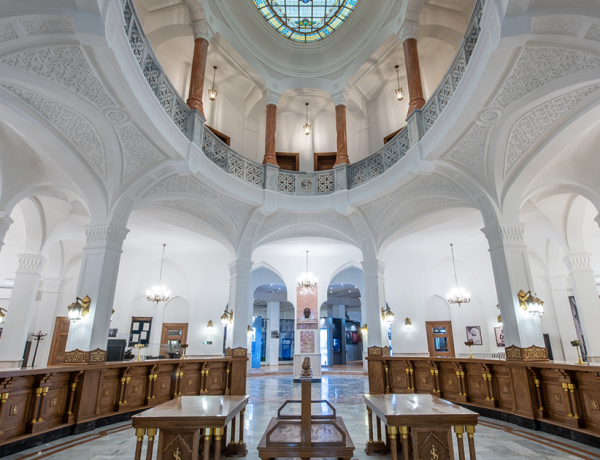
He had been invited to teach the History of Religions at Istanbul University, then still carrying the legacy of the Darülfünun. Between 1925 and 1931, Dumézil lived and worked in Istanbul. These years would become decisive. They did not simply give him a job; they gave him a world.
Dumézil is remembered today mainly for his theory of the “three functions” in Indo-European societies: sovereignty, warfare and fertility. According to him, ancient Indo-European myths often organized the cosmos around these three symbolic orders. Kings, priests, warriors, farmers, gods of law, gods of battle, gods of abundance—all belonged to a deep structure of imagination that could be traced from India to Rome, from Scandinavia to the Caucasus.
But before the grand theory, there was Istanbul.
The Istanbul of the 1920s was not only Turkish, Greek, Armenian, Jewish, Levantine or Muslim. It was also Circassian, Abkhaz, Ossetian and Ubykh. After the Russian conquest of the Caucasus in the nineteenth century, many Caucasian peoples including my ancestors had been displaced into Ottoman lands. Their languages and oral traditions survived in villages, families, memories and songs. For Dumézil, this was a revelation. In Anatolia, he encountered living mythologies—fragments of worlds that had not yet been fully absorbed into written history.
This is where his Turkish years become so fascinating. Dumézil did not write primarily about Ottoman palaces, mosques or Republican reforms. He wrote from Turkey, using Turkey as an archive of exiled voices. He studied Caucasian languages and myths, especially the Ubykh language, which would later become extinct. His 1931 work La langue des Oubykhs helped bring Ubykh to the attention of the scholarly world. Later, his collaboration with Tevfik Esenç, the last fluent speaker of Ubykh, would help preserve one of the most complex sound systems known to linguistics.
There is something almost cinematic in this image: a French intellectual wandering through the newly Republican city, teaching the history of religions by day, listening by night for the last echoes of vanished mountain peoples. Istanbul, usually imagined as the meeting point of East and West, becomes here something even stranger: a refuge for lost Caucasian cosmologies.
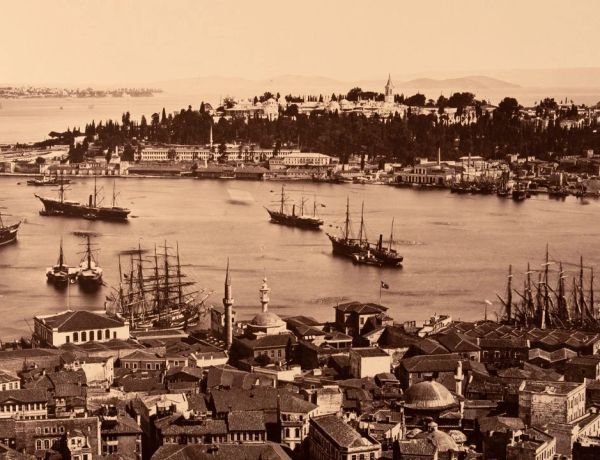
Dumézil’s Istanbul was not the city of tourist postcards. It was not only Hagia Sophia, the Bosphorus or the melancholy of empire. It was a listening post. Through Istanbul, he gained access to the Nart sagas, the heroic legends of the Ossetians and other Caucasian peoples. These stories of warriors, feasts, magical objects, heroic births and divine conflicts would become essential to his later reconstruction of Indo-European myth.

Istanbul, 1920s
In this sense, Istanbul did not merely host Dumézil. It formed him.
He arrived as a young scholar trained in philology and comparative religion. He left in 1931 for Uppsala, and later returned to France, where he would eventually become one of the great names of twentieth-century intellectual life. Yet the Turkish years remained embedded in his work. He continued to return to Turkey for fieldwork, and his studies of Caucasian traditions remained one of the foundations of his scholarship.
There is also a deeper historical irony. In the 1930s, Turkey would become a haven for many German and Austrian scholars fleeing Nazism. Dumézil belonged to an earlier wave: European scholars invited into the young Republic as part of its modernization of higher education. He came before the great university reform of 1933, at a time when Istanbul’s intellectual institutions were still suspended between Ottoman inheritance and Republican ambition.

That suspension suited him. Dumézil himself was a scholar of survivals—of ancient structures living beneath new forms, of mythic patterns hidden inside language, ritual and legend. Istanbul in the 1920s was precisely such a place: modernizing rapidly, yet full of older voices; politically transformed, yet haunted by empire; officially secularizing, yet saturated with religious memory.
This is why Dumézil’s Istanbul matters. It reminds us that the city was not only a setting for political transition. It was also an intellectual crossroads where the deep past could still be heard—not in monuments alone, but in endangered languages, refugee communities and oral tales carried across mountains and seas.
If Paris gave Dumézil his education, Istanbul gave him his ear.
And perhaps that is the most beautiful way to remember him: not only as the architect of a grand theory of Indo-European mythology, but as a young French scholar in 1920s Istanbul, listening carefully while old worlds spoke their last.