
“Thutmose III, sovereign of Upper and Lower Egypt of the Eighteenth Dynasty, having offered his sacrifice to the god Amun, brought all seas and rivers under his dominion with the aid of Horus. In celebration of the thirtieth year of his reign, he caused this pillar to be made and erected, so that it might stand for the many festivals yet to come.”
From the inscription on the Egyptian Obelisk in Sultanahmet
At the center of Istanbul’s ancient hippodrome, amid Ottoman fountains and Byzantine monuments, stands one of the city’s most unexpected treasures: a genuine Egyptian obelisk carved more than 3,500 years ago for a pharaoh who ruled long before Constantinople, Christianity, or even the founding of Rome.

How did a monument born on the banks of the Nile end up in the heart of the former Byzantine capital?
The answer is a remarkable story of empire, prestige, and the enduring power of symbols.
A Monument Born in the Age of Pharaohs
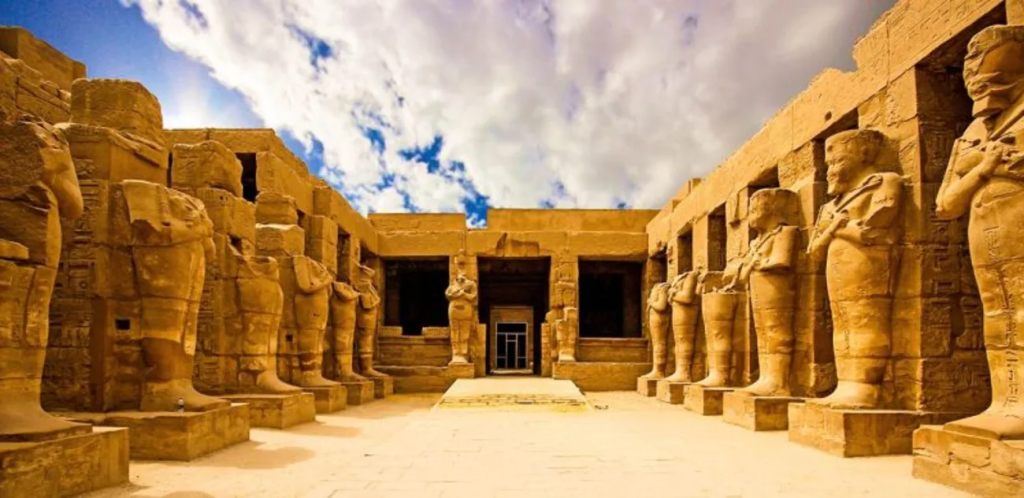
Temple of Karnak
The obelisk that rises today in Istanbul’s Sultanahmet Square was originally commissioned by Thutmose III, one of ancient Egypt’s greatest warrior-kings. Carved from a single block of pink granite around 1450 BCE, it was erected at the great temple complex of Karnak Temple Complex to celebrate the pharaoh’s military victories and divine authority.
Like all Egyptian obelisks, it was more than an architectural ornament. Its tapering form symbolized a ray of the sun god Ra, linking earthly kingship to cosmic order. The hieroglyphs carved into its sides proclaimed Thutmose III as the beloved ruler chosen by the gods.
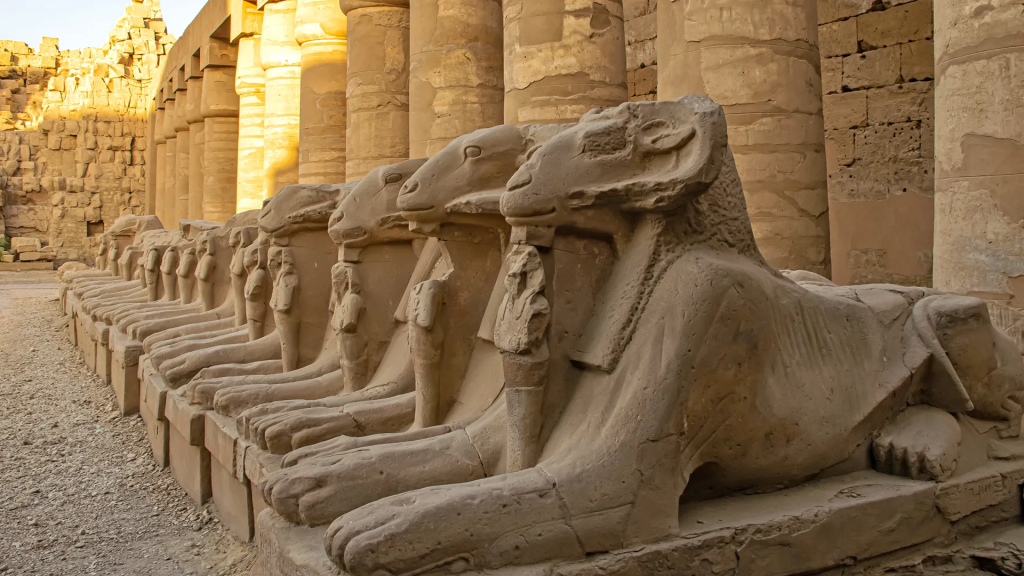
Temple of Karnak
For nearly a millennium, the monument stood beneath the Egyptian sun.
From Egypt to the Roman World
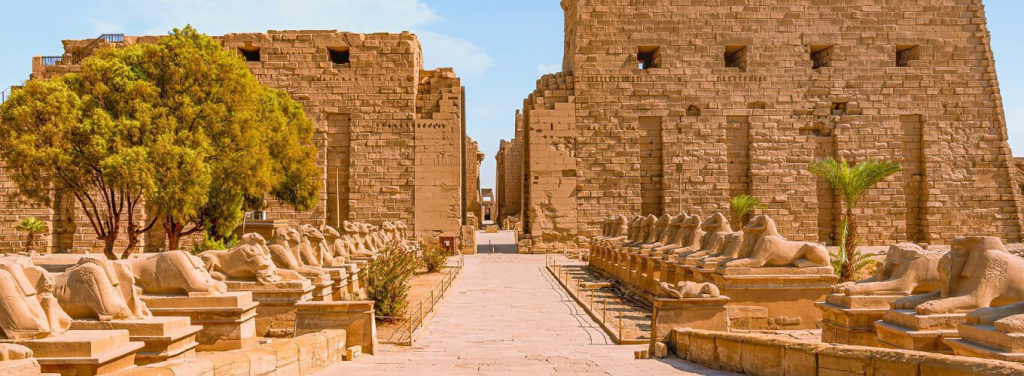
Temple of Karnak
The Romans admired Egyptian civilization with an almost religious fascination. After the conquest of Egypt in 30 BCE, emperors began transporting obelisks across the Mediterranean as trophies of imperial power.
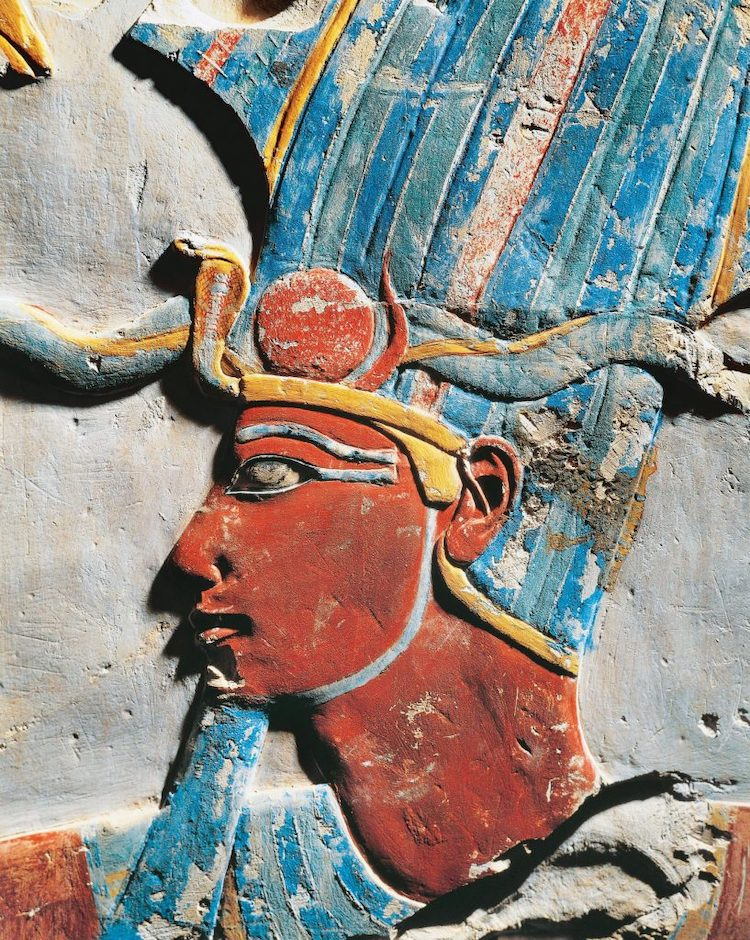
Thutmose III
By Late Antiquity, Egyptian monuments adorned the great cities of the empire. The obelisk of Thutmose III was eventually moved from Karnak to Alexandria, awaiting a new destiny.
That destiny arrived under Theodosius I.
The Journey to Constantinople
When Constantine founded Constantinople in 330 CE, he intended it to rival Rome itself. The city needed monuments worthy of an imperial capital, and later emperors eagerly imported the symbols of earlier civilizations.
Around 390 CE, Theodosius I ordered the Egyptian obelisk to be transported to Constantinople and erected in the city’s vast hippodrome—the arena where chariot races, political ceremonies, and imperial rituals unfolded before tens of thousands of spectators.
The journey was a feat of ancient engineering. The original obelisk measured nearly thirty meters in height, but only its upper portion survived the transport. The monument that stands today rises about nineteen meters above its marble pedestal, yet even in its reduced form it remains among the oldest human-made objects in Istanbul.

The emperor added a new Roman foundation decorated with reliefs showing the obelisk’s installation. One scene depicts Theodosius himself presiding over the ceremony, linking Roman imperial authority to the prestige of ancient Egypt.
The message was unmistakable: the rulers of Constantinople were heirs not only to Rome, but to the civilizations that preceded it.
An Empire Built Upon Earlier Empires
The presence of an Egyptian monument in Istanbul reveals a deeper truth about the Byzantine world.
Constantinople was never merely a Greek or Roman city. It was a crossroads where civilizations met, absorbed one another, and claimed each other’s legacies. Egyptian obelisks, classical temples, and Christian churches coexisted within a single urban landscape.
To Late Roman emperors, possessing an Egyptian monument was an act of cultural succession. By relocating these ancient stones, they symbolically transferred the glory of the Nile to the Bosporus.
The obelisk thus became a statement of universal empire: a declaration that Constantinople stood at the center of human history.
The Ottoman Encounter
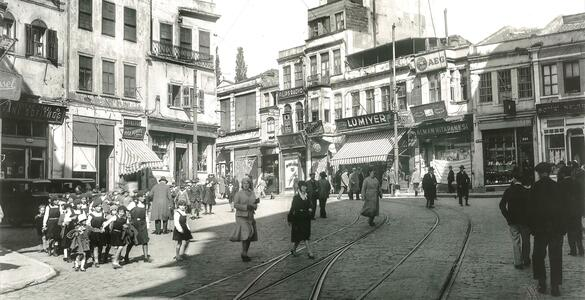
When Mehmed II conquered Constantinople in 1453, the Egyptian obelisk remained standing in the former hippodrome, which gradually evolved into the Ottoman At Meydanı.
Remarkably, the Ottoman rulers preserved the monument. Unlike many ancient structures elsewhere in the world, the obelisk continued to dominate the square for centuries.
Travelers from Europe recorded their amazement at finding hieroglyphs in an Islamic imperial capital. The monument had outlived the pharaohs, the Roman emperors, and the Byzantine Empire itself, becoming part of the layered identity of Ottoman Istanbul.
Its survival illustrates one of Istanbul’s most distinctive qualities: the city rarely erases its past completely. Instead, successive civilizations build around earlier inheritances, allowing fragments of distant worlds to remain visible in everyday life.
Reading the Stone Today
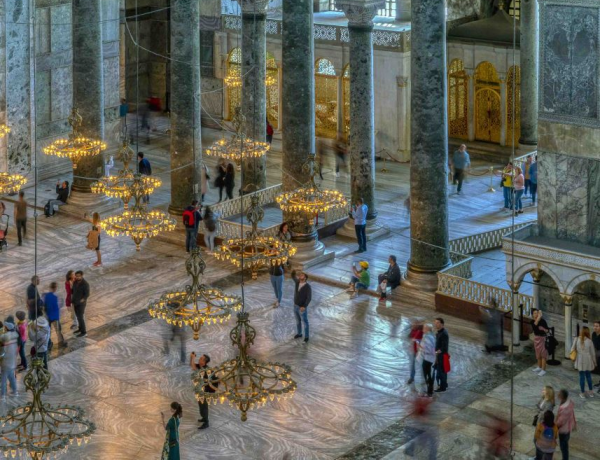
Modern visitors walking through Sultanahmet encounter the obelisk alongside the Blue Mosque, the Hagia Sophia, and the German Fountain.
Few places on earth compress so many eras into a single public square.
The hieroglyphs carved by Egyptian artisans around 1450 BCE remain visible. They were already ancient when Socrates lived, venerable when Christ was born, and nearly three thousand years old when Ottoman sultans rode past them on ceremonial processions.
“The pharaoh, bearer of the strength, wealth, powerful love, and reverence granted by Horus, who spreads across the world the golden colors he possesses at sunrise, possessor of the crowns of Lower and Upper Egypt and chosen by the Sun himself, had this monument made for his father Ra.”
The stone has witnessed more empires than perhaps any living city around it.
Afterthought
So what is an ancient Egyptian obelisk doing in the heart of Istanbul?
It is there because empires inherit one another. Because rulers seek legitimacy through the monuments of the past. Because great cities accumulate civilizations rather than replacing them entirely.
The Obelisk of Theodosius is not an alien object stranded in an unexpected place. It is a perfect symbol of Istanbul itself: a city where Egypt, Rome, Byzantium, and the Ottoman world continue to stand side by side, speaking across thousands of years.
In the shadow of its weathered hieroglyphs, one understands that Istanbul has never belonged to a single civilization. It has always been, in the truest sense, a meeting place of worlds.
Note that the video is embedded via YouTube and all rights belong to the respective rights holders.