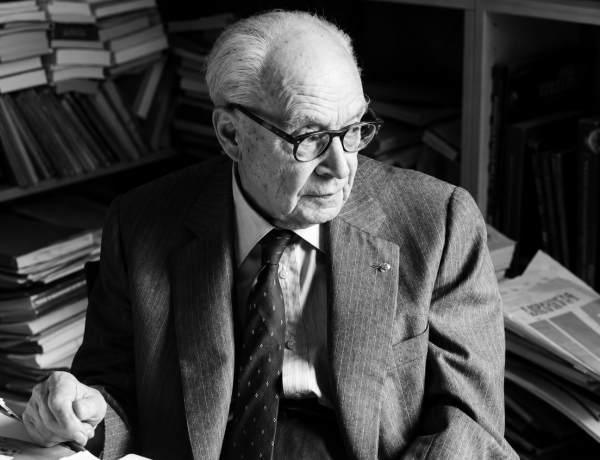

‘Istanbul…the constant beating of the wave of the East against the rock of the West.’
Susan Moody

Haghia Sophia (visual is taken from kulturveyasam.com)
Istanbul’s culture is a unique blend of Eastern and Western traditions. Constantinople—the former name of modern-day Istanbul—was once the capital of one of the largest and longest-lasting empires the world has ever known: the Byzantine Empire. When the Ottomans conquered this eternal city, which had been the heart of the Eastern Roman Empire for over a thousand years, the ground seemed to shake for its inhabitants. Suddenly, the city was ruled by the Turks, who came from a completely different religion, culture, and heritage. Yet while the Ottomans captured Constantinople, the city also captured them through its sights, sounds, and flavors. The Turks, originally children of the Central Asian steppes, were forever transformed by Constantinople.

Hagia Sophia
For over a thousand years, Turkish architects have drawn inspiration from the world’s largest cathedral, Hagia Sophia, and began constructing their own mosques in imitation of its eternal glory. Turkish music was deeply influenced by Orthodox religious chants, while Turkish cuisine absorbed elements from the culinary traditions of the Romans.
After the conquest, the Turks began to “Ottomanize” Constantinople, calling it Konstantiniyye, meaning “City of Constantine.” It is important to note that Sultan Mehmed II (Fatih Sultan Mehmet) respected the legacy of Constantine and the Roman Empire, preserving both the city’s name and that of Hagia Sophia. The modern name Istanbul derives from the Greek phrase eis tan polin, meaning “to the city,” a common expression among local Greeks. This name gradually replaced Konstantiniyye during the early Republican era in the 20th century.
When Mehmed the Conqueror captured Constantinople in 1453, he was struck by the city’s poverty and diminished population. To revive it, he brought new inhabitants from across the Ottoman lands. His sadness at the sight of the ruined Byzantine palaces even inspired lines of poetry. Determined to restore the city’s former grandeur, he encouraged not only Turks but also Jews, Armenians, and other cultural communities of the empire to settle there. Thus, in the 15th century, Constantinople’s organizing principle became the cultivation of a truly multicultural city—reflecting the diverse character of the Ottoman Empire itself, with its many ethnicities, languages, sounds, flavors, and traditions.
Throughout Ottoman history, Istanbul remained the empire’s capital and, as such, was always its most progressive center—a meeting ground for cultures, traditions, and religions. This cosmopolitan environment gave rise to a highly refined urban culture. To be called an “İstanbullu” (an Istanbulite) meant to embody the most sophisticated tastes, an elegant lifestyle, and the most polished use of Turkish.
Despite the erosion of Istanbul’s unique culture after the 1960s, due to large-scale migration from Anatolia, the city has retained its distinct identity. It remains the most progressive place in Turkey, a magnet for new ideas and practices, and the destination where young and talented people flock in search of better education, greater freedom, and broader opportunities.
Even today, Istanbul continues to stand at the crossroads of East and West—a meeting point where oriental and occidental cultures coexist, sometimes in harmony, sometimes in tension, but always side by side.
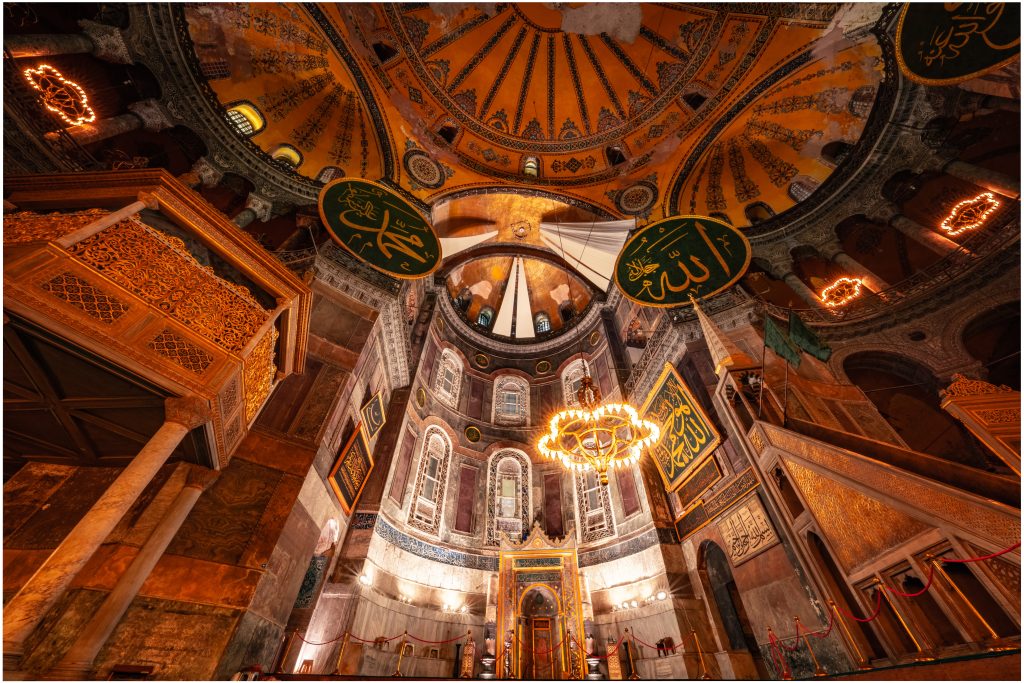
Hagia Sophia’s Interior where Christianity meets Islam
If you want to hear the lush resonances of the ancient Hagia Sophia Cathedral, listen to the haunting echoes of Byzantine chants that once filled its vast dome: