

Modern day Istanbul is home to the legacy of Ottoman Jewels. These jewels represent a centuries-old tradition that reflect the tastes of our ancestors. As a maximalist at heart, I am fascinated by these jewels. Here are three distinct Ottoman styles that have been luring Turkish women for centuries.
One of my most favourite of these styles is Divanhane çivisi which is a term in Ottoman jewelry art. It refers to a type of ring setting shaped like a nail head (a slightly domed surface) that is fully set with diamonds, the largest one in the center. The style reflects Ottoman taste for symmetry, fullness, and the interplay of central and surrounding stones. Today, you can still find rings with this elegant style in Istanbul’s jewelry stores, antique dealers and auctions. Here is a fine example.
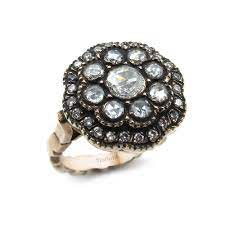
Here is a close up look at a Divanhane Çivisi diamond ring from Emel Jewelry.
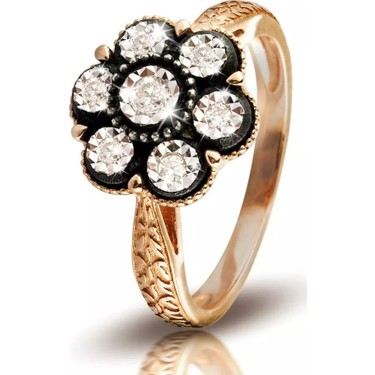
The other popular style for centuries is the rose shape. Ottomans simply loved the rose shape using it widely in their jewelry and fabrics. In Islamic mysticism, the rose symbolized divine beauty, love, and the soul’s longing for God. Poets and calligraphers often compared the rose to the beloved or the divine. Jewelry featuring roses highlighted refinement and status: wearing such pieces showed taste and sophistication. Flower shape was popular in rings, brooches, necklaces, and hair ornaments, especially for elite women and in ceremonial settings. Today, millions of women without status, class or age distinction are drawn to it and Istanbul’s jewelry stores offer wide selections of this style.

Pear-shaped rings were also popular in elite Ottoman jewelry: worn by women and sometimes high-ranking men. Pear-shaped gems were particularly admired for elongating the finger visually, adding both grace and prestige. You can see a rich variety of pear-shaped diamond rings in Istanbul’s jewelry stores.
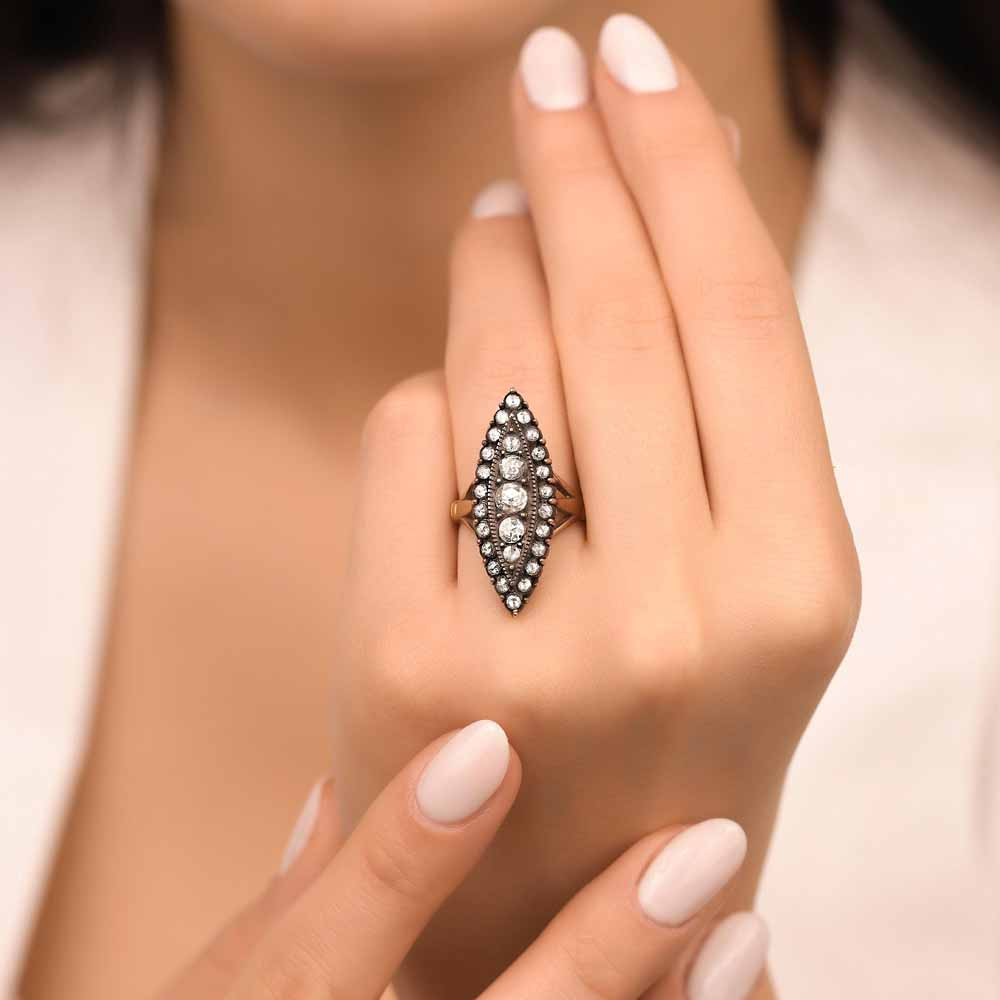
Visual is taken from larispirlanta.com
I want to end with a final note. One can still find Ottoman wedding rings in Istanbul’s jewelry stores. ı admit that this was quiet a surprise for me when I learnt it. Here you can see the Ottoman wedding ring of the 19th century that is still alive and well although many Istanbulites do not know its significance as a wedding ring.
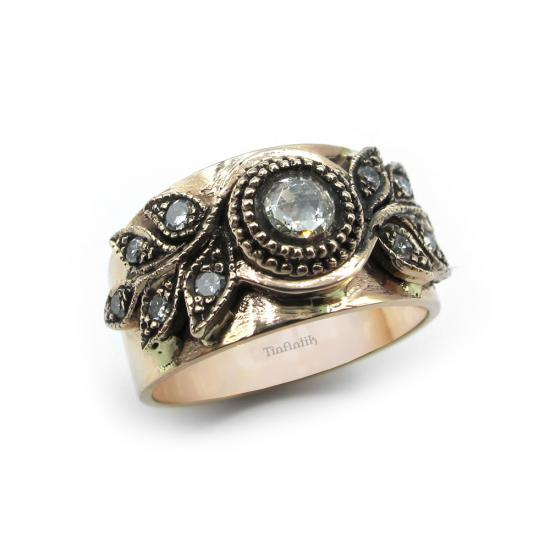
And don’t forget that most of these diamond jewels are still crafted by hand by masters of Istanbul’s jewelry!


