
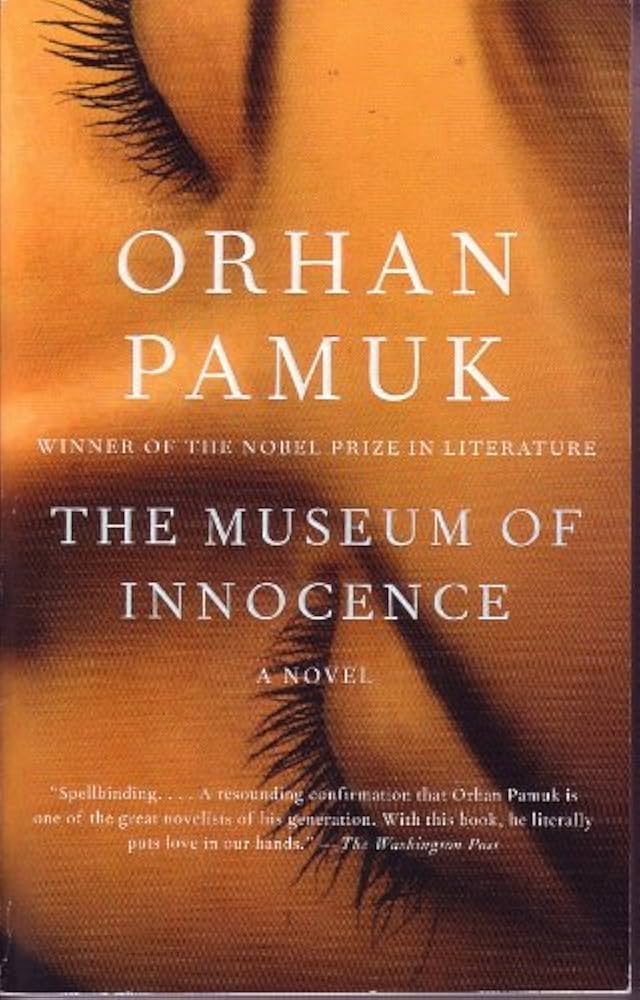
Orhan Pamuk’s The Museum of Innocence (Masumiyet Müzesi) is one of his most beloved novels, blending a deeply emotional love story with a meditation on memory, desire, and the culture of 1970s–80s Istanbul. The novel follows Kemal, a wealthy Istanbul businessman, and his obsessive love for his distant relative Füsun. Pamuk’s narrative is both intimate and symbolic: Kemal collects countless personal objects tied to Füsun, her earrings, hair clips, even cigarette butts as tangible fragments of affection and loss. This obsessive cataloguing of love and memory mirrors the real-life museum that Pamuk established in Istanbul’s Çukurcuma district, where artifacts from the novel are displayed as if glimpses into its fictional world, blurring the line between art, literature, and lived experience. The book’s richly detailed depiction of class, nostalgia, and longing has resonated with readers worldwide, contributing to its translation into more than 60 languages and its reputation as a modern classic.
Now, Netflix has brought this poignant tale to the screen in a highly anticipated Turkish adaptation set to premiere globally on February 13, 2026. The nine‑episode mini‑series stays true to the novel’s core narrative, exploring love, obsession, and missed opportunities in Istanbul’s shifting social landscape while bringing Pamuk’s evocative storytelling into a visual medium. Directed by Zeynep Günay and written by Ertan Kurtulan, and starring Selahattin Paşalı as Kemal and Eylül Lize Kandemir as Füsun, the production uses authentic Istanbul locations and meticulous period detail to evoke the novel’s atmosphere. Netflix’s series aims to capture not just the romance at its heart but also the cultural texture of the era that so deeply shapes the characters’ lives. The adaptation reflects Pamuk’s own involvement in ensuring fidelity to his work, an effort that has amplified excitement among both readers and new audiences eager to experience this rich story in a new form.

I really hope Museum of Innocence has not been ‘Netflixed’ and stripped of its literary depth and turned into ‘another’ love story.