
Today, a spoon is one of the most anonymous objects in a household: inexpensive, interchangeable, and kept by the dozen in a kitchen drawer. In Ottoman dining culture, however, the spoon was a personal possession. People brought their own spoons to meals and gatherings, sometimes carrying them in specially made cases or pouches.
The reason becomes clearer when we consider the traditional Ottoman sofra. Meals were commonly eaten around a low table or tray, with dishes placed communally in the center. Forks and table knives were not central to this arrangement. Many foods were eaten with the fingers and bread, while spoons were used for soups, pilafs, hoşaf and other dishes.
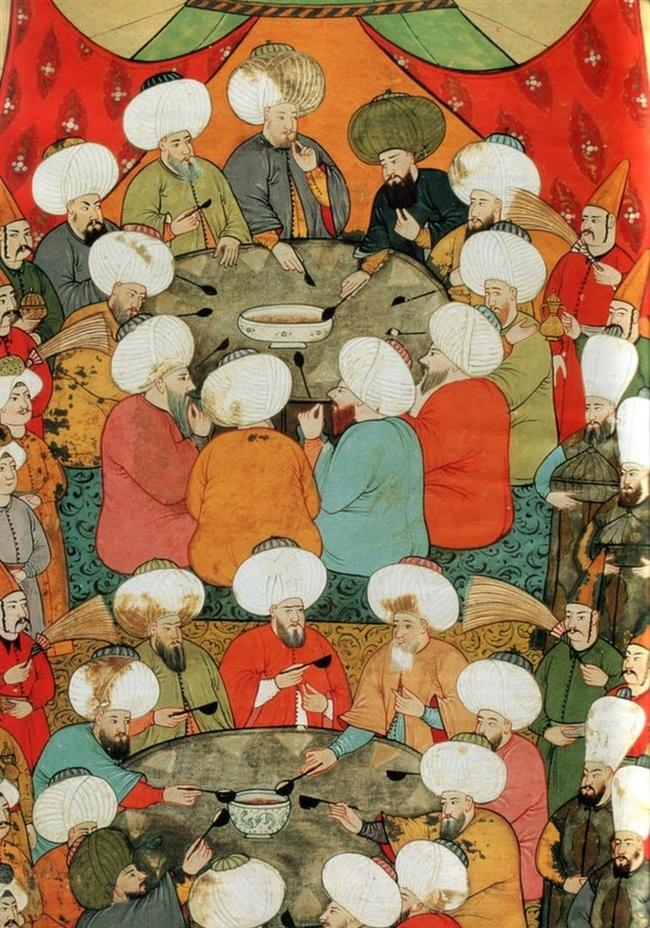
The logic of the Ottoman table was therefore strikingly different from our own:
The food was shared; the spoon was yours.
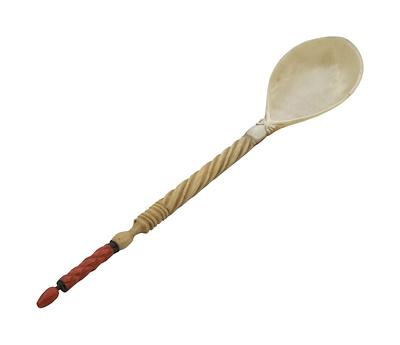
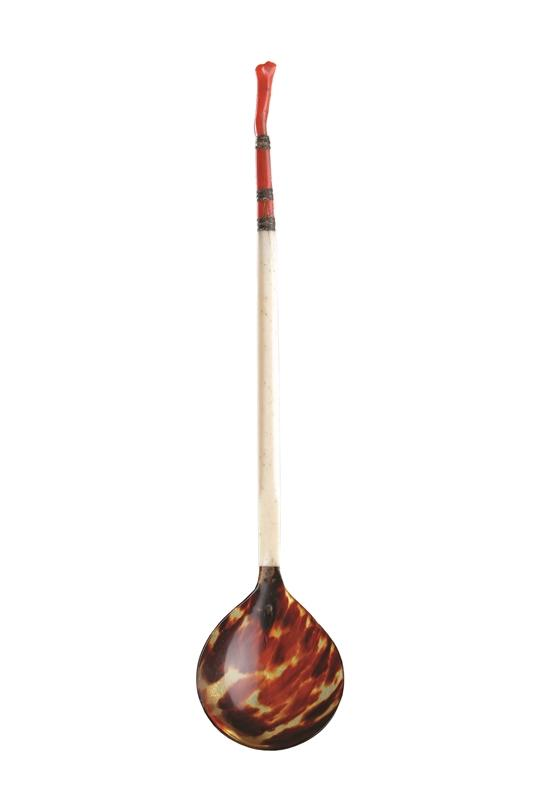
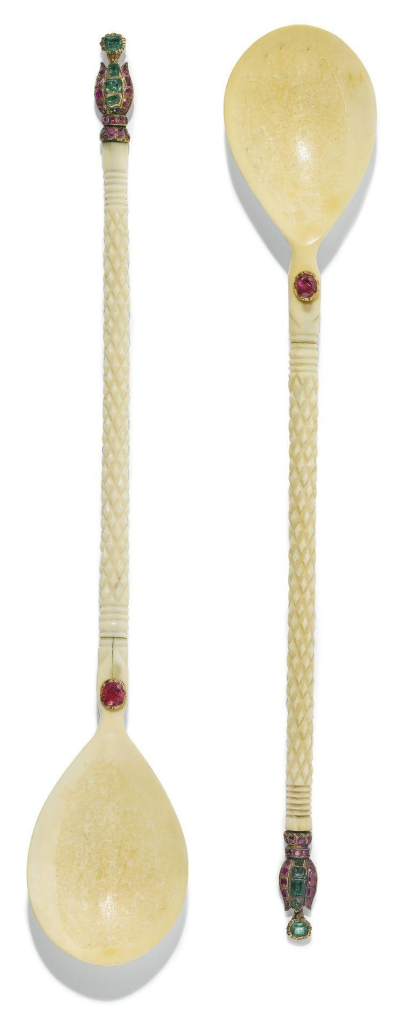
Spoons were also objects of craftsmanship and, in wealthier circles, of considerable value. Alongside ordinary wooden, horn and bone examples were finely crafted spoons made from or decorated with ivory, mother-of-pearl, tortoiseshell and coral. Different forms were produced for soup, pilaf, hoşaf and sweets. Some surviving examples resemble pieces of jewellery more than kitchen utensils.
One particularly evocative testimony comes from Leyla Saz, who spent part of her childhood in the Ottoman imperial palace. In her recollections of harem life, she describes women coming to meals with their own spoons and towels, their spoons protected from dust in small cases or pouches.

A fine example of Ottoman spoon pouch
This does not mean that Ottoman households had no spoons for guests. Ottoman hospitality was highly developed, and customs naturally differed according to period and social class. The important distinction is that, unlike the modern place setting in which the host provides each diner with an identical set of utensils, the spoon itself could belong to the person eating.

And that makes the spoon an unexpectedly revealing historical object. Its material could indicate wealth, its decoration could express taste, and its case tells us that it travelled with its owner.

Perhaps this is what makes the Ottoman spoon so fascinating. It belonged to a dining culture organized around different ideas of sharing, ownership and intimacy. At a communal table, the food might belong to everyone, while the object that passed between dish and mouth remained distinctly personal. A beautifully carved spoon tucked into its case was therefore more than a utensil: it was part of what a person carried into the social world. The meal was shared, but the spoon had an owner.
visuals are taken from alifart.com, yemek.com and bayrakmuzayade.com.