
Your lips pour wine, secretly, to your lovers;
only the intoxicated understand it — it remains unseen to others.’Bâkî, 16th Century
If you are curious about how Ottomans experienced and expressed desire, here is an interesting book for you. You will encounter a far more colourful world than you might imagine, as the pre-modern Ottoman world—whose imperial centre was in Istanbul—was more vibrant, fluid, and multi-layered than any “modern” person can easily grasp.
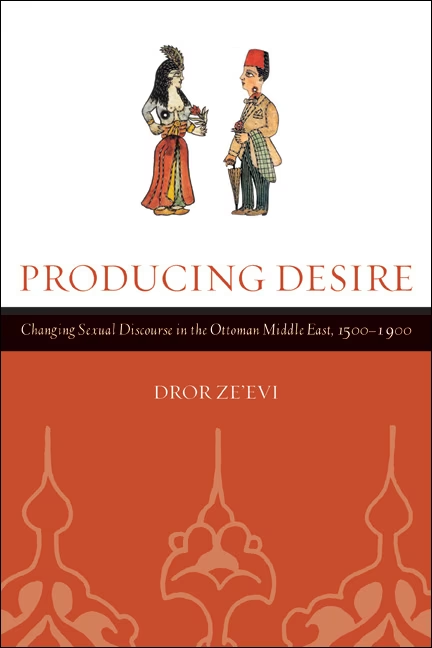
Dror Ze’evi’s Producing Desire: Changing Sexual Discourse in the Ottoman Middle East, 1500–1900 (2006) is definitely a study that reorients how we think about sexuality, not as a stable or timeless human fact, but as something historically produced through language, institutions, and shifting regimes of power.
At the heart of Ze’evi’s argument is the idea that “desire” in the Ottoman world was never a fixed category. Across the centuries he examines, the ways people spoke about sexuality, regulated bodies, and understood intimacy changed in significant ways. These changes were not isolated cultural evolutions but were deeply connected to broader transformations in governance, medicine, religion, and especially the growing impact of European modernity on Ottoman intellectual and administrative life.
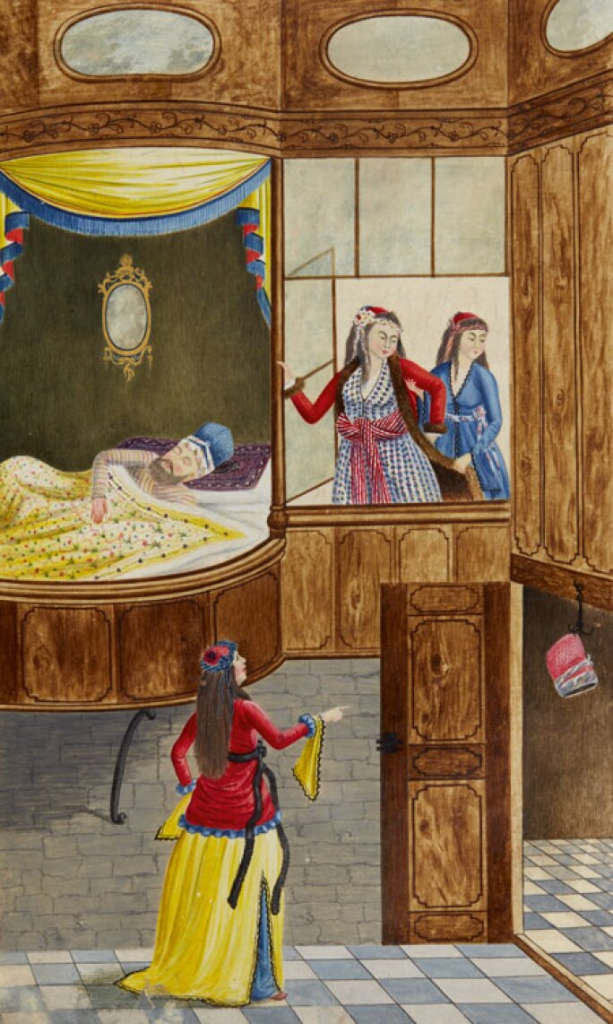
A scene from Tuhfet ül-Mülk (an 18th century Ottoman erotic manuscript)
Ze’evi reads a wide range of sources, including legal documents, medical texts, religious writings, and literary materials, to show that earlier Ottoman sexual discourse was far more fluid than modern categories would suggest. Distinctions that feel natural today—such as heterosexual and homosexual, public and private, normal and deviant—did not operate in the same rigid way. Instead, desire was embedded in social hierarchies, literary conventions, and moral frameworks that allowed for multiple, overlapping forms of expression.
From the nineteenth century onward, however, this discursive landscape begins to shift. With the rise of reform movements, administrative modernization, and intensified engagement with European thought, sexuality becomes increasingly reorganized. It is reframed through medical and scientific vocabularies, moralized in new ways associated with respectability, and gradually structured into more binary and regulated categories. Ze’evi’s analysis here resonates with Foucauldian ideas about the production of sexuality, suggesting not a simple repression of desire but a transformation in the ways it is spoken about and made legible.

A scene from Tuhfet ül-Mülk (an 18th century Ottoman erotic manuscript)
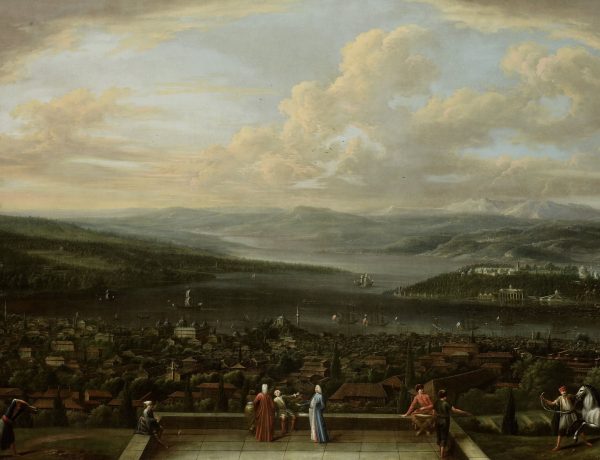
Within this broader transformation, Istanbul occupies a central though often implicit role. As the imperial capital, the city functioned as a space where older Ottoman forms of life and emerging modern frameworks coexisted and often collided. In earlier centuries, Istanbul’s social and cultural world included courtly literary traditions, Sufi networks, religious institutions, hammams, and coffeehouses, all of which formed a complex environment in which expressions of love and desire circulated without being reduced to modern identity categories.
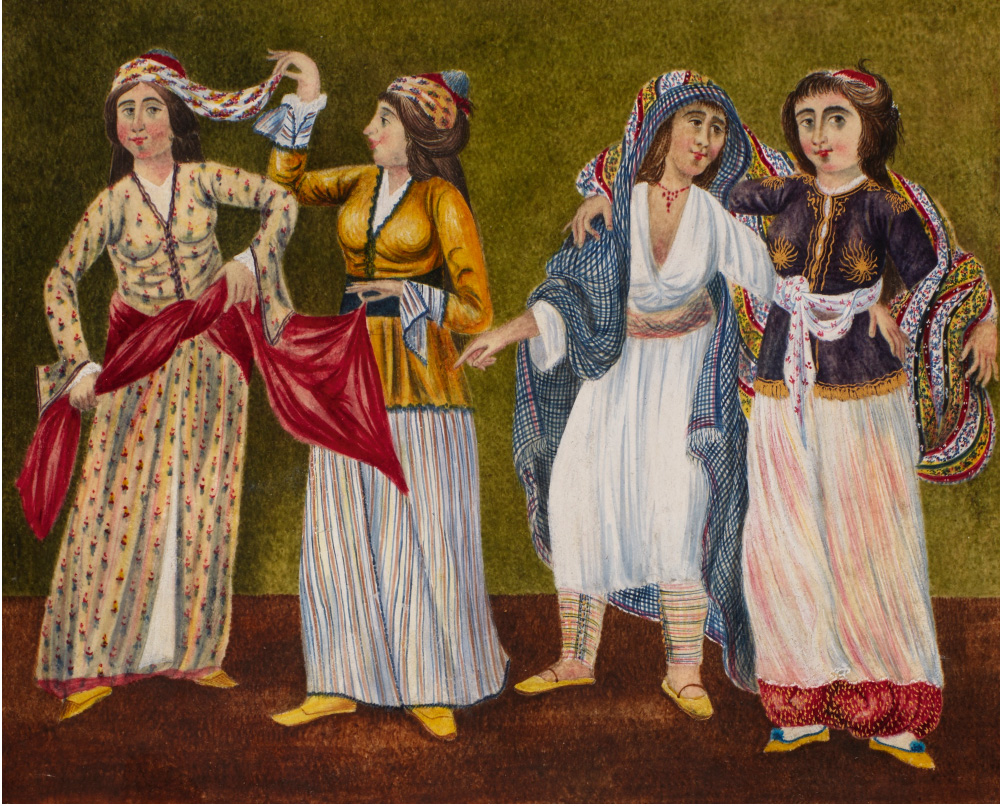
A scene from Tuhfet ül-Mülk (an 18th century Ottoman erotic manuscript)
By the nineteenth century, however, Istanbul becomes a key site for the implementation of Tanzimat reforms and broader processes of modernization. Western-style medical institutions begin to shape understandings of the body, new policing practices regulate public morality, educational systems are reorganized, and emerging bourgeois ideals of family and privacy gradually take hold. In this context, desire is not eliminated or silenced, but increasingly reclassified and disciplined through new forms of knowledge and authority.
Producing Desire is less about sexuality as such than about how modern subjectivity is formed through changing ways of speaking, classifying, and governing the body. In the Ottoman case, and especially in Istanbul, what people are allowed to desire, express, or name is shown to be historically contingent, shaped by the encounter between imperial tradition and modern epistemologies.