
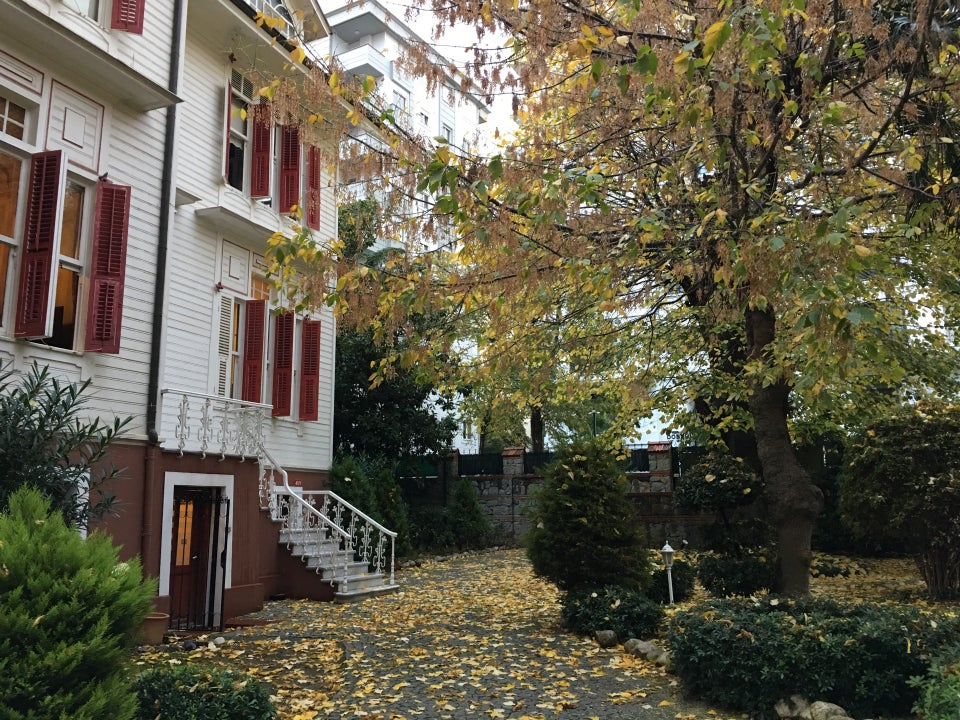
One of the few remaining late 19th-century mansions in our neighbourhood: Rukiye Sultan Mansion in Göztepe.
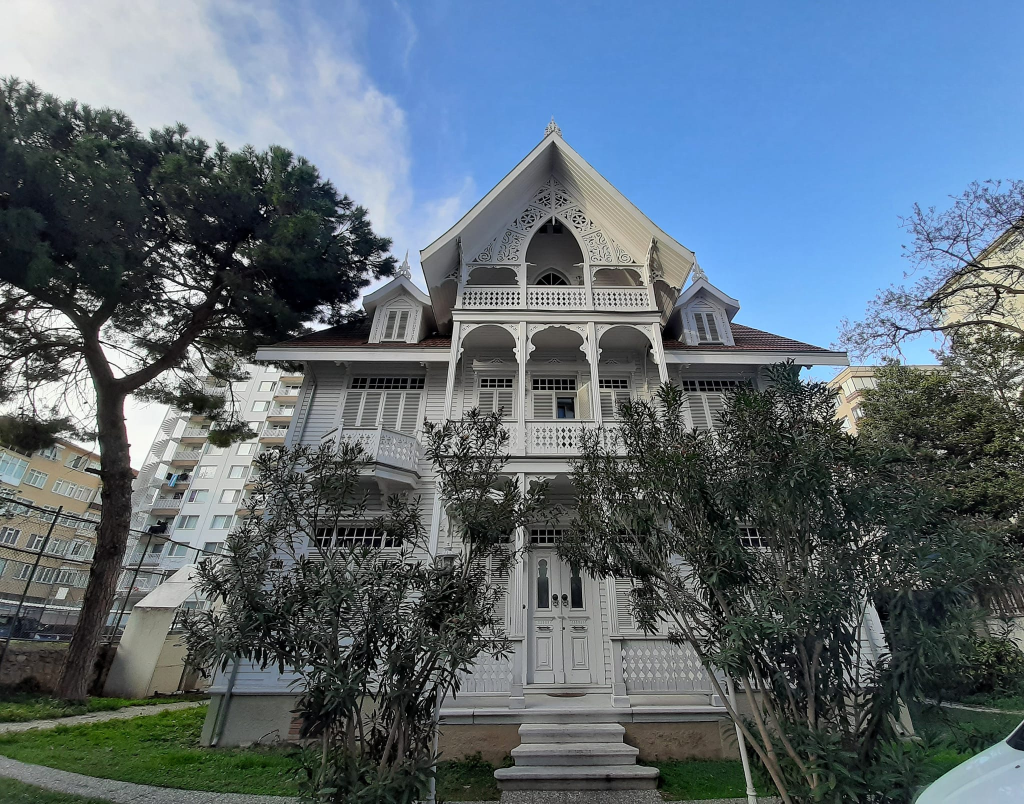
Atlı Muazzam Hanım Mansion is another late 19th-century mansion in Erenköy, which can still stand the test of time.

Pay attention to the elegant details of the Mansion’s entrance
I cannot start thinking of my neighbourhoods without a deep sense of grief that torments my soul. It would not be an exaggeration to say that almost nothing has remained from these neighbourhoods. Everything—including schools, historical 19th-century mansions, and early 20th-century houses and apartment buildings that once served as summer houses in the 1950s and 1960s—has been torn down.
The gardens, along with their giant trees, beautiful flowers, and carefully designed landscapes, have been wiped out. The historical mansions of leading figures, such as Fevzi Çakmak, one of the heroes of the War of Independence, have either been destroyed without a trace or dwarfed by huge apartment blocks built in their gardens, as in the case of Kazım Karabekir’s mansion.

This is the mansion of Kani Bey in Erenköy, built in the first half of the 20th century. It is a mansion my mom used to talk about. I never had a chance to see it—it must have been torn down before I became aware of it.

Me, a friend, and my brother on the steps of our house in the early 1970s—when houses looked like houses, gardens looked like gardens, and people felt human. The house was built by my grandfather, who was a Commander-in-Chief in the War of Independence.
The house I was born in was the summer house of my grandparents, who were residing in Teşvikiye, and they had given it to my father and mother as a wedding gift. Our house, along with many others, was torn down in the early 1970s to make way for apartment blocks.
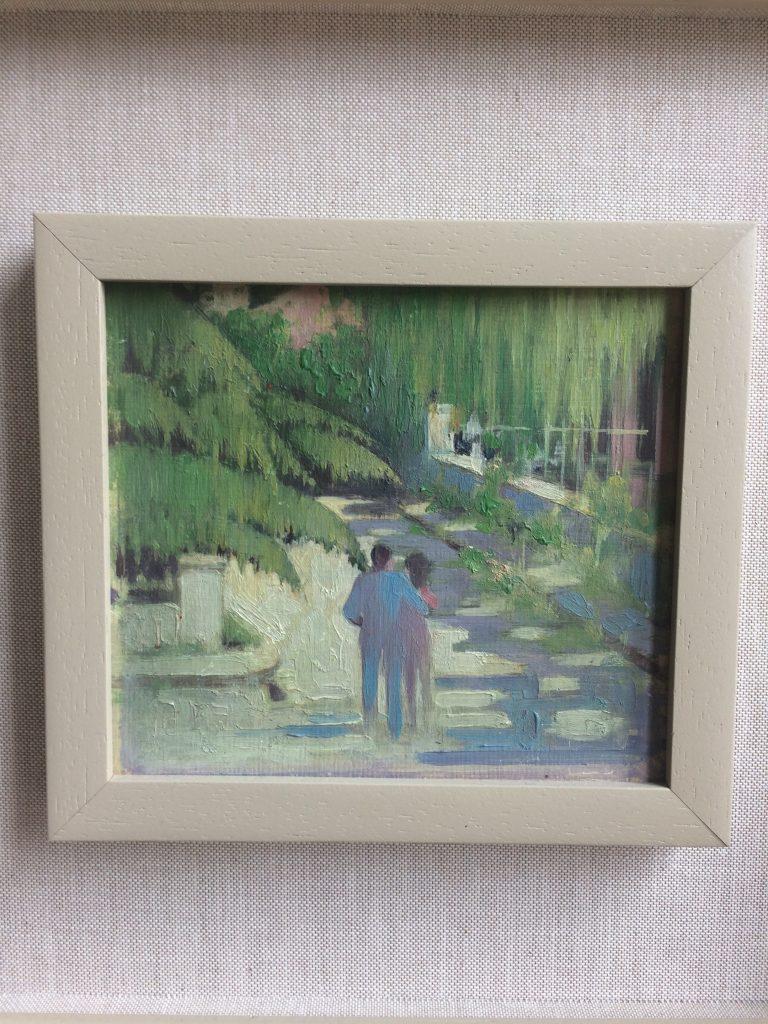
The apartment I grew up in, just a block away, was originally built as a summer house in the late 1960s for those who came to reside here during the summer to swim in Caddebostan. My grandfather, Suat Vina, who was also an artist, looked out from the window of our apartment and drew these two lovers walking down the street. The greenery I see in this painting is the same greenery I recall from the gardens of the houses and mansions that once surrounded us.
Almost all of the apartment blocks built in the late 1960s and 1970s were also torn down in the last decade to make way for taller buildings with smaller living spaces and ever more outrageous real estate prices. Now, Erenköy and Göztepe are packed with high-rises that have absolutely no character, no trace of the neighbourhoods’ past, no gardens, no greenery, and no thoughtful landscapes. Instead, there is more concrete, more people, more cars, more chaos, and more noise. And people are more anxious, more depressed, and angrier than ever before.
Erenköy and Göztepe have not only lost their buildings—they have also lost their soul.
Our apartment block is one of the last remaining examples from the late 1960s, and it is about to be demolished. There is only one reminder of the neighbourhood’s history: the sculpture in the garden of our building. My grandfather, Suat Vina, created it in the early 1970s, with the theme of men carrying the weight of the world, inspired by the mythological figure Atlas.

As a final note, I want you to catch a glimpse of this drone footage, which shows the sharp contrast between one of the last remaining 19th-century mansions and the concrete apartment blocks that surround it, very close to my neighbourhood.
What remains is a broken love song!
The videos are embedded via YouTube. All rights belong to the respective rights holders.