
O Constantinople, Constantinople! Mother of churches, princess of religion, guide of perfect opinions, nurse of all learning, now you have drunk from the hand of God the cup of fury, and burned in a fire far greater than that which burned the Pentapolis!’
Umberto Eco, Baudolino
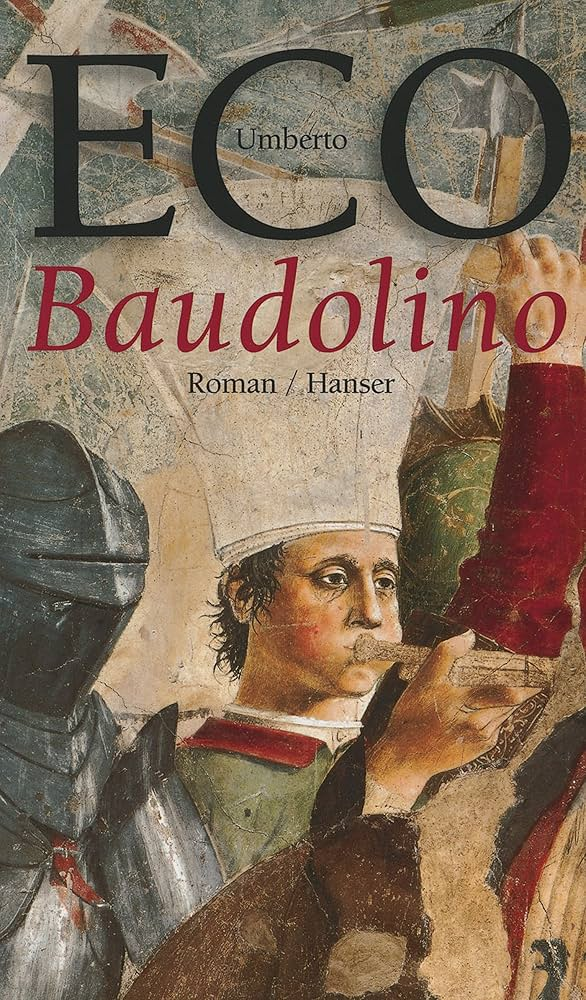
In Baudolino, Umberto Eco places one of the great cities of history—Constantinople—at the emotional and narrative center of the novel’s frame story. The book begins amid catastrophe: the city has just been conquered during the Fourth Crusade in 1204. Fires burn through the streets, churches are looted, relics disappear into the hands of crusaders, and the capital of the Byzantine Empire—once the most splendid city in the Christian world—lies broken.

Umberto Eco
Eco does not merely use Constantinople as a historical backdrop. Instead, the ruined city becomes a stage on which memory, storytelling, and loss unfold. As the fictional narrator Baudolino wanders through the devastated city, he recounts his life to the Byzantine historian Niketas Choniates, a real historical figure who himself witnessed the catastrophe.
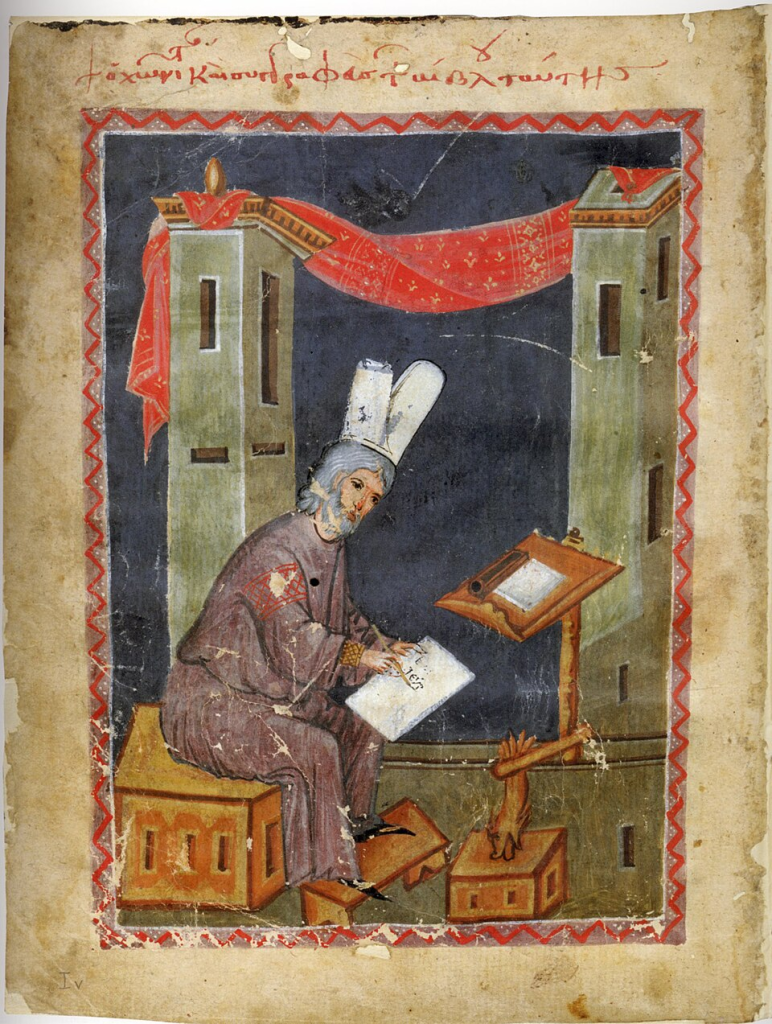
Miniature depicting Niketas Choniates
Their conversations take place among the smoking remains of churches and palaces, turning Constantinople into both a physical setting and a symbol of a civilization brought to its knees.
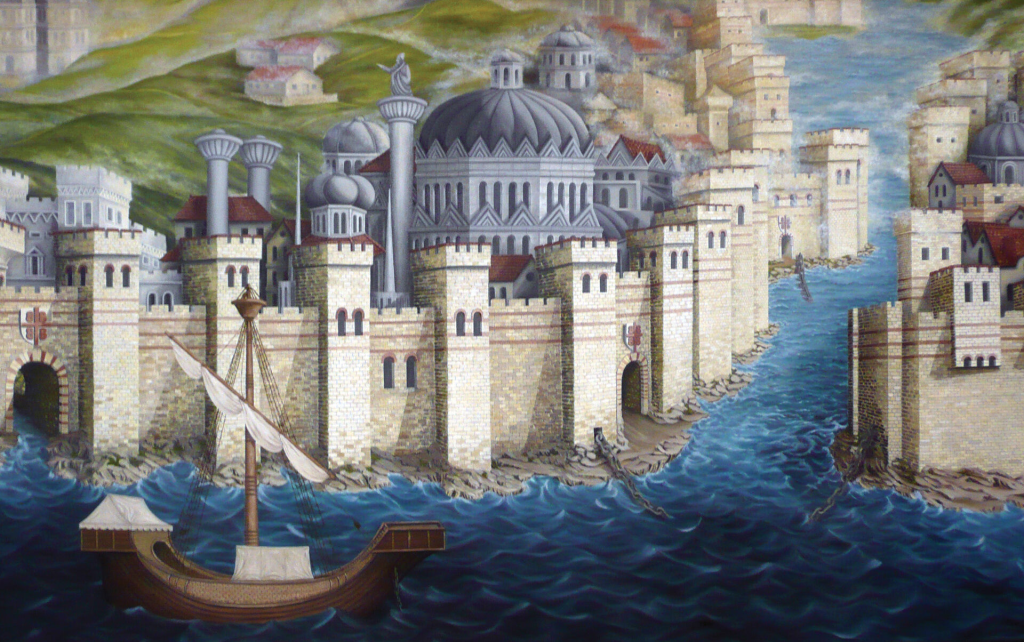
Early depiction of Constantinople, 1203
Before its fall, Constantinople had stood for nearly nine centuries as the center of the Eastern Roman—or Byzantine—world. It was a city of unmatched wealth, libraries, theology, and sacred relics. Its churches glittered with gold mosaics; its markets connected Europe and Asia; its imperial court preserved traditions reaching back to Rome. When crusaders from Western Europe captured the city in 1204, the shock reverberated across the Christian world. Instead of defending the Byzantine capital, the crusading armies plundered it.
Eco’s novel captures precisely this moment of civilizational fracture. The sack of Constantinople represents more than military defeat—it signals the humiliation of a city that once embodied order, learning, and imperial dignity. In Baudolino, the destruction appears almost surreal. Sacred objects are carried away, libraries vanish, and the city that had long seemed eternal suddenly reveals its fragility.
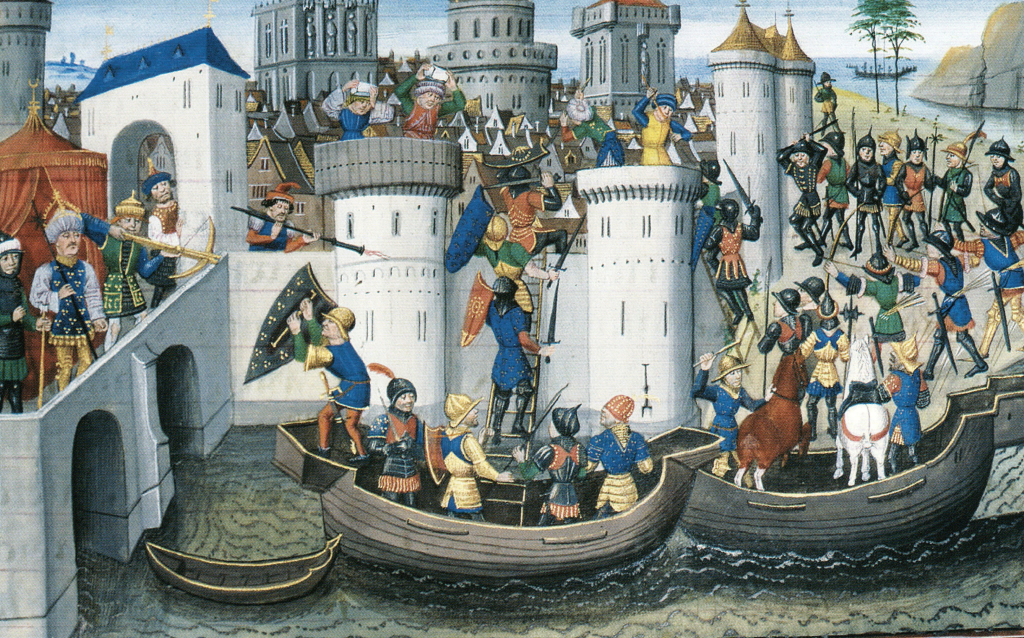
Sacking of Constantinople in 1204
The novel’s structure reinforces this sense of loss. Baudolino’s extraordinary adventures—filled with fabricated legends, mythical creatures, and the search for the kingdom of Prester John—are told against the backdrop of a city whose reality has collapsed. While Baudolino embodies imagination and invention, Constantinople represents history itself: grand, complex, and vulnerable to human folly.
Eco subtly contrasts Western medieval fantasy with Byzantine intellectual culture through the presence of Niketas Choniates. As a historian, Niketas seeks truth, coherence, and meaning. Baudolino, by contrast, lives through invention and narrative. Their dialogue amid the ruins of Constantinople becomes a meditation on how history survives catastrophe—through stories, chronicles, and memory.
In this way, Constantinople in Baudolino is not only a city that has fallen; it is a city whose dignity lingers even in defeat. The flames consuming its buildings cannot erase the centuries of civilization that once flourished there. By placing the storytelling in the midst of destruction, Eco suggests that memory itself becomes an act of preservation.
Today, the sack of Constantinople in 1204 remains one of the most painful moments in Byzantine history. In Eco’s novel, that moment is transformed into literature: the ruins of a great city become the setting in which imagination and history meet. Constantinople emerges not merely as a lost capital, but as a reminder that even the most magnificent civilizations depend on fragile human choices—and that dignity, once wounded, survives only in the stories we continue to tell.
“What is life if not the shadow of a fleeting dream?”
Umberto Eco, Baudolino
Let me end with a tribute to the great master Umberto Eco who once said I have deep intellectual feelings for Istanbul!