
It is said that the kanto, which was mixed with the lively dance style we call çiftetelli, entered our improvisational theater (tuluat tiyatrosu) as a kind of stage dance under the name kanto. The kanto, performed by an ensemble composed of instruments such as trumpet, drum, and violin, is said to have been staged for the first time at a shabby theater in Kadıköy’s Yoğurtçu Park. Although there is no definite information about who first brought it to the stage, the name of the kantocu (kanto performer) Aranik Hanım is mentioned.’
İsmail Dümbüllü
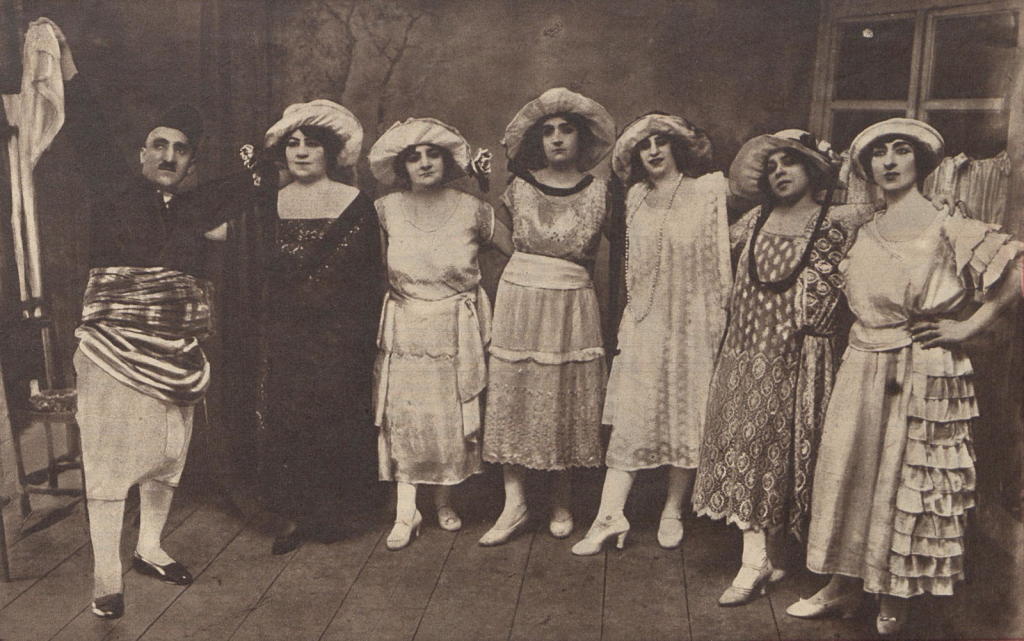
Ismail Dümbüllü -the most important representative of traditional Turkish theater- with kanto dancers, early 20th century, Istanbul
Among the many cultural expressions born out of Istanbul’s unique blend of East and West, few are as vibrant and revealing as kanto. Emerging in the late Ottoman period and flourishing during the early years of the Turkish Republic, kanto was more than just a musical genre—it was a mirror of Istanbul’s social life, humor, and transformation. Combining song, dance, and theatre, it became the city’s most flamboyant form of urban entertainment, reflecting the pulse of a changing society.
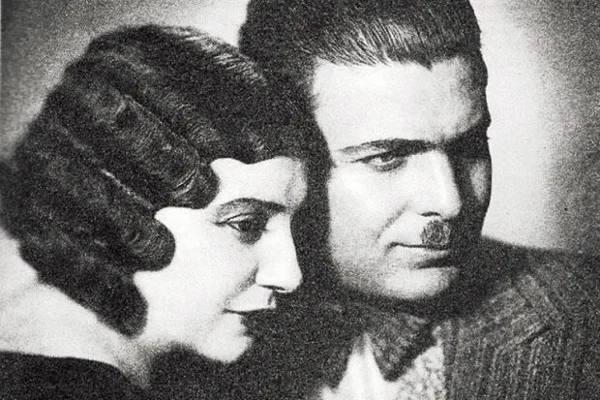
Deniz Kızı Eftelya was the most famous of Kanto singers in Istanbul at the turn of the century
The word kanto derives from the Italian cantare, meaning “song” or “to sing.” Its European roots hint at the cosmopolitan influences that shaped late 19th-century Istanbul, when Western operettas and cabaret performances captivated audiences in Pera (Beyoğlu), Galata, and Kadıköy. In this environment, local performers began adapting Western musical forms to Ottoman tastes, giving rise to an entirely new style—Istanbul kanto.
Initially, kantos were performed within tulûat tiyatrosu (improvisational theatre) shows as musical interludes. However, they soon became stand-alone attractions. The lively atmosphere of Direklerarası during Ramadan nights and the bustling theatres of Galata provided ideal venues for these colorful performances. Early kanto performers—many of whom were women of Armenian, Greek, or Jewish descent—entertained diverse audiences with witty, flirtatious, and satirical songs that reflected everyday life in the city.
A kanto performance was a spectacle of sound, movement, and emotion. The singer—often dressed in eye-catching costumes—would sing about love, jealousy, gossip, and the absurdities of modern city life. The lyrics were witty and sometimes daring, often filled with double meanings and playful humor.
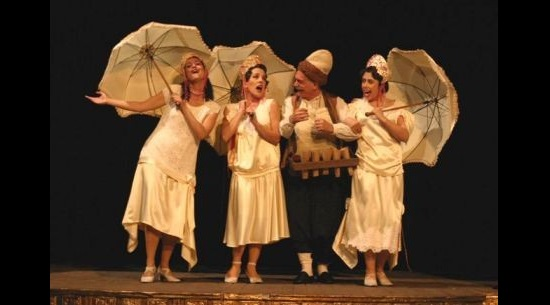
Unlike traditional Turkish music, kanto incorporated Western rhythms, brass instruments, and orchestral arrangements. Yet, it remained deeply rooted in Istanbul’s local culture and language. In this blend of East and West, the genre created a sound that was uniquely urban—playful, theatrical, and unmistakably Istanbulite.
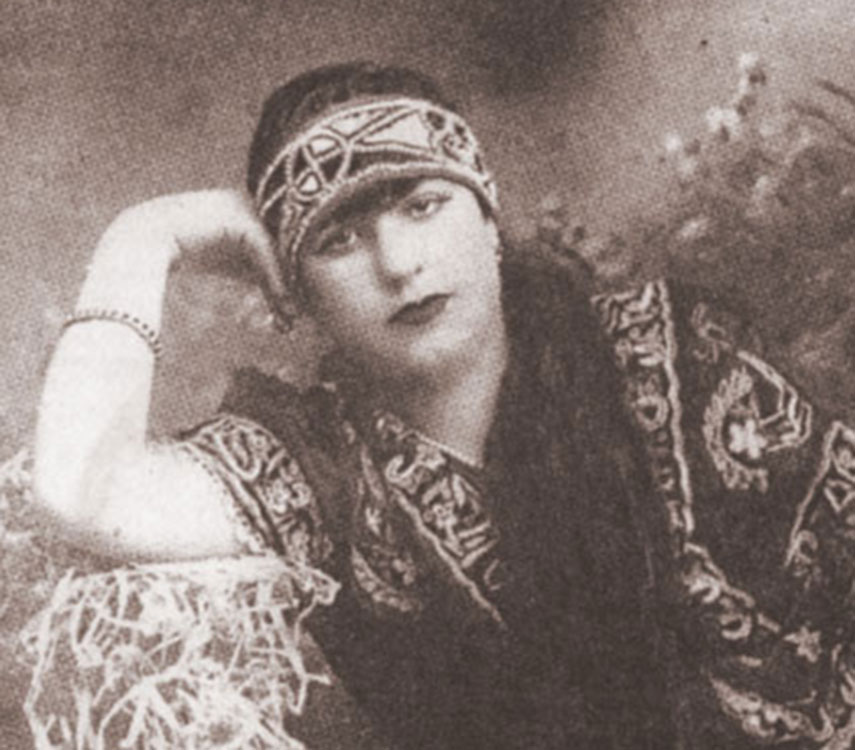
Peruz Hanım
The early 20th century is often considered the golden age of kanto. Among the celebrated names were Deniz Kızı Eftelya, a pioneering female performer who recorded extensively in the 1920s and 1930s, and Peruz Hanım, known for her expressive stage presence. Later, artists like Nurhan Damcıoğlu carried the tradition into the modern era, bridging kanto’s theatrical roots with contemporary Turkish entertainment.
Kanto’s popularity also coincided with the rise of new recording technologies. Gramophone records and radio broadcasts brought kanto into homes, turning once-local performances into mass entertainment.
Beyond its entertainment value, kanto was a cultural phenomenon that illuminated the shifting social norms of its time. It gave women a visible and vocal presence in public life at a time when female performance was often stigmatized. Through humor and irony, kantos subtly commented on issues like gender roles, modernization, and the collision between tradition and modernity.

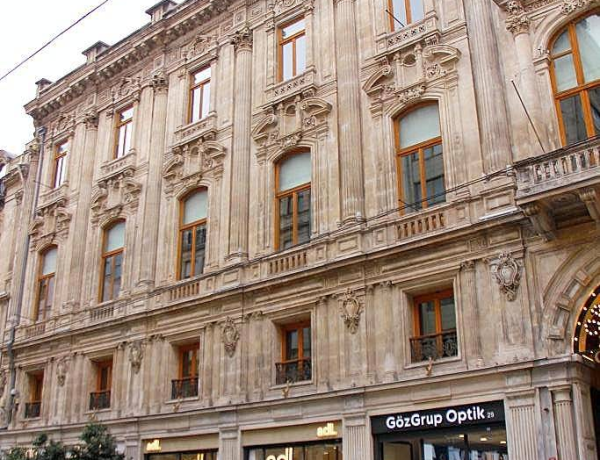
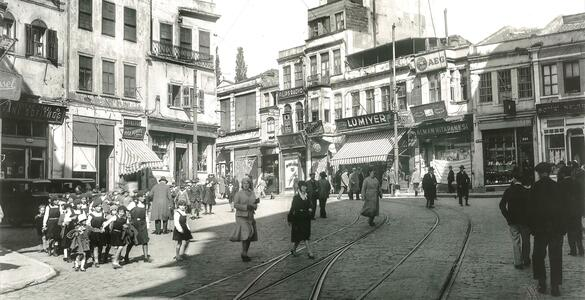
Direklerarası which once was the entertainment center of Istanbul
Kanto’s venues—Galata, Direklerarası, and Kadıköy—were themselves microcosms of Istanbul’s diversity. Muslim, Christian, and Jewish artists performed side by side, singing in Turkish, Greek, Armenian, and Ladino. In this way, kanto embodied the pluralism and creativity of a city where cultures met and mingled.
By the mid-20th century, the rise of cinema, radio, and later television began to eclipse live stage entertainment. As musical tastes shifted toward tango, arabesk, and pop, kanto gradually faded from the mainstream. However, it never disappeared entirely. In later decades, nostalgic revivals brought kanto back to life on modern stages and in cultural festivals. Performers like Huysuz Virjin (Seyfi Dursunoğlu) and Nurhan Damcıoğlu kept its spirit alive, reinterpreting the style for new generations.
Today, institutions such as Kadıköy Boa Sahne continue to preserve and celebrate the genre, ensuring that the laughter, rhythm, and sparkle of kanto remain part of Istanbul’s living memory.
The story of kanto is the story of Istanbul itself—a city of contradictions and harmonies, of tradition and innovation, of modesty and boldness. Born from the mingling of cultures, it captured the humor, charm, and vitality of its time. Though its golden days may have passed, kanto continues to echo through Istanbul’s theatres and in the collective imagination of those who remember the songs of a city that never stops singing.