
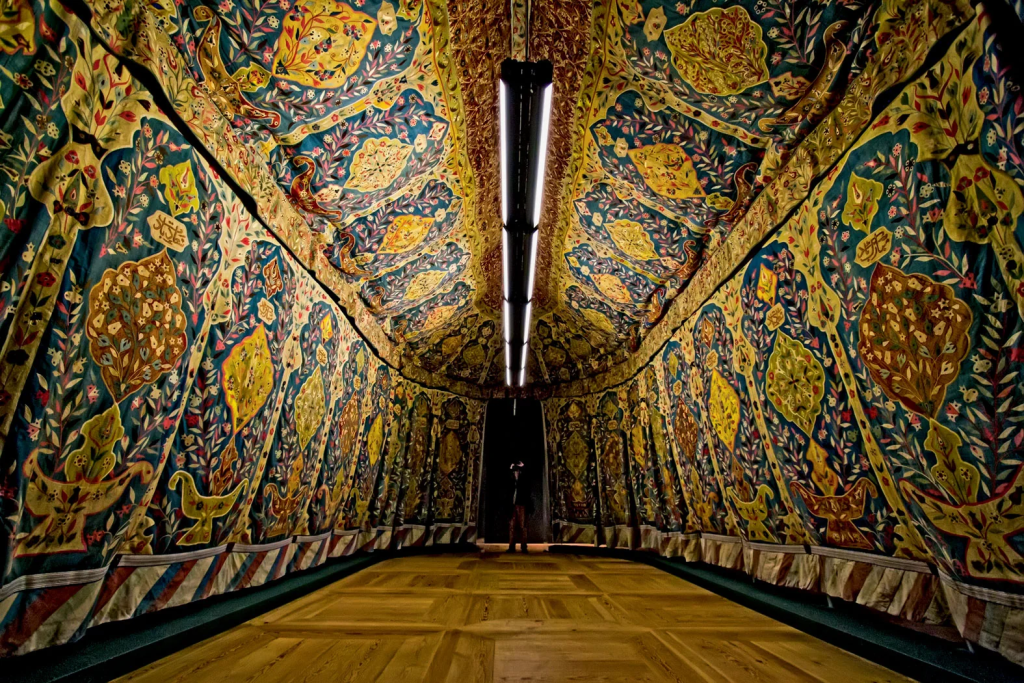
Ottoman tent from 17th century in Krakow, Poland
Walk through the great museums of Vienna, Kraków, or Dresden, and one encounters an unexpected survivor of Ottoman civilization: not a jewel, a manuscript, or a ceremonial robe, but a tent.
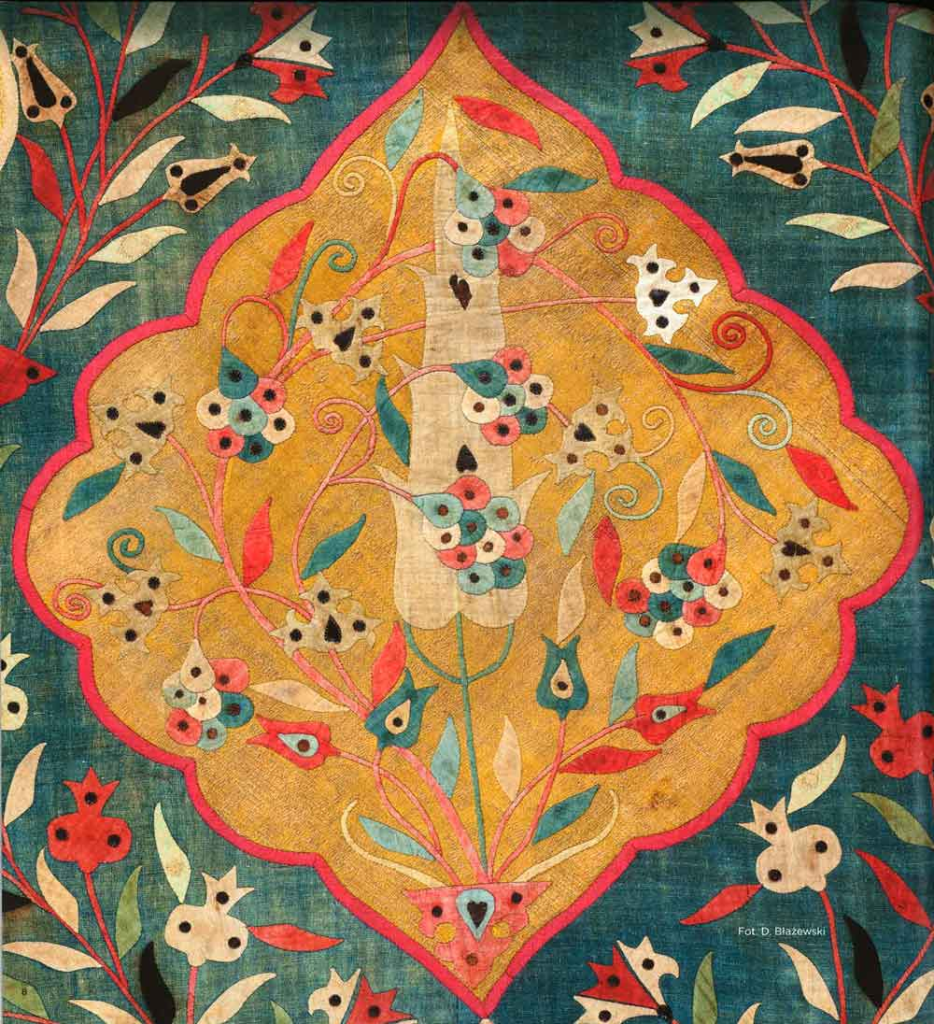
A detail of an Ottoman tent in Krakow Museum, Poland
These are no ordinary tents. They are palaces of silk and canvas, embroidered with gold thread, lined with velvet, and adorned with intricate floral and geometric motifs. They once housed sultans, grand viziers, and military commanders during imperial campaigns. Today, many of the finest examples stand not in Istanbul, but in European collections.
How did the portable palaces of the Ottoman Empire find their way into foreign museums?
The Ottoman Tent as Architecture
To modern eyes, a tent suggests impermanence. To the Ottomans, however, it represented sovereignty itself.
The Ottoman court inherited the nomadic traditions of the Turkic steppe, where rulers governed from elaborate encampments long before they occupied stone palaces. Even after the construction of Topkapı Palace, the imperial tent remained an essential symbol of power.
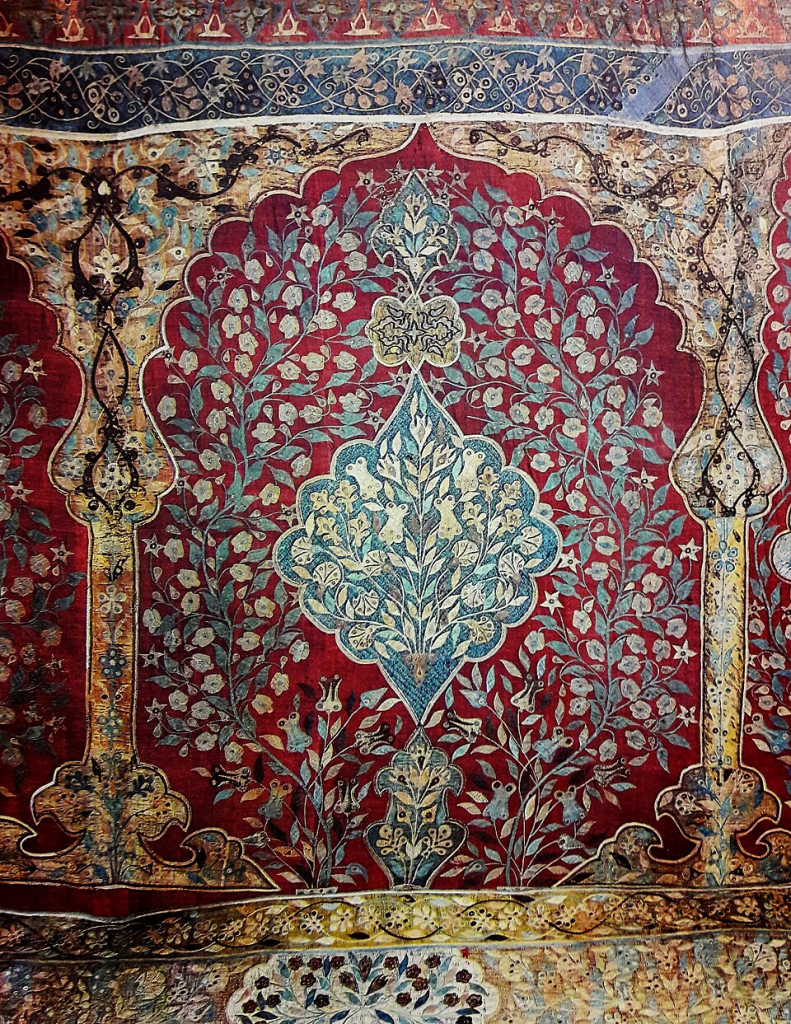
A glimpse at a detail of an Ottoman tent in Dresden, Germany
When the Ottoman army marched, it did not merely travel—it relocated an entire city. Contemporary observers described immense tent settlements stretching across the landscape, complete with kitchens, baths, workshops, stables, mosques, and ceremonial spaces.
At the center stood the imperial otağ-ı hümayun, the sultan’s tent. Constructed from richly decorated fabrics, these structures contained multiple chambers and reception halls. They functioned as mobile versions of the palace itself.
In many ways, they constituted one of the most extraordinary forms of temporary architecture ever created.
War and the Dispersal of an Imperial Heritage
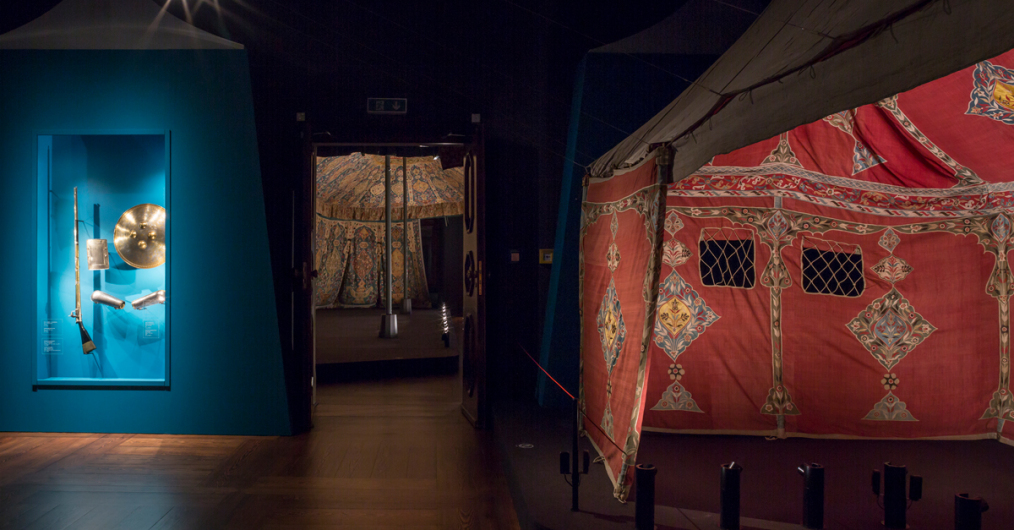
A glimpse at Krakow Museum where Ottoman tents are displayed
The greatest movement of Ottoman tents into Europe occurred through warfare.
The turning point came in 1683, during the failed Ottoman siege of Vienna. As the army retreated, it abandoned an enormous encampment containing hundreds—perhaps thousands—of tents, including those belonging to senior commanders and members of the imperial household.
European forces regarded these objects not merely as military spoils but as symbols of victory over one of the continent’s most formidable powers.
The magnificent tent of Grand Vizier Merzifonlu Kara Mustafa Paşa became one of the most celebrated trophies of the campaign. Other tents, banners, carpets, weapons, and ceremonial objects were distributed among the victorious powers.
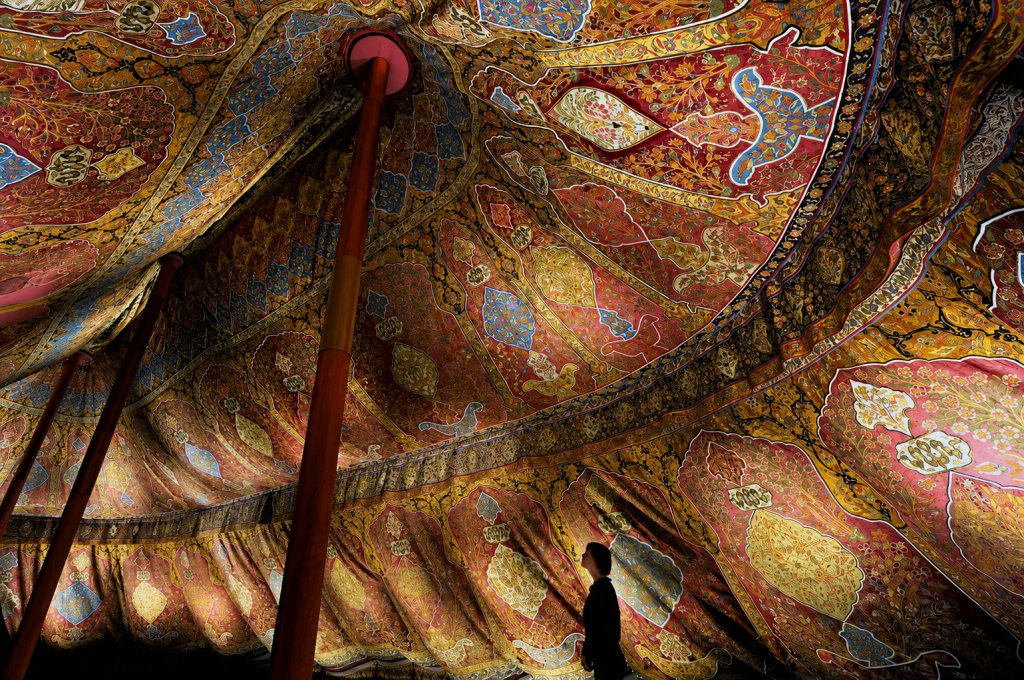
The magnificent tent of Grand Vizier Merzifonlu Kara Mustafa Paşa, Dresden
The Polish king Jan III Sobieski carried numerous Ottoman treasures back to Kraków. The Habsburgs transported others to Vienna. Additional pieces eventually reached Dresden, Munich, Berlin, and other princely collections.
Thus began the European afterlife of Ottoman portable architecture.
Vienna: The Empire Preserved Through Defeat
Perhaps nowhere is this irony more visible than in Vienna.
The collections assembled after 1683 contain some of the finest surviving examples of Ottoman military and ceremonial tents. Preserved first as symbols of Christian victory and later as historical artifacts, these objects escaped the fires, political upheavals, and neglect that destroyed many similar structures within the Ottoman world itself.
The very campaign that marked the limits of Ottoman expansion inadvertently ensured the survival of elements of its artistic heritage.
What was lost as political power endured as material culture.
Kraków and the Sobieski Legacy
Poland possesses another remarkable concentration of Ottoman tents.
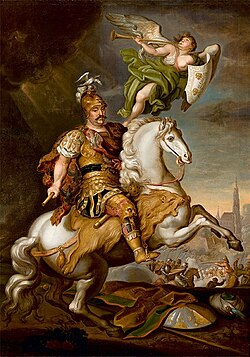
King Jan III Sobieski
King Jan III Sobieski viewed the captured Ottoman treasures as tangible proof of his triumph at Vienna. The objects entered the royal collections at Wawel and were carefully preserved for generations.
Today, some of the world’s best-preserved Ottoman tents and military textiles remain in Kraków.
The irony is profound: masterpieces created for Ottoman sultans and commanders now constitute an essential component of Polish cultural memory.
They belong simultaneously to two histories.
Beyond War: Diplomacy and Orientalism
Not every Ottoman tent arrived in Europe as a trophy.
Some were presented as diplomatic gifts. Ottoman rulers frequently employed luxury objects to express imperial prestige, and elaborately decorated tents formed part of this ceremonial language.
During the eighteenth and nineteenth centuries, European fascination with the Orient generated new interest in Ottoman material culture. Aristocrats and collectors acquired textiles, weapons, manuscripts, and occasionally entire tents for their private collections.
Museums later inherited many of these objects, transforming symbols of exotic fascination into subjects of scholarly inquiry.
Why Are So Many Better Preserved Abroad?
A curious paradox emerges when comparing Ottoman collections in Istanbul with those in Europe.
The Ottoman capital suffered repeated fires, political upheavals, reforms, and changing attitudes toward court culture. Textile structures, by their very nature, are exceptionally fragile. Many deteriorated, disappeared, or were deliberately discarded.
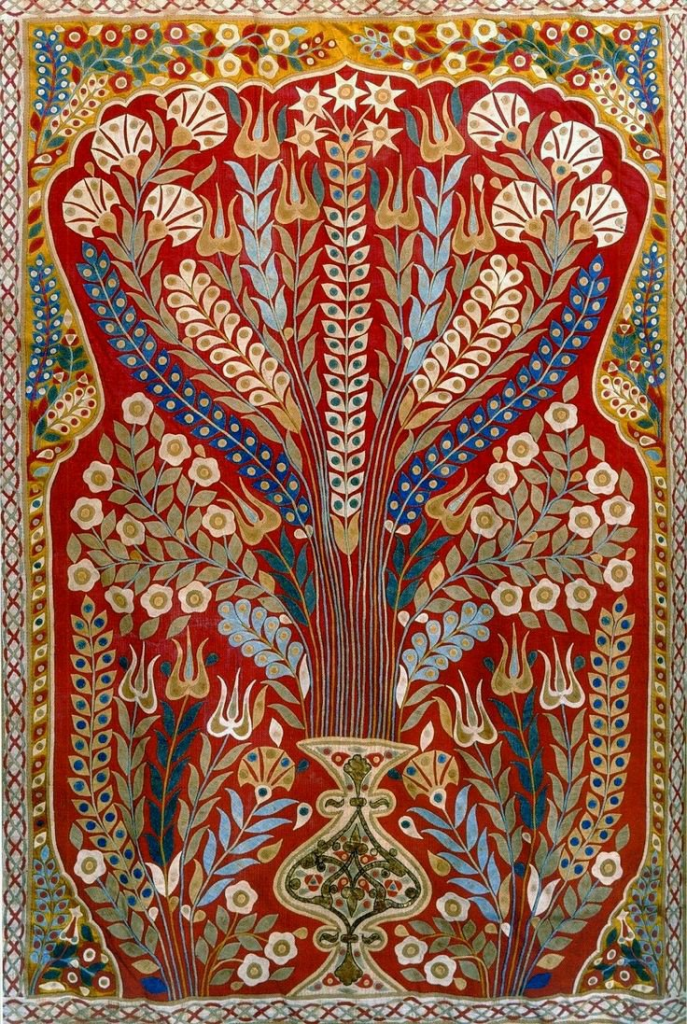
Details of an Ottoman tent
European royal arsenals and museums, however, often preserved captured tents as sacred trophies. They remained untouched in storerooms for centuries, protected precisely because they commemorated historic victories.
The result is one of history’s great ironies: some of the most complete examples of Ottoman ceremonial architecture survive outside the lands that created them.
Portable Palaces, Permanent Memories
Ottoman tents challenge modern distinctions between architecture and textile art.
They were buildings made of fabric, palaces designed for movement, expressions of imperial authority that could be folded, transported, and reconstructed wherever the court required.
Unlike Topkapı Palace or the wooden mansions of old Istanbul, many of these structures left no foundations behind. Their survival depended entirely upon the care of those who inherited them—whether friend or foe.
Today, visitors in Vienna, Kraków, Dresden, and elsewhere encounter these extraordinary objects as museum pieces. Yet they were once living spaces filled with diplomats, soldiers, musicians, servants, and rulers.
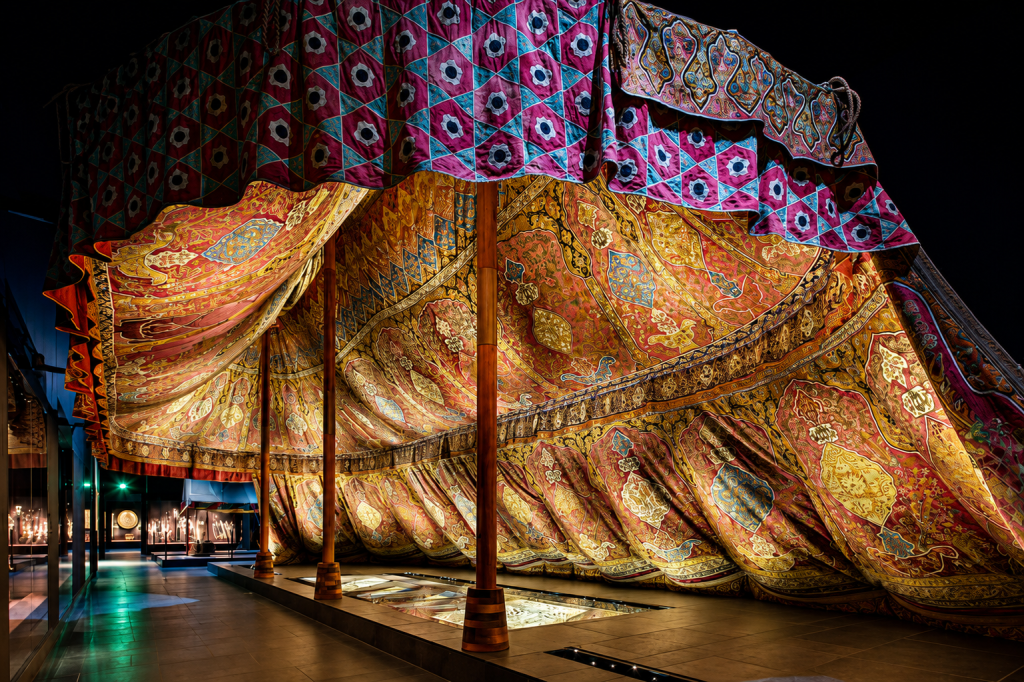
The magnificent tent of Grand Vizier Merzifonlu Kara Mustafa Paşa, Dresden
They remind us that empires are not remembered only through marble and stone.
Sometimes, their greatest monuments were made of canvas and silk—and endured because they travelled farther than anyone ever intended.
Note that the videos are embedded via YouTube and all rights belong to the respective rights holders and visuals have been taken from relevant museums websites.