
I had, of course, heard of the Turkish March. Mozart’s Rondo alla Turca has been played, rearranged and loved for generations, becoming perhaps the most famous musical expression of Europe’s fascination with the Ottoman world.
But only recently did I discover something much less familiar: a waltz composed by Johann Strauss II in honour of the Ottoman Sultan Abdülhamid II.
Its name was Märchen aus dem Orient — Tales from the Orient — and behind this elegant Viennese waltz lies a curious little story connecting the imperial worlds of Vienna and Istanbul.
A Birthday Present from the Waltz King
Sultan Abdülhamid II was born on 21 September 1842. In 1892, the year of the Sultan’s fiftieth birthday, Johann Strauss II composed Märchen aus dem Orient, Op. 444, and dedicated it to the Ottoman ruler.
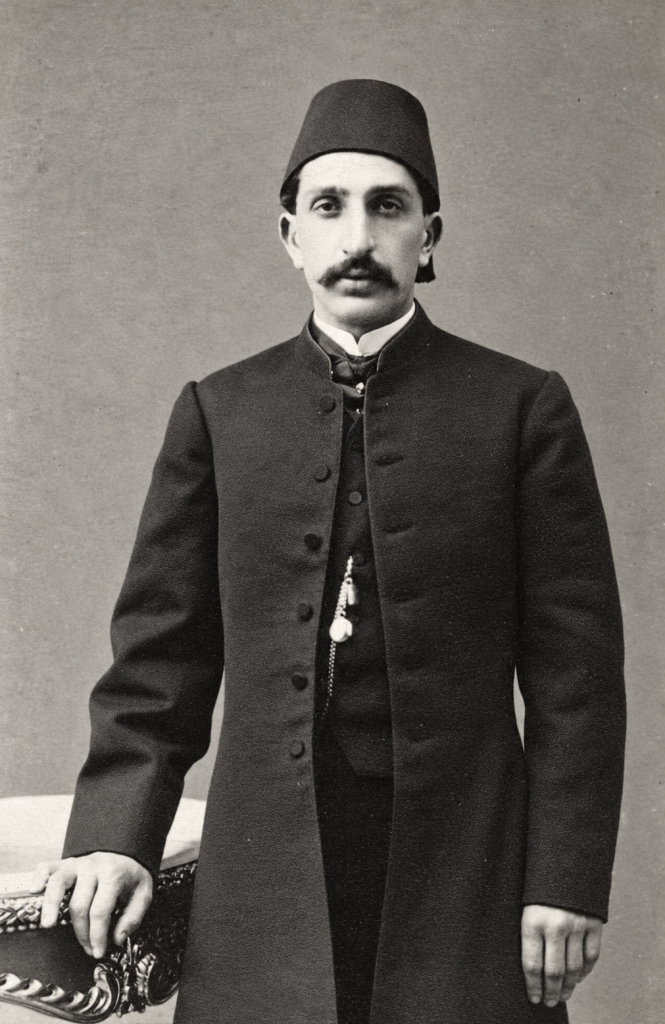
Sultan Abdülhamid II
Strauss hardly needs an introduction. He was the composer who gave nineteenth-century Vienna some of its most enduring music, including The Blue Danube, Tales from the Vienna Woods and the operetta Die Fledermaus. Yet towards the end of his life, the world of the celebrated “Waltz King” briefly intersected with that of Yıldız Palace.
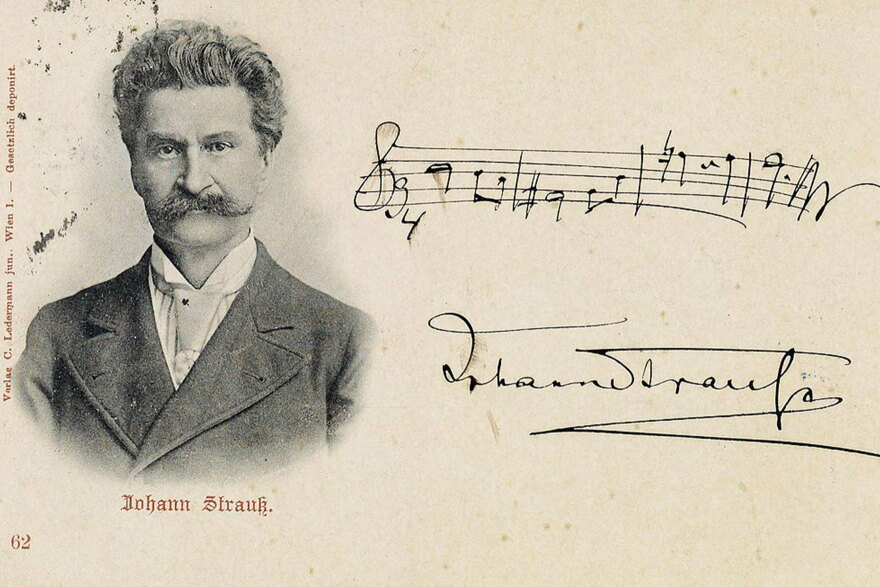
The dedication was not simply an eccentric gesture by a Viennese composer fascinated by the East. Musical dedications were also part of the diplomatic and cultural world of nineteenth-century Europe, and Ottoman sultans had long been recipients of compositions by European musicians.
The Strauss family itself had musical connections with the Ottoman dynasty. Johann Strauss I had composed works inspired by the Ottoman world, while Johann’s younger brother Eduard Strauss dedicated his Huldigungen-Walzer, Op. 88, to Sultan Abdülaziz.
Abdülhamid’s waltz therefore belonged to a much longer musical conversation between Istanbul and Vienna.
From Vienna to Yıldız Palace
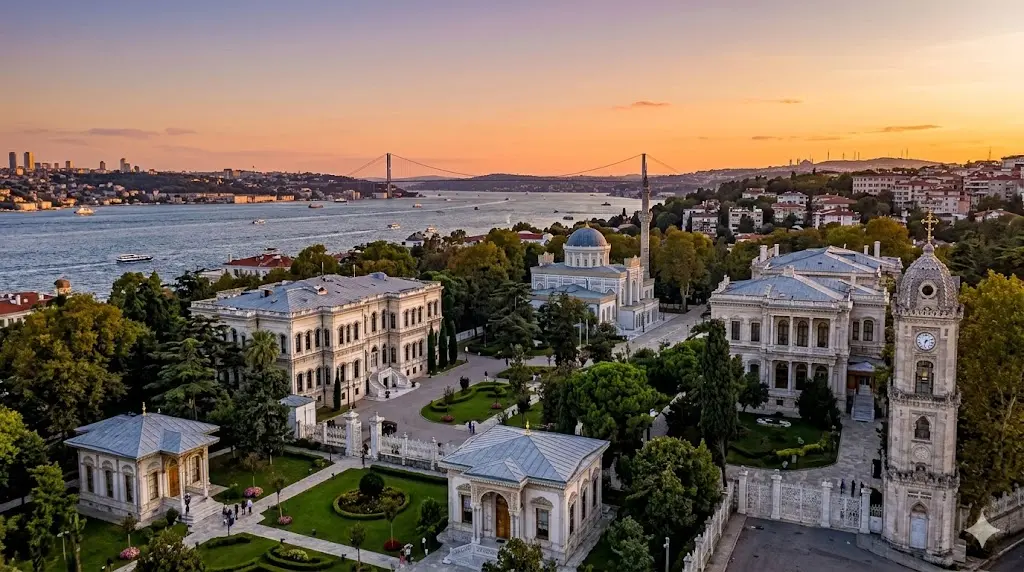
A glimpse at Yıldız Palace
The title Strauss chose is revealing: Märchen aus dem Orient — literally, Tales from the Orient.
It was, naturally, an imagined Orient: the East as seen through nineteenth-century Viennese eyes, a world of mystery, colour and fantasy. Yet the composition is more sophisticated than a simple piece of musical exoticism. It belongs to Strauss’s later, more symphonically conceived waltzes, in which he was stretching the familiar dance form beyond music intended merely for the ballroom.
The work received its premiere in the great hall of Vienna’s Musikverein on 27 November 1892, with Johann Strauss himself conducting the new composition.
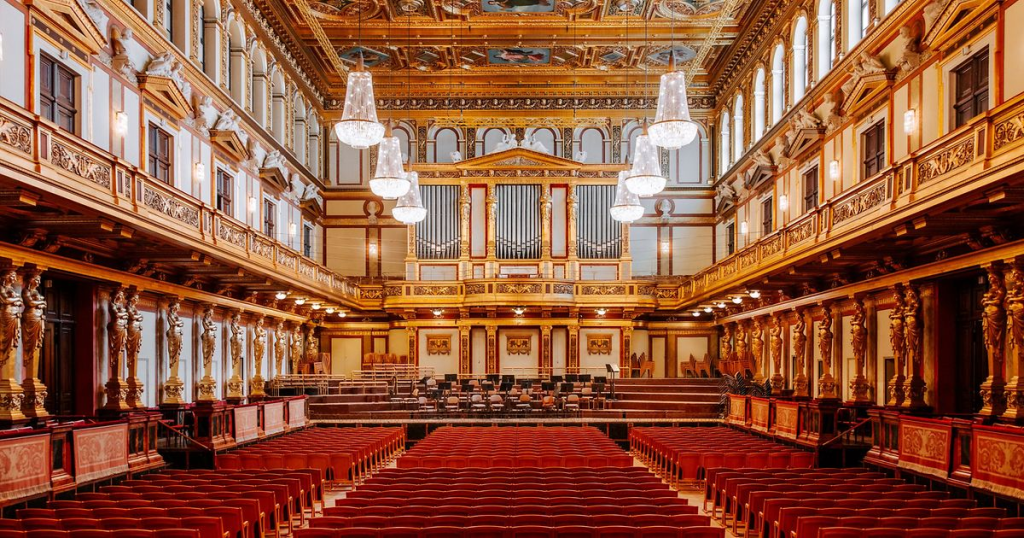
The great hall of Vienna’s Musikverein
One can imagine the scene: Vienna in late autumn, the orchestra beginning to play, and a waltz conceived in honour of an Ottoman sultan unfolding in one of the great musical halls of Europe.
History has its ironies. Two centuries after Ottoman armies had stood outside Vienna, Vienna was offering an Ottoman sultan a waltz.
Abdülhamid and Western Music
The gift was not as incongruous as it might initially seem.
Abdülhamid II is generally remembered through politics: his long reign, the extraordinary centralisation of power at Yıldız Palace, diplomacy, censorship, reform and the turbulent final decades of the Ottoman Empire. But the Ottoman court in which he lived was also deeply acquainted with European music.
By the nineteenth century, Western-style music had become part of Ottoman palace culture. The Muzıka-i Hümâyun, established under Sultan Mahmud II, performed European as well as Ottoman music, while successive generations of the dynasty learned Western instruments and listened to opera, operetta, marches, polkas and waltzes.
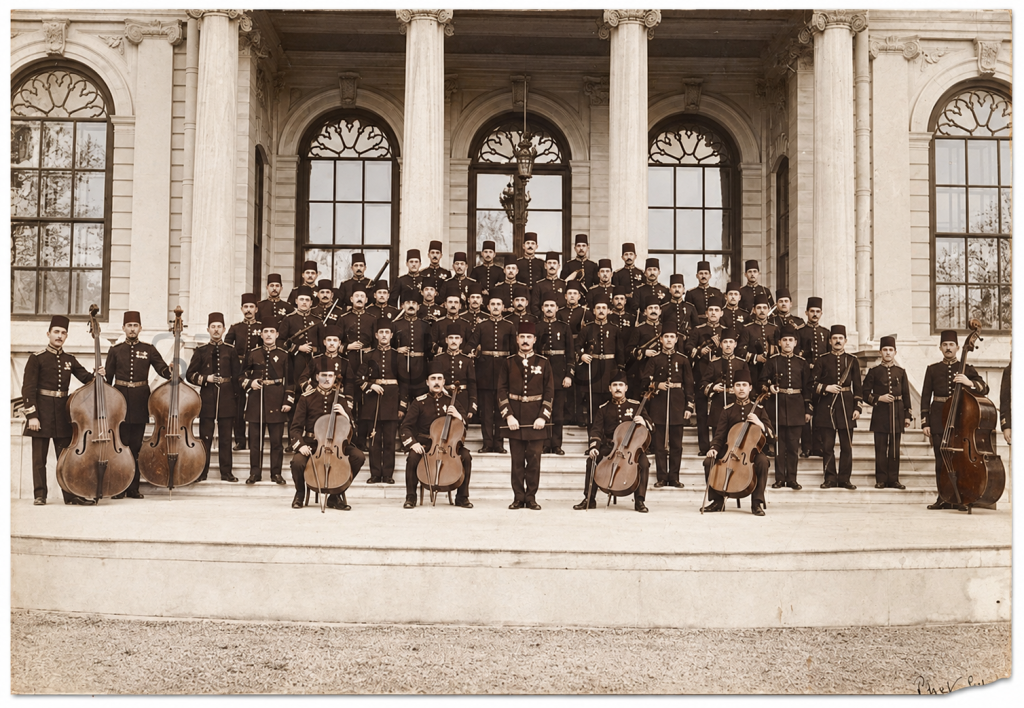
Muzıka-i Hümâyun
The waltz, in other words, was no stranger to Istanbul.
Indeed, the musical exchange ran in both directions. European composers imagined the Ottoman world in marches, operas and “Oriental” compositions, while Ottoman musicians experimented with European forms.
One of the most beautiful examples is Dede Efendi’s Yine Bir Gülnihal, composed in the nineteenth century and frequently described as one of the earliest examples of the waltz form in Ottoman classical music.
The musical landscape of the nineteenth century was therefore far more porous than our neat categories of “Eastern” and “Western” music sometimes suggest.
A Medal from the Sultan
The story did not end with the composition.
Sultan Abdülhamid II later honoured Johann Strauss with the Third Class of the Order of the Medjidie (Mecidiye Nişanı). The decoration was presented to Strauss in Vienna in 1895.
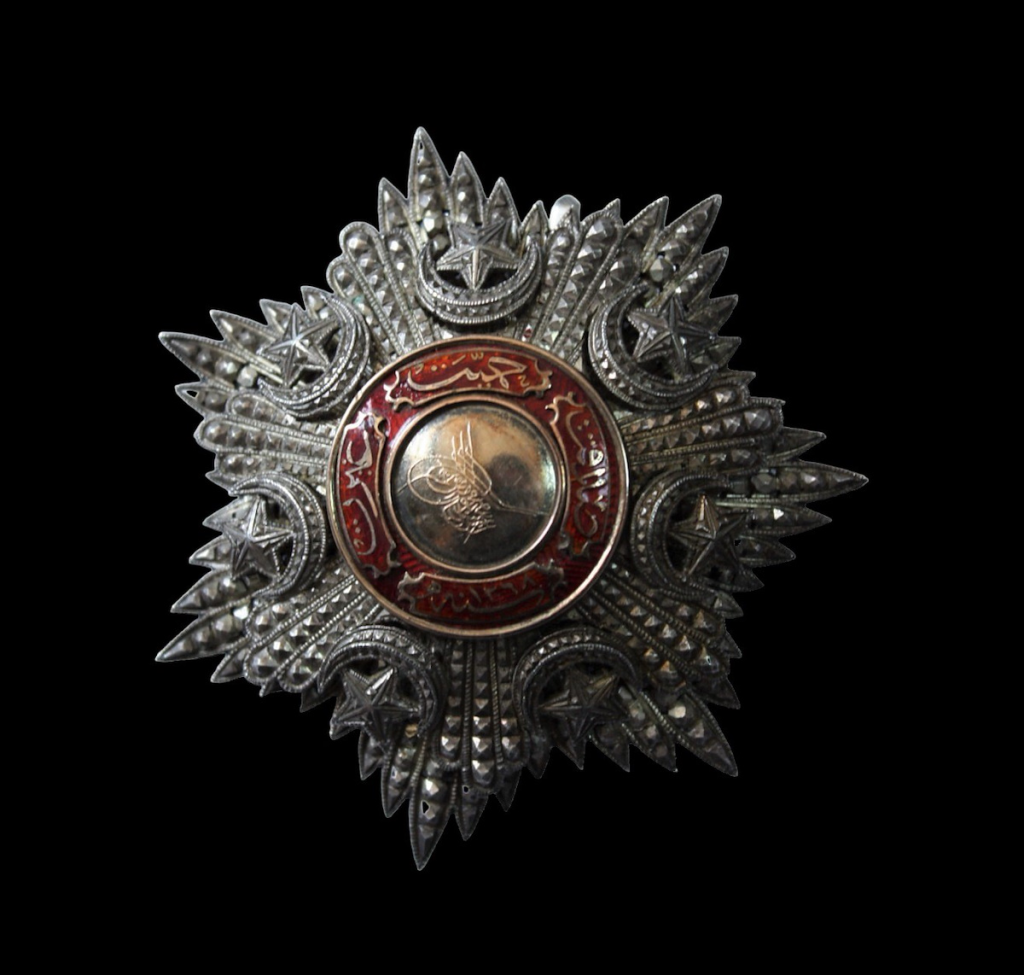
Mecidiye Nişanı
So a waltz travelled from Vienna towards Istanbul, and an Ottoman decoration travelled back from Istanbul to Vienna.
It is a wonderfully nineteenth-century exchange.
And perhaps that is why I find Märchen aus dem Orient so enchanting. It belongs to a cosmopolitan world in which music travelled surprisingly easily across political, religious and cultural borders.
Istanbul listened to Vienna; Vienna dreamed of Istanbul.
Ottoman princes and princesses played the piano, European composers wrote music for sultans, and melodies moved between imperial courts alongside diplomats, scores, medals and letters.
We remember the Turkish March.
Perhaps it is time we remembered the Sultan’s waltz as well.
On the fiftieth birthday of Abdülhamid II, the Waltz King of Vienna offered the Sultan in Istanbul something that required no translation at all: a dance in three-quarter time.
Note that the video is embedded via YouTube and all rights belong to the respective rights holders.