

Imagine Istanbul on a warm summer evening at the turn of the twentieth century. The last light lingers over the water. Boats move slowly along the shore, gardens disappear into the dusk, and somewhere, perhaps through the open windows of a summer house, comes the sound of a piano.
This is the Istanbul that seems to have stayed in the memory of Martha Remmert (1853–1941), the German pianist and composer who had studied with Franz Liszt.
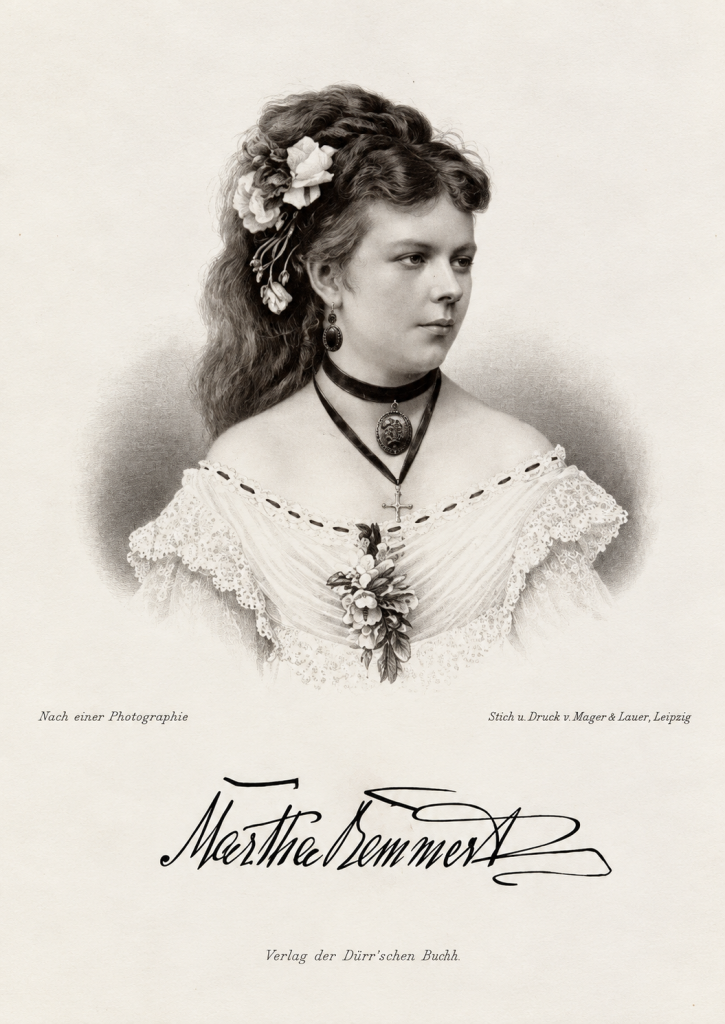
Martha Remmert (1853–1941)
Once a celebrated concert pianist who travelled widely across Europe and beyond, Remmert is today a largely forgotten figure. Yet among the music she left behind is an enchanting little record of her encounter with Istanbul: Erinnerung an San Stephano (Musikalische Skizzen) — Memories of San Stefano: Musical Sketches.
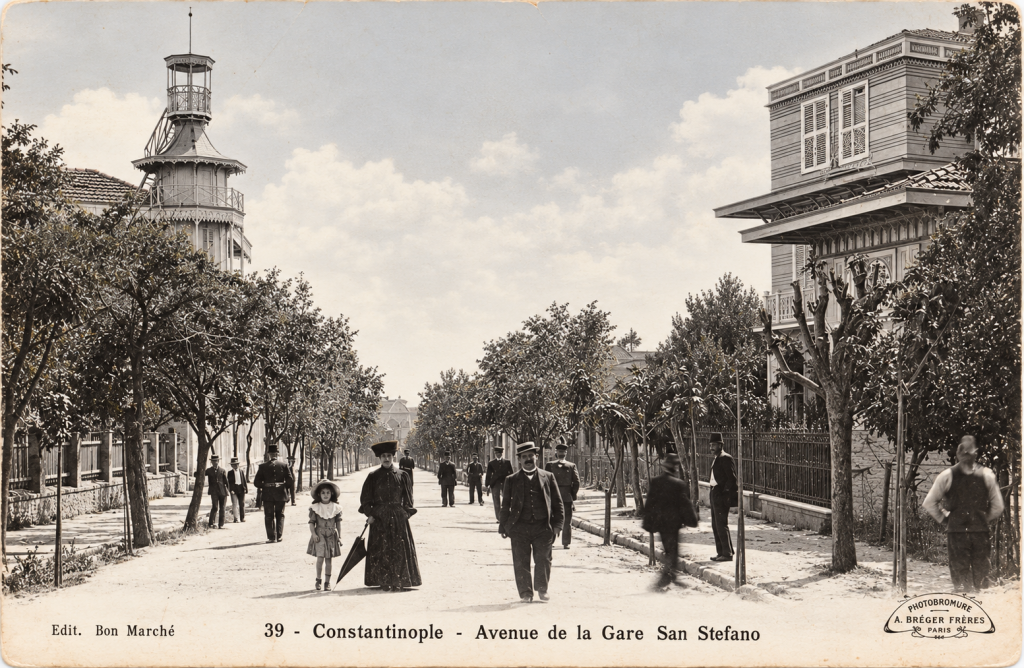
Photo is taken from https://www.levantineheritage.com/
San Stefano, today’s Yeşilköy, was then a seaside settlement outside Istanbul, connected to the city by railway. With its gardens, wooden houses, summer residences and cosmopolitan population, it offered a very different atmosphere from the crowded streets of the imperial capital.
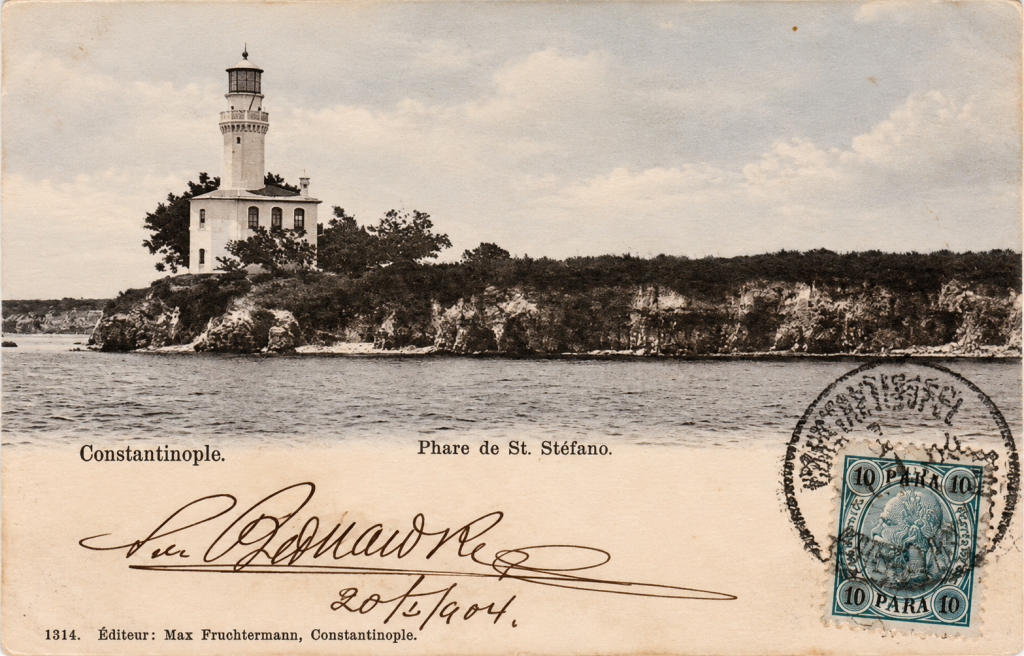
Photo is taken from https://www.levantineheritage.com/
Remmert transformed her memories of this place into four short piano pieces: Gondellied (Gondola Song), Schlummerlied (Slumber Song or Lullaby), Andante espressivo and Valse (Waltz).
Together, they almost suggest four scenes from a summer evening.
First comes the Gondellied: the gentle movement of a boat across the water. Then the Schlummerlied, quieter and more intimate, as though the landscape itself were falling asleep. The Andante espressivo introduces a more reflective mood, while the final Valse brings us back to society — to music, movement and perhaps the summer gatherings of cosmopolitan Constantinople.
Whether Remmert consciously intended such a narrative is impossible to know. But heard together, the pieces create something remarkably close to a miniature musical portrait of Istanbul at the beginning of the twentieth century.
The collection was published around 1905 and dedicated to Sultan Abdülhamid II. The dedication places these delicate musical sketches within a fascinating historical moment: the final years of the Ottoman Empire, when Constantinople remained an important destination for European artists, musicians and travellers.
There is also a curious afterlife to Remmert’s music. Her Schlummerlied can today be encountered under the more picturesque title Schlummerlied am Ufer des Bosphorus — “Slumber Song on the Shores of the Bosphorus.” Yet this does not appear to have been Remmert’s original title. Her own collection points instead to San Stefano, on the Sea of Marmara.
The distinction matters. Remmert was not simply composing an imaginary “Oriental” Bosphorus. She was remembering a particular corner of Istanbul.
And perhaps that is what makes these modest pieces so captivating today.
Old photographs allow us to see the lost summer houses, gardens, promenades and waterfronts of Ottoman Istanbul. Written accounts tell us who lived there and how they spent their days. But music offers something different. It can preserve an atmosphere: the rhythm of a boat, the melancholy of an evening, the languor of a summer night, the distant suggestion of a waltz.
Martha Remmert left us four such impressions.
More than a century later, if we listen closely, her Musical Sketches allow us to do something rather magical: to hear a summer night in a vanished Istanbul.
Note that the video is embedded via YouTube and all rights belong to the respective rights holders.