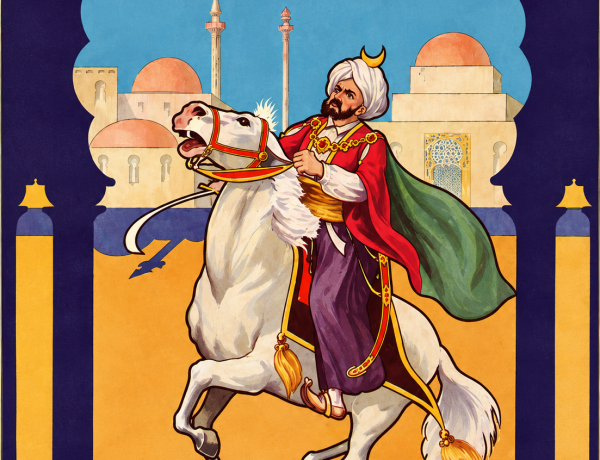

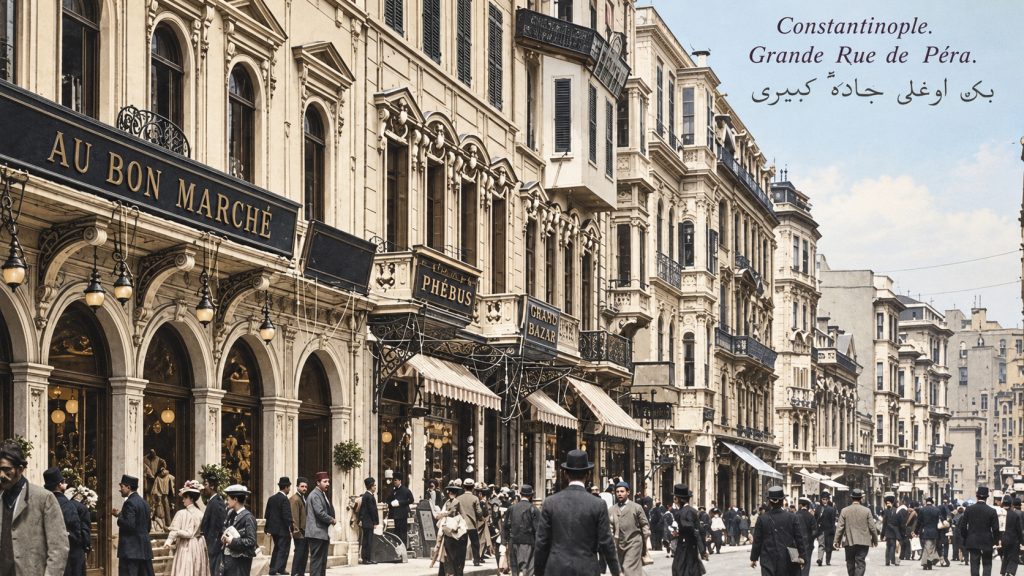
There was a time when the streets of Istanbul echoed not only with the call to prayer, church bells and the cries of street vendors, but also with Italian arias, Armenian songs, Ottoman melodies and the fashionable operettas of Europe.
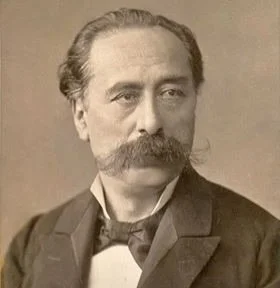
It was in this extraordinarily fertile musical world that Dikran Çuhacıyan (Tigran Chukhajian, 1837–1898) emerged. An Istanbul-born Armenian composer, he became one of the pioneers of opera and musical theatre in the Ottoman Empire.
Çuhacıyan received his early musical education in Istanbul before studying in Milan, the great centre of Italian opera. When he returned home, he brought this musical language with him. Yet he was returning to a city that already possessed a remarkably cosmopolitan theatrical culture. In Pera, European opera companies shared the cultural landscape with Armenian theatrical companies, Ottoman musicians and audiences drawn from the city’s diverse communities.
Çuhacıyan stood precisely at this crossroads.
From Arshak II to Leblebici Horhor Ağa
His most ambitious early work was Arshak II, based on the fourth-century Armenian king. Its libretto was written by the Istanbul Armenian poet Tovmas Terzian, first in Italian and later translated into Armenian. Although excerpts were performed, Çuhacıyan never saw the complete opera staged during his lifetime.
Çuhacıyan pioneered Turkish-language operetta in the Ottoman Empire with Arif’in Hilesi (1872), but it was Leblebici Horhor Ağa that became his most celebrated and enduring popular success.
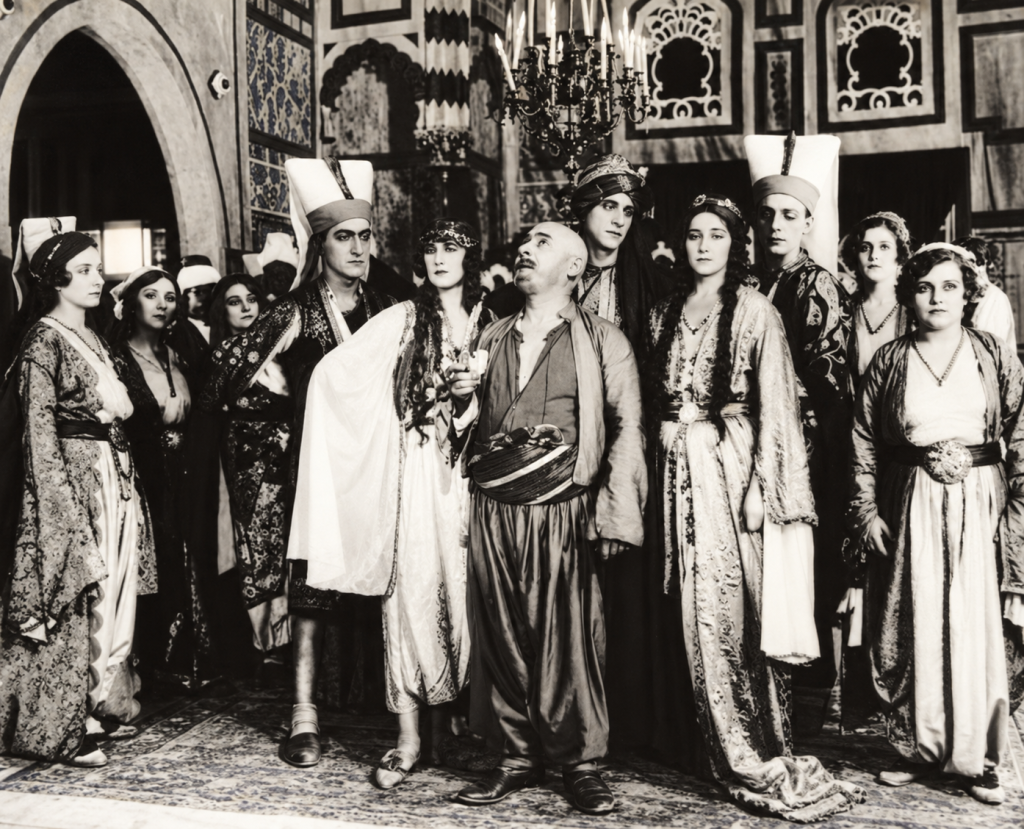
A scene from the film Leblebici HorHor Ağa, directed by Muhsin Ertuğrul in 1923
Here Çuhacıyan’s Istanbul becomes particularly vivid: an Armenian composer trained in the Italian tradition was creating Turkish-language musical theatre with Armenian librettists and performers for the audiences of the Ottoman capital.
The boundaries between Armenian and Turkish, Eastern and Western, European and Ottoman become remarkably difficult to draw.
Çuhacıyan inhabited all of these worlds.
A Life Across Istanbul
His biography can almost be read as a map of nineteenth-century Istanbul: Pera, with its theatres and European musical culture; Ortaköy, where his home was destroyed by fire in 1874; Üsküdar, where he taught music at an Armenian school; Kadıköy, where performances connected with his theatrical company took place; and the artistic world surrounding the Balyan family, important patrons of Armenian cultural life.
Istanbul was not merely the city in which Çuhacıyan happened to be born. It was the landscape of his creative life.
His Legacy Today
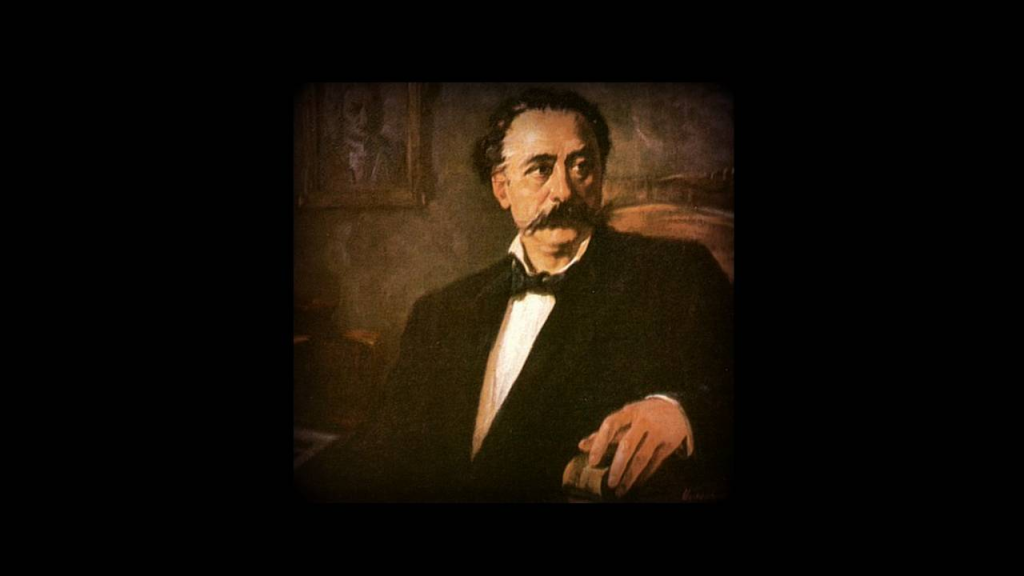
Much of Çuhacıyan’s Istanbul has disappeared. Its theatres vanished, fires destroyed buildings and archives, and the communities that created this remarkable cultural world were transformed or dispersed.
Yet his music survives.
Among those who have helped preserve this memory is another Istanbul-born Armenian musician, pianist and musicologist Şahan Arzruni, who has researched and performed Çuhacıyan’s music for contemporary audiences.
There is something moving about this continuity: two Armenian musicians born in Istanbul, separated by more than a century—one helping to create the musical world of nineteenth-century Constantinople, the other helping to keep its memory alive.
Perhaps this is Çuhacıyan’s greatest legacy. His life reminds us that some of Istanbul’s most creative moments emerged not from cultural purity, but from encounter.
An Armenian composer returns from Milan. Armenian writers create librettos in different languages. Turkish words are sung on a Pera stage. European musical forms encounter the stories and sounds of the Ottoman capital.
No single identity is sufficient to describe this world.
Perhaps only one word is: Istanbul.
Note that the videos are embedded via YouTube and all rights belong to the respective rights holders.