

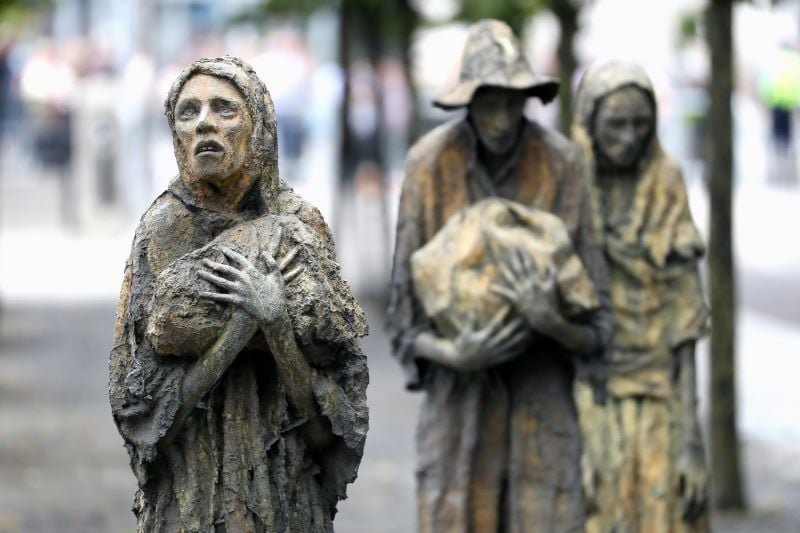
The Famine Memorial
In 1847, while Ireland was experiencing one of the darkest periods in its history, an unexpected gesture of sympathy arrived from thousands of kilometres away.
It came from Istanbul.
The benefactor was Sultan Abdülmecid I, the young ruler of the Ottoman Empire.
The episode has since acquired an almost legendary quality. According to the familiar story, Abdülmecid wished to donate £10,000 to the starving Irish but was persuaded to reduce his gift because it would exceed Queen Victoria’s contribution. Determined to help nevertheless, he supposedly sent ships laden with food to Ireland.
The historical record is more complicated—but no less remarkable.
Black ’47
The Great Famine began in 1845 when potato blight devastated successive harvests. For much of Ireland’s poor population, potatoes were the foundation of everyday subsistence.
The consequences were catastrophic. Hunger was accompanied by disease and mass emigration. Approximately one million people died during the famine years and another million left Ireland. The year 1847 became remembered simply as Black ’47.
The catastrophe also inspired an extraordinary international humanitarian response. Donations arrived from Europe, India and the Americas. Famously, the Choctaw people in the United States contributed despite having themselves suffered forced displacement only years earlier.
Another donor lived considerably farther east: Sultan Abdülmecid I in Istanbul.
An Irish Doctor at the Ottoman Court
There was an intriguing personal connection between Ireland and the Ottoman palace.
Justin Washington McCarthy, an Irish physician from County Cork, served at the Ottoman court. Educated in Edinburgh and Vienna, he had entered Ottoman service before Abdülmecid’s reign and became associated with the imperial household.
Later accounts connected McCarthy with the Sultan’s response to the Irish catastrophe, suggesting that the physician may have helped bring the suffering of his countrymen to Abdülmecid’s attention. No contemporary document has yet established this connection conclusively, but the presence of an Irish doctor at the Ottoman court adds a fascinating human dimension to the story.
“Turkish Sympathy”
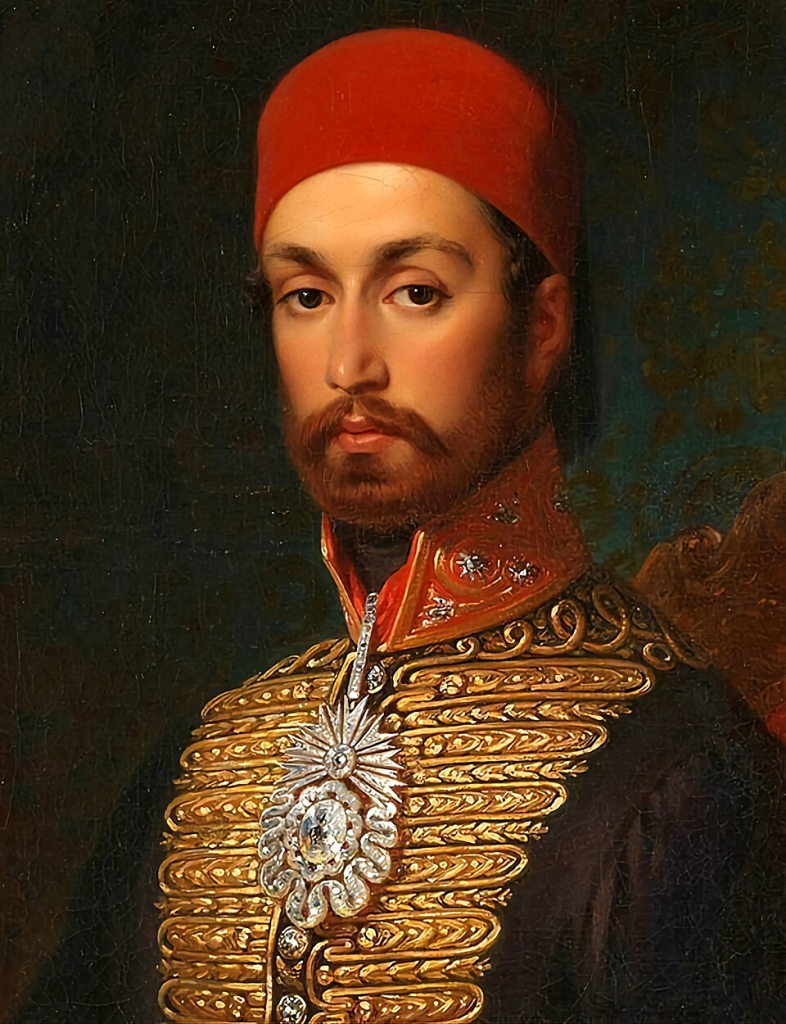
Abdülmecid I, 1846
What is beyond dispute is Abdülmecid’s contribution.
In 1847, the Sultan personally donated £1,000 to Irish famine relief. The Sultan’s £1,000 donation was an extraordinary sum in 1847—equivalent to tens of thousands of days of wages for an Irish labourer during the Famine. His contribution was recorded by the British Relief Association and reported in the contemporary press. The Nenagh Guardian described the episode under the striking heading “Irish Distress—Turkish Sympathy.”
The donation was substantial, but its symbolic significance was perhaps even greater: a Muslim sovereign at the eastern end of Europe had extended assistance to a predominantly Catholic population suffering at its western edge.
The gesture was not forgotten.
An elaborate address of thanks from Irish noblemen, gentlemen and inhabitants survives in the Ottoman Archives in Istanbul. In it, the Irish expressed their gratitude for Abdülmecid’s generosity and acknowledged the relief his assistance had brought to their suffering countrymen. A copy is also preserved in the National Library of Ireland.
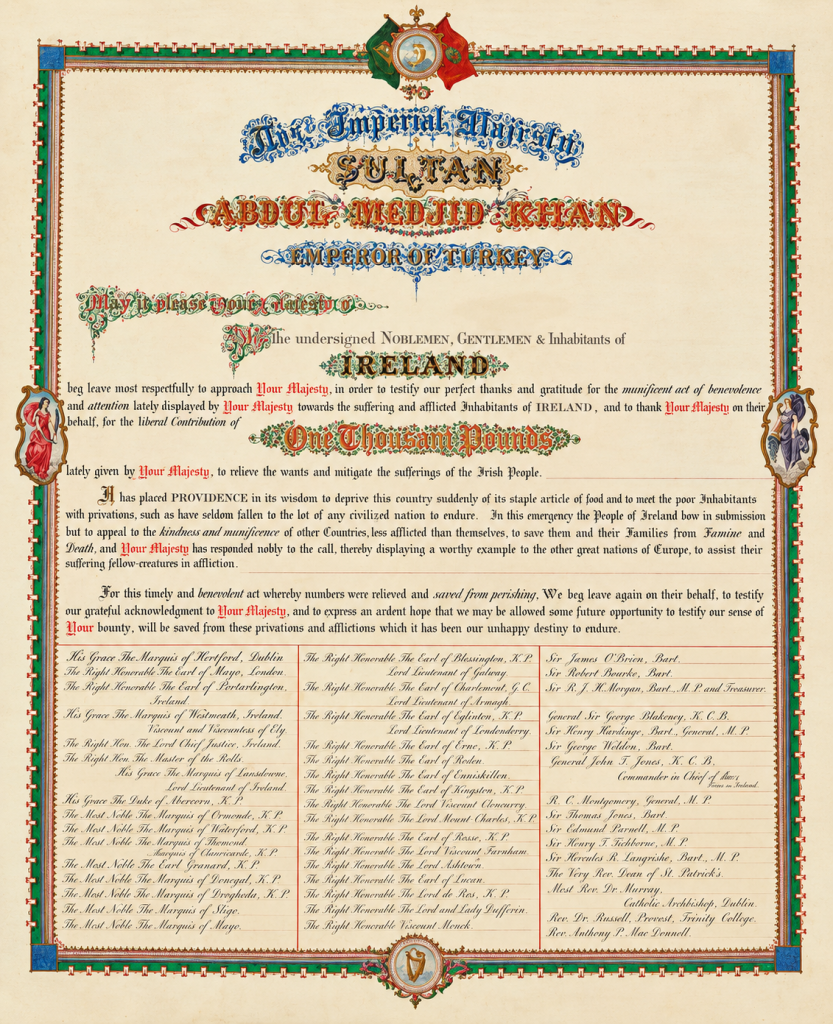
A richly illuminated address of gratitude presented by Irish noblemen, gentlemen and citizens to Sultan Abdülmecid, thanking him for his generous donation of £1,000 to relieve the suffering caused by the Great Irish Famine.
The document remains one of the most tangible pieces of evidence connecting the Ottoman Sultan with the Irish famine.
Did Abdülmecid Want to Give £10,000?
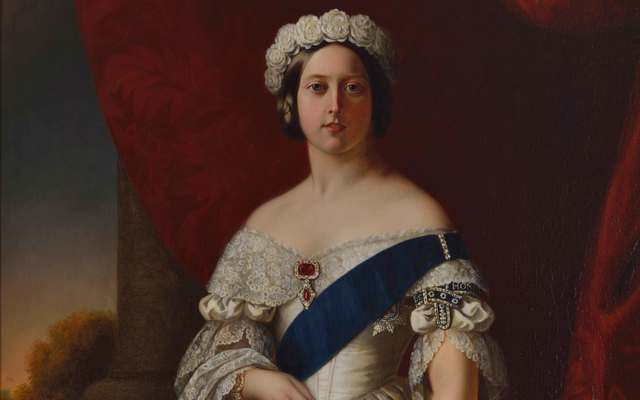
Queen Victoria
One of the most famous elements of the story holds that Abdülmecid originally intended to donate £10,000.
According to contemporary and near-contemporary accounts, he was advised that such a contribution would create a diplomatic difficulty because it would exceed Queen Victoria’s donation. His official contribution was therefore reduced to £1,000.
The story has some historical support, but it cannot be treated with the same certainty as the £1,000 donation itself. No surviving document conclusively proves that a formal £10,000 offer was made and rejected.
The safest conclusion is that Abdülmecid certainly gave £1,000, while early accounts indicate that he wished to contribute considerably more.
The Mystery of the Ottoman Ships
Even more intriguing is the enduring story that Abdülmecid also sent ships laden with food to Ireland.
Local tradition in Drogheda, a port town north of Dublin, holds that Ottoman vessels arrived during the famine carrying provisions for the starving population. Records confirm that ships connected with Ottoman ports reached Drogheda during the famine period carrying grain.
What has never been conclusively established is whether these cargoes were humanitarian aid personally ordered by Abdülmecid or ordinary commercial shipments. The story therefore remains an evocative possibility rather than a documented certainty.
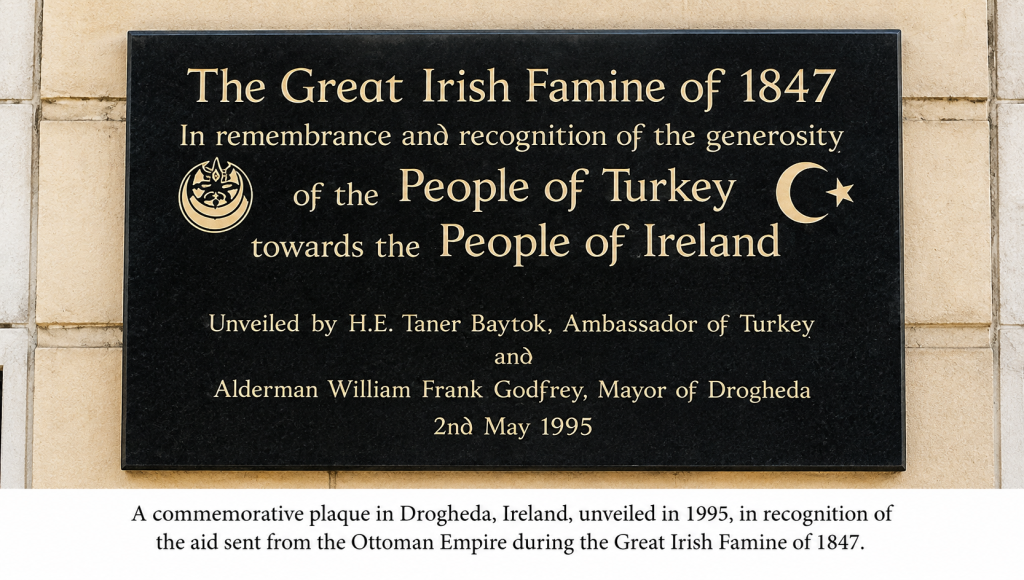
Over time, it became deeply embedded in the shared memory of Turkish-Irish relations. In 1995, a commemorative plaque was unveiled in Drogheda honouring “the generosity of the People of Turkey towards the People of Ireland” during the Great Famine.
Another popular story connects Ottoman aid with the crescent and star found on Drogheda’s arms. According to the legend, the town adopted these symbols in gratitude to the Sultan. The story is appealing but historically impossible: the crescent and star had been associated with Drogheda centuries before the famine. Their later association with Abdülmecid belongs to the history of remembrance rather than to the events of 1847 themselves.
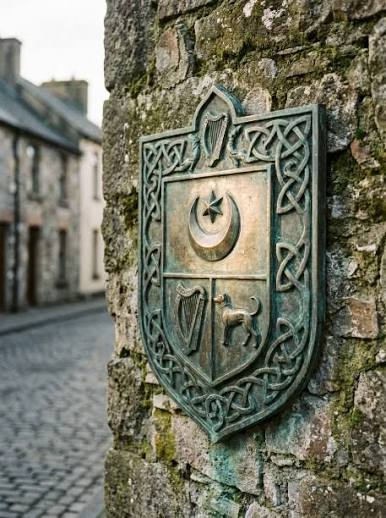
The coat of arms of Drogheda, Ireland.
“The Brotherhood of Mankind”
Perhaps the most beautiful contemporary assessment of Abdülmecid’s gesture came from the British Relief Association.
Its report placed the Ottoman Sultan among those whose response to Ireland’s suffering arose from “sympathy, humanity and the brotherhood of mankind.”
That phrase captures why the episode remains so compelling.
Abdülmecid did not save Ireland, nor was Ottoman assistance the largest contribution to famine relief. But in an imperial palace overlooking the Bosphorus—perhaps with an Irish physician helping to make a distant tragedy feel less distant—a young Sultan learned that people were starving on an island at the opposite end of Europe and decided that their suffering concerned him too.
Nearly two centuries later, the story has accumulated legends: £10,000, diplomatic objections, ships sailing into Drogheda and a crescent and star.
Some belong to documented history; others to collective memory.
But beneath them lies a simpler fact that requires no embellishment.
In 1847, during one of the worst humanitarian catastrophes of the nineteenth century, Sultan Abdülmecid I reached across borders, religions and empires to help the suffering people of Ireland.
They were not his subjects. They did not share his religion. Most would never see his country.
And yet, across the distance, Istanbul reached out to Ireland.


