
I Woke Up in Purple. From the Night I Was Buried.’
Some artists depict Istanbul. Handan Börüteçene listens to what lies buried beneath it.
Born in Istanbul in 1957, Börüteçene studied ceramics at the State Academy of Fine Arts in Istanbul before continuing her studies in sculpture at the École Nationale Supérieure des Beaux-Arts in Paris. Her fascination with archaeology began early: from 1978 onwards, she participated in archaeological excavations, an experience that would profoundly shape her artistic language. Memory, cultural heritage, geography and the traces left by vanished civilizations have remained at the heart of her work.
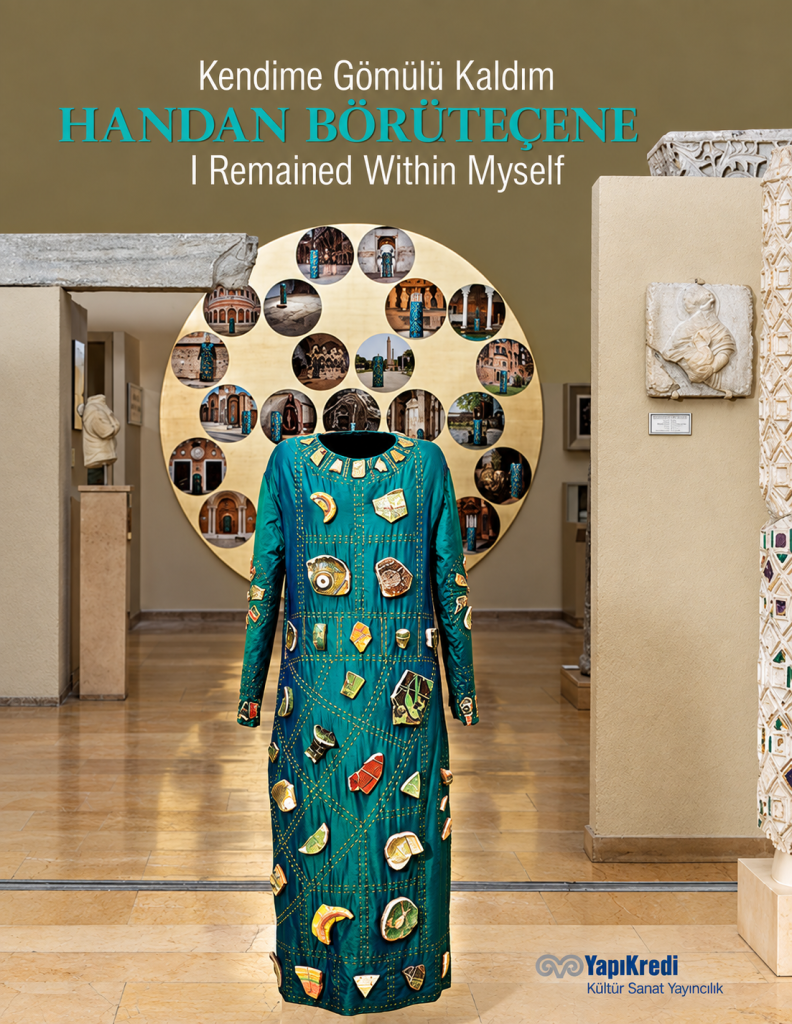
Few works embody her relationship with Istanbul as powerfully as the extraordinary project she developed between 1999 and 2023, appearing over the years under different titles: Suların Bağladığı / Suların Çözdüğü (Waters That Tie / Waters That Untie), Kendime Gömülü Kaldım (I Remained Buried Within Myself), and finally Morla Döndüm. Gömülü Gecemden Sabaha (I Woke Up in Purple. From the Night I Was Buried).
At its heart is an empty dress.
But the dress is far from empty.
Giving a Body to a Forgotten Woman
The story begins with Moero of Byzantium, whom Börüteçene evokes as Istanbul’s earliest known female poet. In an attempt to give this almost forgotten woman a presence — a body, even — Börüteçene created a replica of the dress depicted in an icon of Saint Eudokia preserved at the Istanbul Archaeological Museums.
Yet she made one crucial alteration.
Where precious ornamental stones might have appeared, Börüteçene placed fragments of broken ceramics, remnants evoking civilizations that once existed and disappeared.
The dress thus becomes something much larger than a garment. It carries within it a forgotten woman, a vanished Byzantium and the archaeological memory of Istanbul itself. The absent body becomes strangely appropriate: Moero is gone, Byzantium is gone, generations of Istanbulites are gone — yet traces of them remain.
The dress becomes a vessel for those traces.
The Wandering Ghost of Istanbul
The work then begins to travel.
Börüteçene photographed the dress at Byzantine sites in Istanbul and Venice, creating what she deliberately described as “souvenir” photographs. But there is something poignant — and almost ironic — about these souvenirs.
The ghost of Istanbul has become a traveller through its own past.
The journey carries a powerful historical resonance. During the Fourth Crusade of 1204, the sack of Constantinople and the ensuing Latin occupation, enormous quantities of Byzantine objects were removed from the city. Many eventually found their way to Venice, where fragments of Constantinople remain embedded in another city’s monuments and collections.
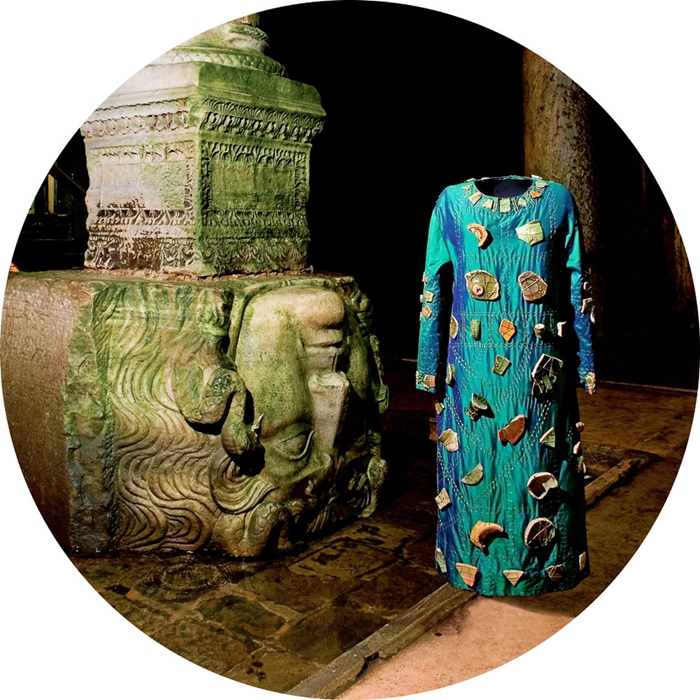
And so Börüteçene sends her empty dress after them.
The ghost of Istanbul follows the fragments of its own body across the sea.
There is a striking symbolism in this journey. The garment does not merely represent Istanbul’s lost memory; it retraces its dispersal. Just as objects once belonging to Constantinople travelled across seas and borders, the dress travels too, moving through the geography of the city’s own fragmentation.
In its wandering, it begins to share the fate of the objects it seeks.
Istanbul’s history has never remained entirely in Istanbul.
A City Buried Within Itself
But Börüteçene’s work is not merely an elegy for Byzantium.
Its deeper subject is memory.
What happens when a city continues to exist physically while gradually losing consciousness of its own past?
Ancient stones survive beneath apartment blocks. Columns are incorporated into later buildings. Fragments appear unexpectedly during construction. Byzantine objects stand in museums and churches hundreds or thousands of kilometres from the city where they were made. Entire communities disappear while their houses, places of worship, cemeteries and names leave faint traces behind.
The past has not vanished.
It has simply become difficult to see.
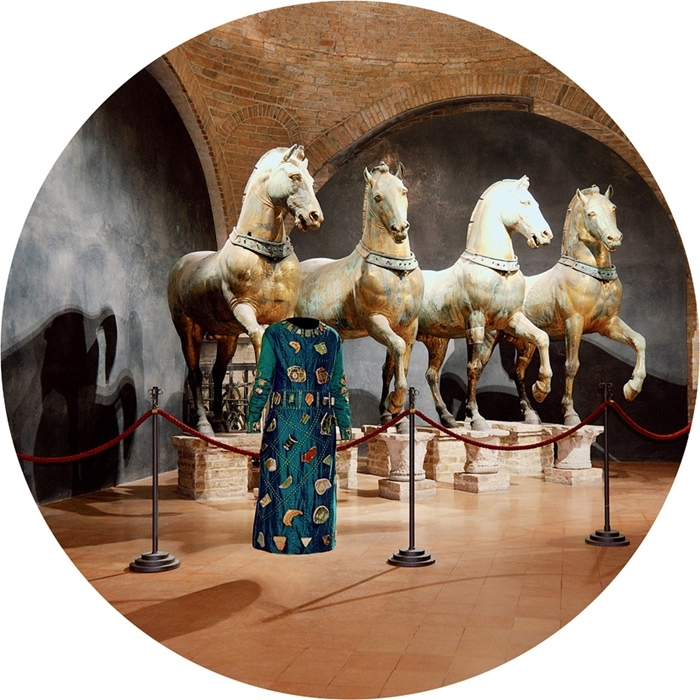
Börüteçene approaches Istanbul almost archaeologically in a psychological sense: one city buried inside another, and another beneath that. Her Istanbul is not composed of successive civilizations neatly replacing one another. They remain layered together, fragments of previous lives continually resurfacing in the present.
We usually imagine archaeology as the excavation of dead civilizations.
Börüteçene reverses the metaphor.
Perhaps it is not the past that is buried beneath Istanbul. Perhaps Istanbul is buried within us.
From the Buried Night
The journey of the dress did not end with Kendime Gömülü Kaldım. Börüteçene continued to transform the work until 2023, when this long artistic voyage came to encompass the title Morla Döndüm. Gömülü Gecemden Sabaha — officially rendered in English as I Woke Up in Purple. From the Night I Was Buried.
Across more than two decades, the garment travelled, changed its name and accumulated new layers of meaning.
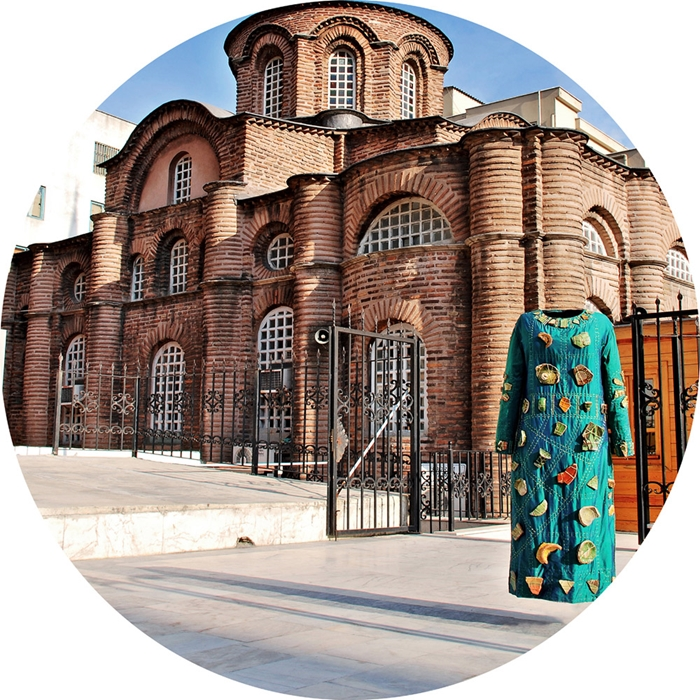
In that sense, it never became a static museum object. Like Istanbul itself, it carried fragments of its previous lives into every new incarnation.
Moero, Byzantium, broken ceramics, displaced objects, Venice, Istanbul — they become pieces of the same archaeology of memory.
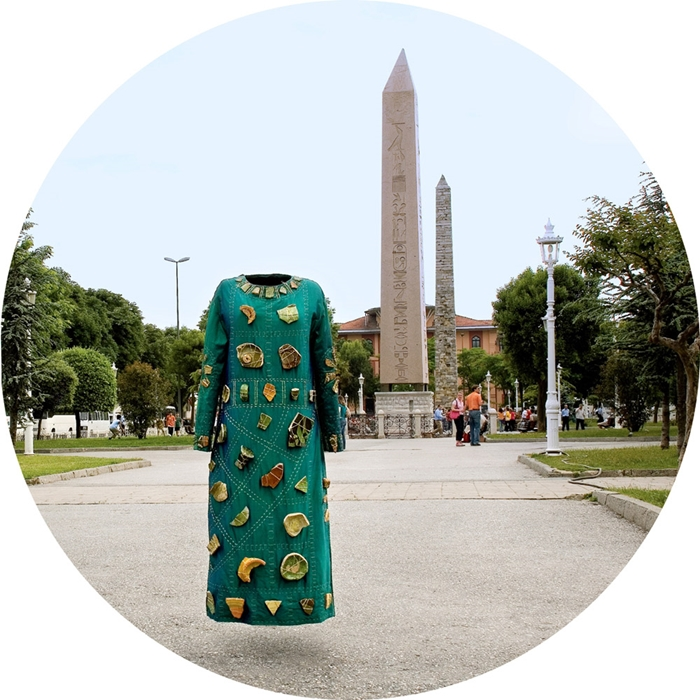
And perhaps this is why Börüteçene’s empty garment is such a haunting image of Istanbul.
It does not merely search for the city’s scattered fragments.
In its own wandering, it becomes one of them.
The body is absent.
The memory remains.
Visuals are taken from https://sanat.ykykultur.com.tr/.