
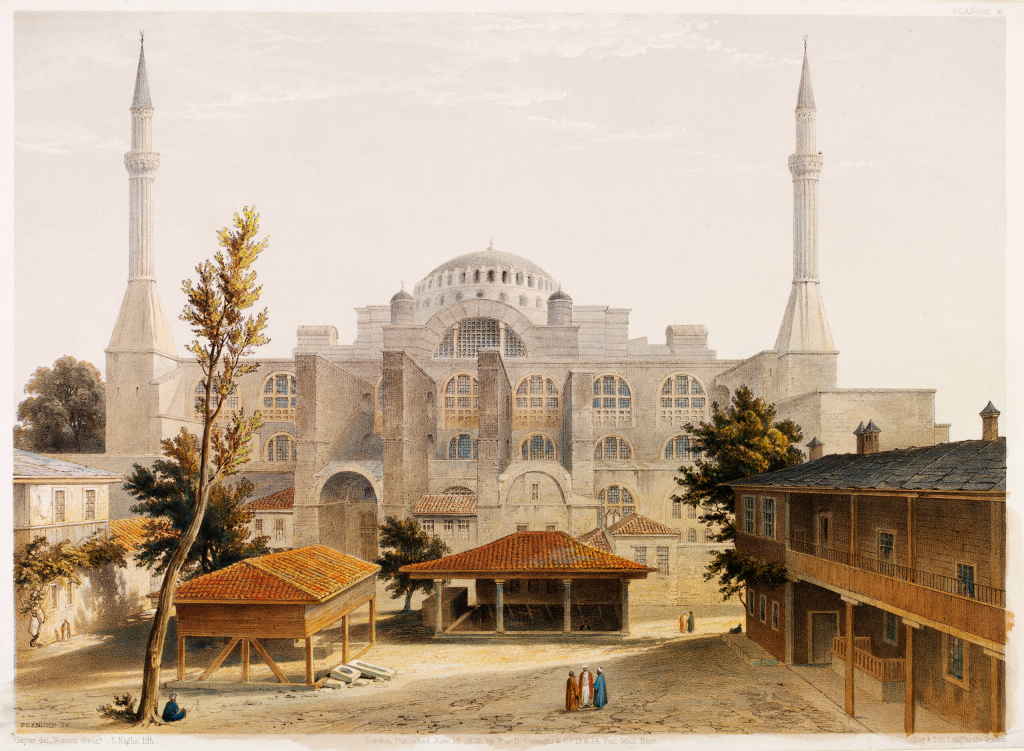
Photograph: Victoria and Albert Museum, London | ‘Aya Sofia Constantinople’, hand-coloured lithograph, by Gaspare Fossati, published by P. & D. Colnaghi. London, 1852
Few cities have witnessed such extraordinary cultural transformations as Istanbul. For nearly sixteen centuries, it served as the capital of successive empires, becoming a meeting point of civilisations, religions and artistic traditions.
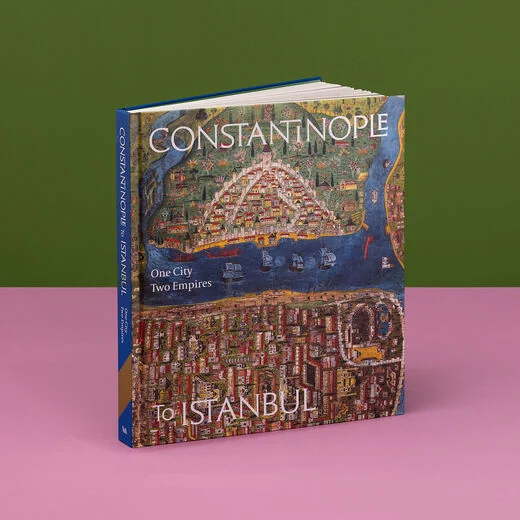
This fascinating history is explored in Constantinople to Istanbul: One City, Two Empires, an exhibition at London’s Victoria and Albert Museum (V&A), bringing together more than 200 objects dating from AD 330 to 1922.
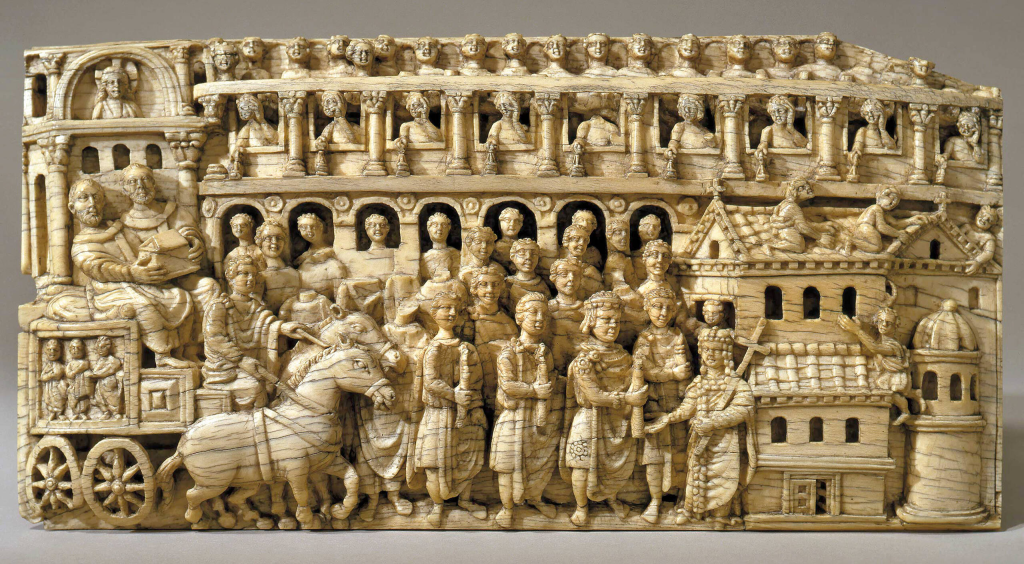
Photograph: Victoria and Albert Museum, London | Ivory relief panel with arrival of relics, possibly 5th century, Trier Cathedral, Germany, Treasury, Markus Groß-Morgen
The exhibition traces the city’s evolution from its refounding by Emperor Constantine the Great to the final years of the Ottoman Empire, exploring how two great imperial traditions shaped its artistic and cultural identity.
From Constantinople to the Ottoman Capital
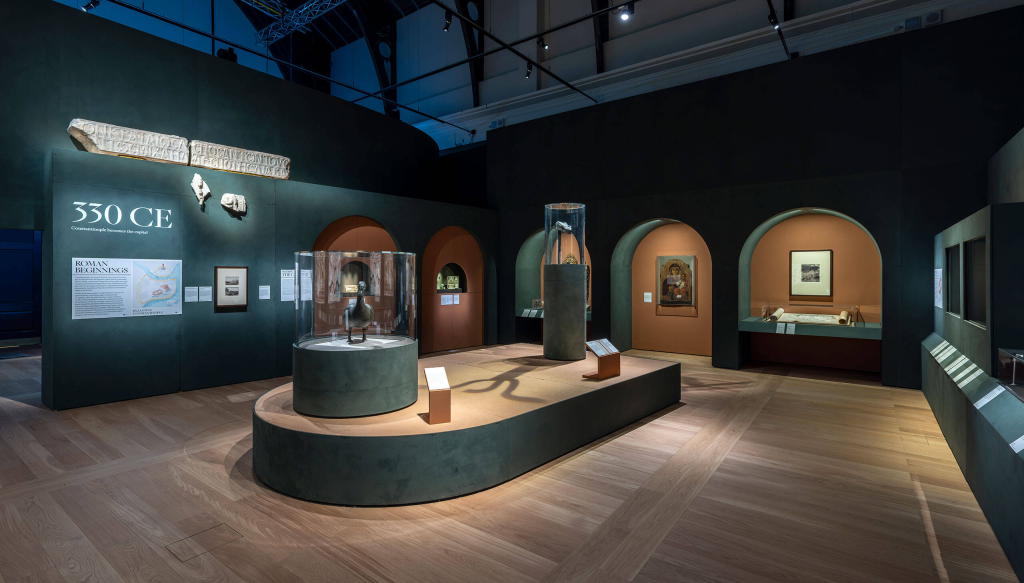
Photograph: Victoria and Albert Museum, London | Section 1: Roman Beginnings. Constantinople to Istanbul: One City, Two Empires. © Victoria and Albert Museum, London
In AD 330, Emperor Constantine the Great inaugurated Constantinople as the new capital of the Roman Empire, transforming the ancient city of Byzantion into one of the most important political, religious and commercial centres of the ancient world. Following the division of the Roman Empire, it remained the capital of the Eastern Roman, or Byzantine, Empire for more than a thousand years.
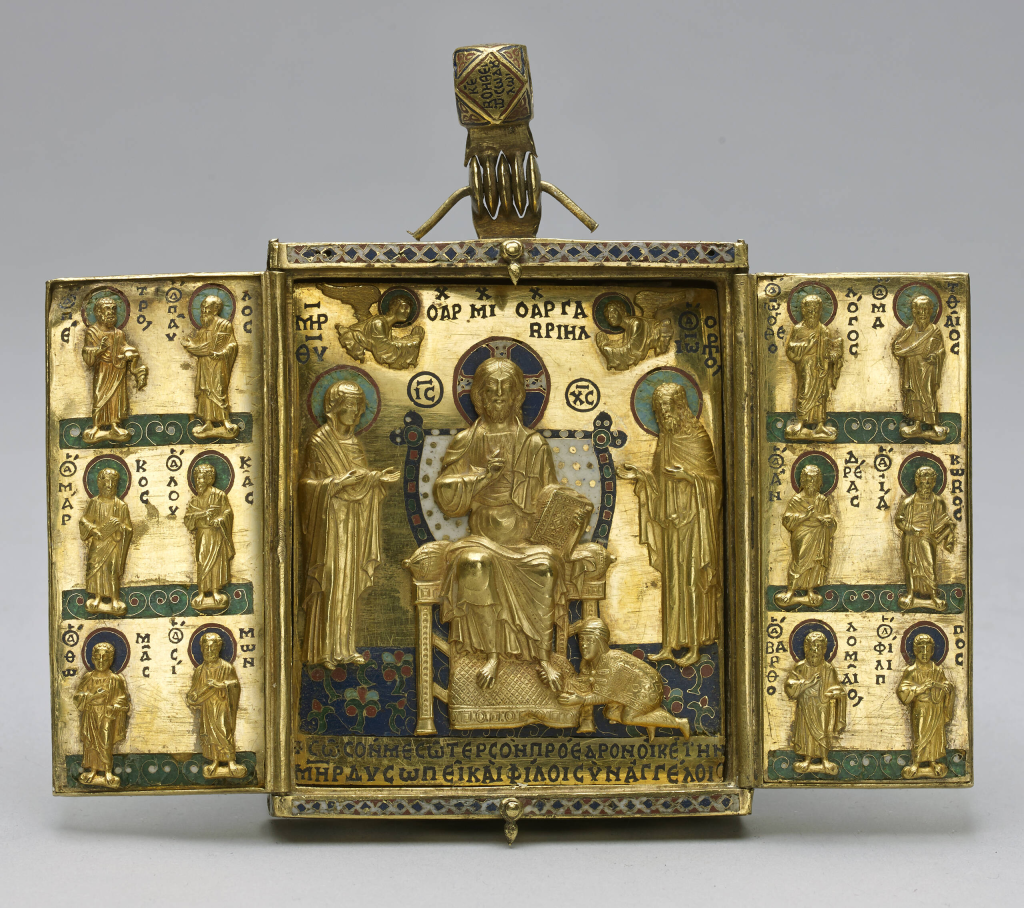
Photograph: Victoria and Albert Museum, London | Enkolpion of Constantinos, proedros, 11th century, Byzantine Empire
Byzantine art developed a distinctive visual language, combining classical Roman and Greek influences with Christian symbolism. Magnificent mosaics, icons, religious objects and architectural decoration reflected the city’s position as the spiritual and political heart of the empire.
In 1453, Sultan Mehmed II conquered Constantinople and made it the capital of the Ottoman Empire. The city entered a new chapter in its history, but its importance as an imperial centre remained undiminished.
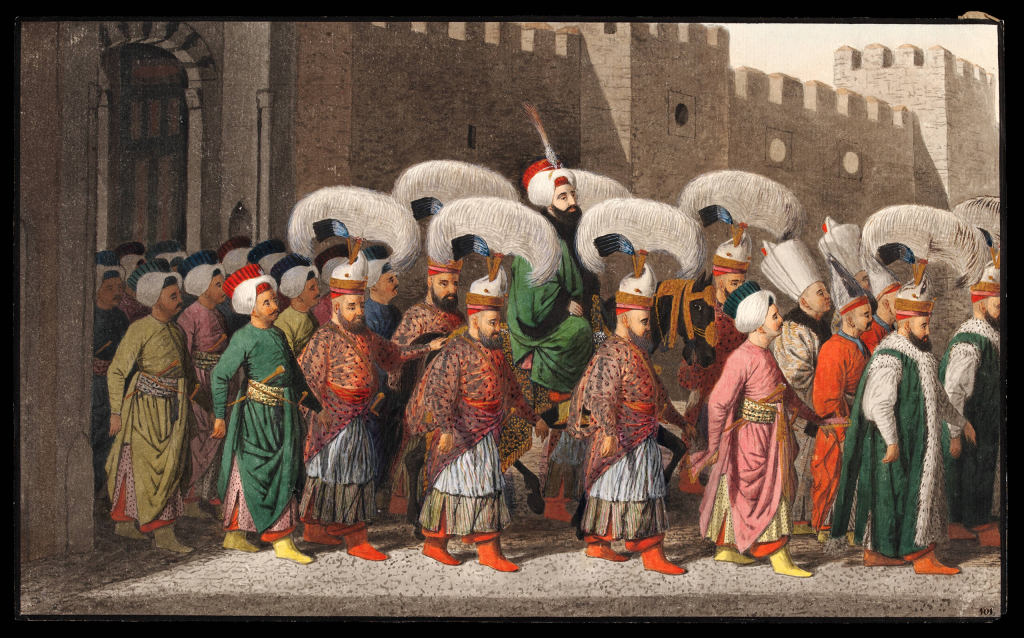
‘Photograph: Victoria and Albert Museum, London | The Sultan riding out in procession to Friday Prayers’, watercolour by anonymous Greek artist, about 1809, Istanbul, Turkey
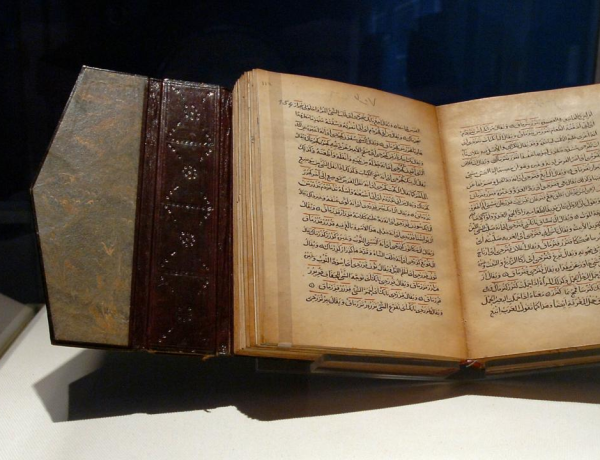
The Ottoman court developed an extraordinary artistic culture of its own. Precious textiles, jewellery, ceramics, manuscripts and ceremonial objects expressed the wealth and sophistication of an empire whose cultural and commercial networks extended across three continents.
A Cosmopolitan City
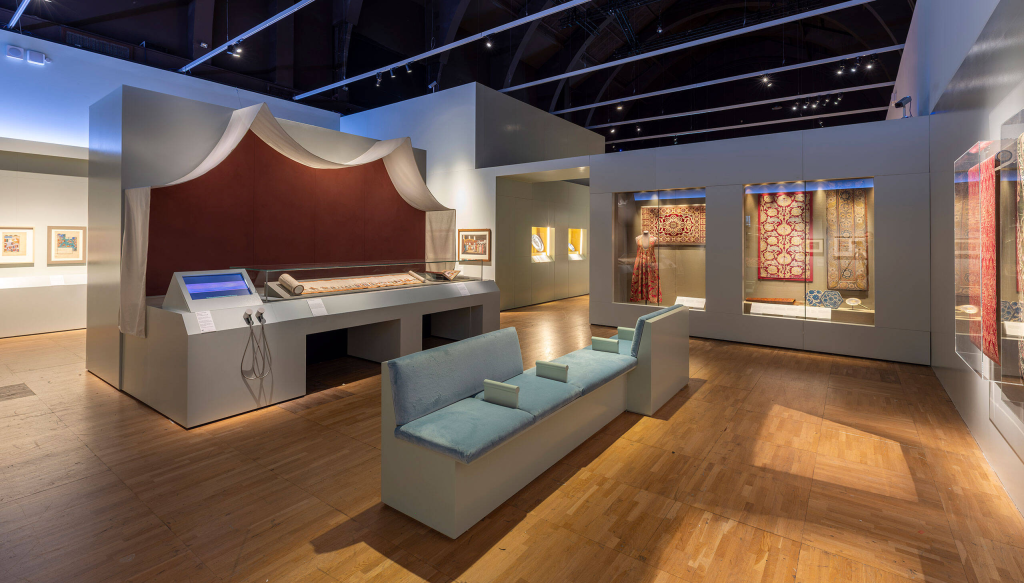
Photograph: Victoria and Albert Museum, London | Section 4: Life in the City. Constantinople to Istanbul: One City, Two Empires. © Victoria and Albert Museum, London
Beyond the imperial courts, the exhibition also explores everyday life in Constantinople and Istanbul. For centuries, Muslims, Christians and Jews shared the city’s urban landscape, contributing to its rich cultural diversity through their crafts, traditions, music and commercial activities.
The nineteenth century brought another significant transformation. Increasingly influenced by European tastes, particularly those of Paris, Ottoman society embraced new architectural styles, fashions and decorative arts. Yet these influences did not simply replace existing traditions; they created new forms of artistic expression through an encounter between Ottoman and European aesthetics.
This cultural exchange worked both ways. Byzantine and Ottoman art also fascinated European artists and designers, influencing their interpretations of Eastern decorative traditions.
One City, Many Histories
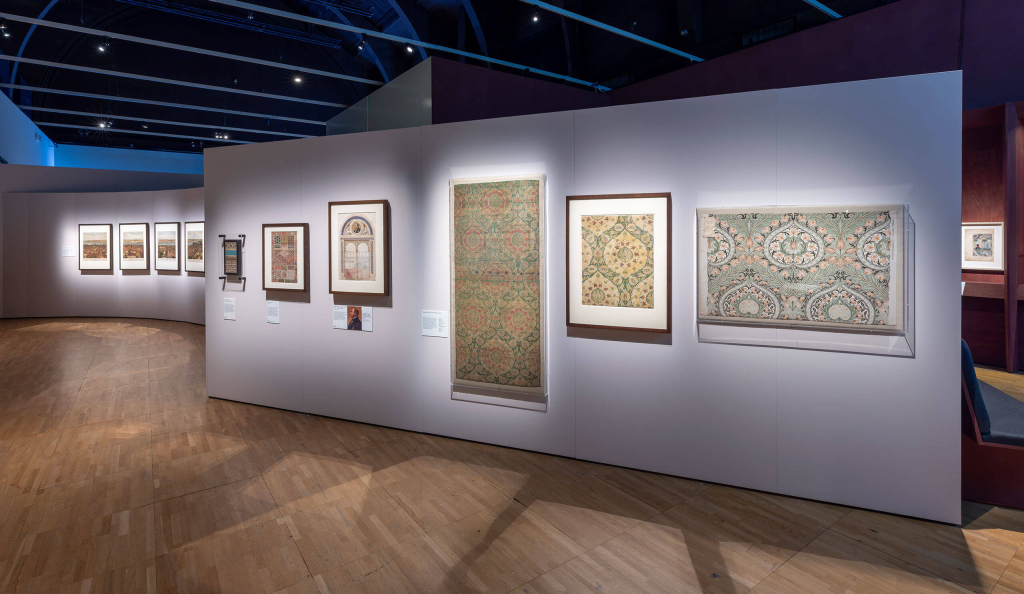
Photograph: Victoria and Albert Museum, London | Constantinople to Istanbul: One City, Two Empires. © Victoria and Albert Museum, London
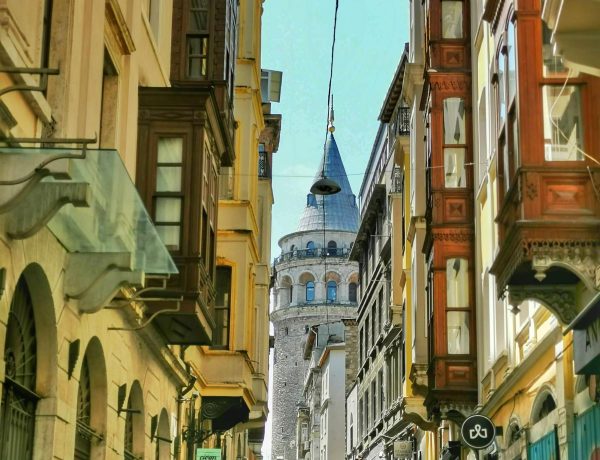
What makes Istanbul extraordinary is the coexistence of its many historical layers. Byzantine churches, Ottoman mosques, baroque palaces and nineteenth-century European-style buildings are not isolated remnants of different eras. Together, they form the cultural landscape of a city that has continually reinvented itself without entirely losing its past.
The V&A exhibition offers an opportunity to appreciate this continuity and to look beyond the conventional divisions between Byzantine and Ottoman history.
After nearly sixteen centuries of imperial transformations, Istanbul remains a city whose artistic identity cannot be attributed to a single civilisation. Its uniqueness lies in its ability to absorb, reinterpret and preserve the influences of the many worlds that have called it home.
Perhaps this is what makes Istanbul an eternal city.
Exhibition: Constantinople to Istanbul: One City, Two Empires
Venue: Victoria and Albert Museum (V&A), South Kensington, London
Dates: 7 November 2026 – 9 May 2027
Period covered: AD 330–1922
Official exhibition page: https://www.vam.ac.uk/exhibitions/constantinople-to-istanbul-one-city-two-empires
Further reading: https://www.vam.ac.uk/articles/about-the-constantinople-to-istanbul-one-city-two-empires-exhibition
Note that the video is embedded via YouTube and all rights belong to the respective rights holders.