

Before Byzantion became Constantinople, and long before the city acquired its Christian and imperial identity, one ancient goddess was associated with its protection: Hekate, the goddess of night, crossroads and torches.
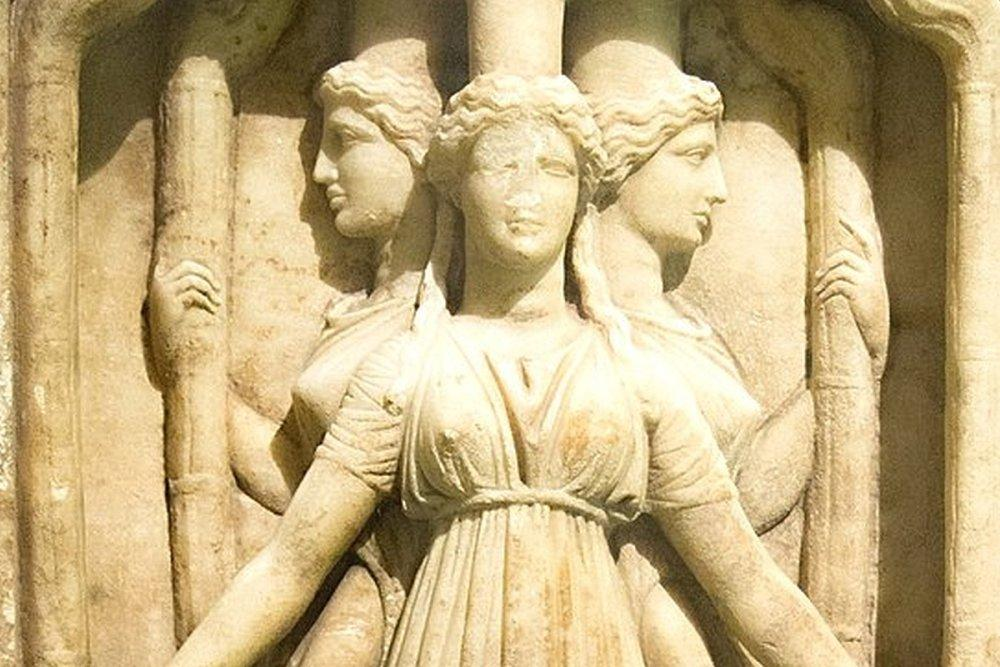
Detail from the Hekate relief dating back to the 2nd to 3rd century CE and originated from the ancient region of Thrace. It is housed in the permanent collection of the Musée du Louvre in Paris.
The ancient city had its own sacred protectors. Among them was Hekate, one of the most fascinating goddesses of the ancient Greek world. Often associated with darkness, magic, the moon and the spirit world, Hekate was much more than a mysterious goddess of the night. She was also a guardian of boundaries, crossroads and entrances. She watched over places where different worlds met and was believed to offer protection to those passing through uncertain or dangerous territory.
For a city such as Byzantion, standing at the meeting point of Europe and Asia, the Black Sea and the Sea of Marmara, her symbolism seems particularly appropriate.
The Goddess of Light
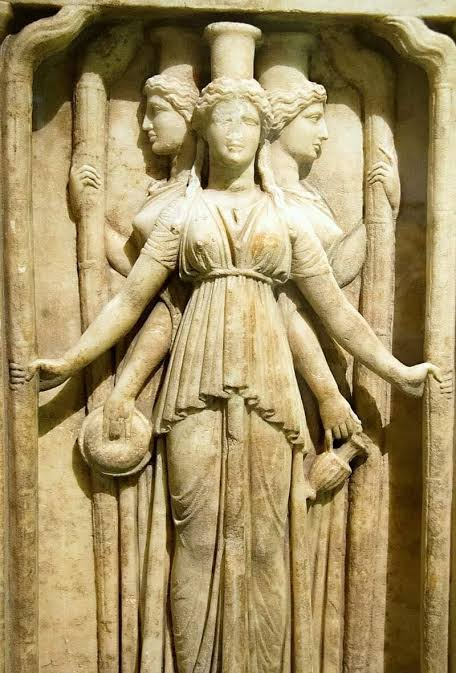
Hekate was traditionally represented carrying torches, illuminating the darkness and guiding the way. One of her titles was Phosphoros, meaning “Light-Bearer”.
Her connection with Byzantion became especially significant during the siege of the city by Philip II of Macedon in 340–339 BC. According to a tradition recorded by Hesychius of Miletus, a sixth-century AD writer, Macedonian soldiers attempted to enter the city secretly during the night. The inhabitants were apparently unaware of the approaching attack.
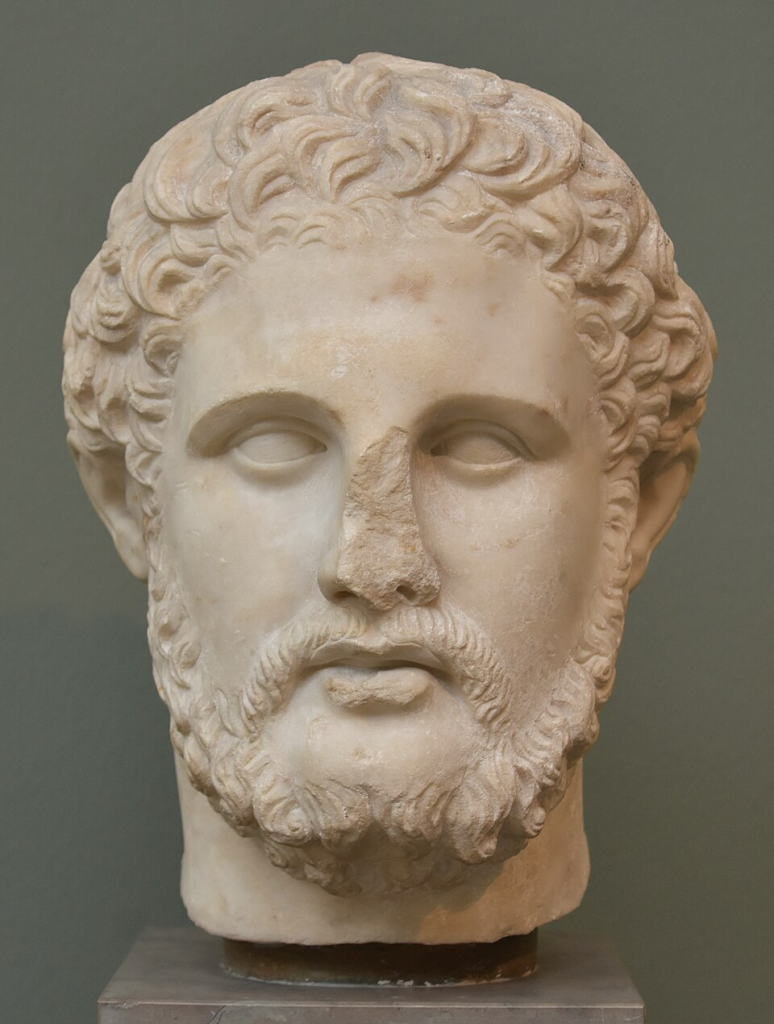
Philip II of Macedon, Roman copy from a Greek original
Then, according to the account, an extraordinary light appeared in the sky. In some versions of the story, the sudden illumination was accompanied by the barking of dogs, further alerting the inhabitants to the approaching enemy. The people of Byzantion interpreted this event as divine intervention by Hekate, whose light had helped them defend their city.
In gratitude, the inhabitants honoured the goddess with a statue known as Hekate Lampadephoros, meaning “Hekate, the Torch-Bearer”.
It is important to remember that this account was recorded approximately nine centuries after the siege itself. Although it belongs to the later historical tradition surrounding Byzantion, it reveals how deeply Hekate’s protective image had become embedded in the city’s memory.
Guardian of Crossroads and City Gates
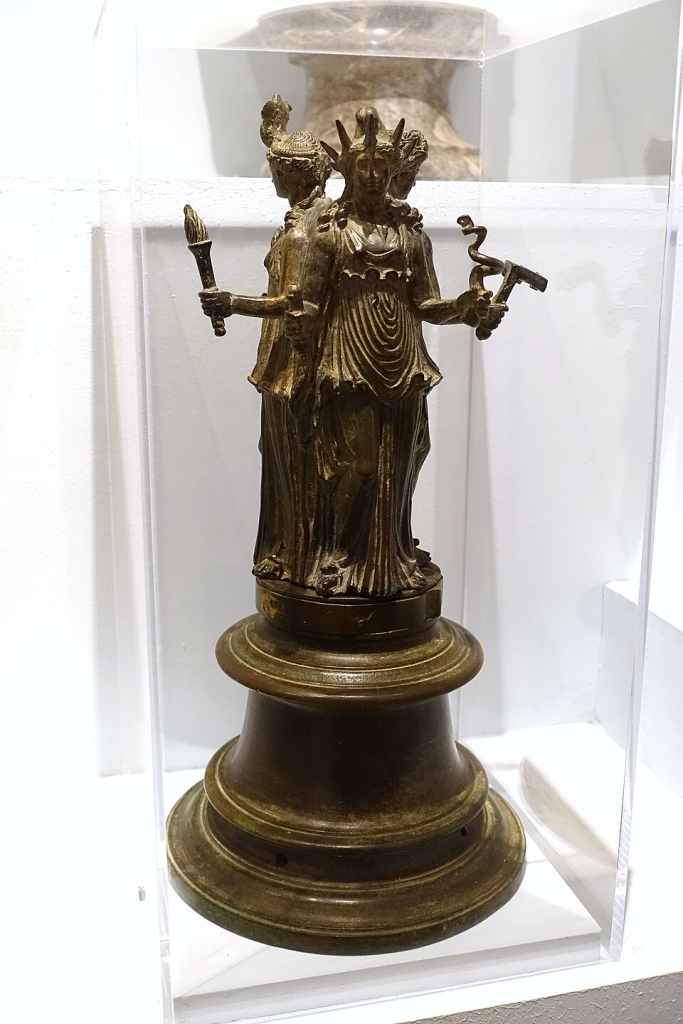
Gilt-bronze Hekataion, 1st century CE, Roman period. Musei Capitolini, Rome. A striking example of the triple-bodied representation of Hekate, rooted in ancient Greek artistic tradition.
Hekate’s protective role was closely connected with her association with thresholds and boundaries.
In the ancient Greek world, she was often honoured at crossroads, entrances and doorways. Her presence was believed to protect places where one space ended and another began. Her triple form, in which she was represented looking in three different directions, became one of her most recognisable images. In Byzantion, her cult was associated with the protection of the city and its boundaries. Ancient traditions also connect her worship with sanctuaries near the city’s gates.
There is an interesting connection here with another goddess, Artemis, who was also worshipped in Byzantion under the title Phosphoros. Both goddesses were associated with torches and divine protection, and their cults sometimes overlapped.
Hekate and the Identity of Byzantion
What makes Hekate particularly interesting in the history of Byzantion is not simply her mythology, but what she represented. She was a goddess of transitions: between night and day, safety and danger, the familiar and the unknown. She stood at crossroads and guarded entrances, watching over the passage from one world into another.
It is tempting to see a certain symbolic affinity between this goddess and the geographical character of Byzantion itself. The city occupied a remarkable position between two continents and two seas. Its identity was shaped by movement, encounters and the constant passage of people, ships and cultures.
Hekate’s presence in its ancient religious landscape offers us a glimpse of a Byzantion that existed long before the imperial capital of Constantinople.
Today, when we walk through Istanbul, it is easy to forget that the city’s earliest history was also shaped by the beliefs and rituals of the ancient world. Yet beneath the layers of Roman, Byzantine and Ottoman history, traces of its pagan past remain part of its cultural memory.
Hekate’s Legacy in Modern Istanbul
Although no securely identified sanctuary of Hekate survives in modern Istanbul, the goddess has not entirely disappeared from the city’s historical landscape. Ancient literary sources and modern scholarship preserve traces of her association with Byzantion, including a possible sanctuary dedicated to Phosphoros, the Light-Bearer, whose identity has been linked to both Hekate and Artemis. The question remains open, adding another layer of mystery to the city’s ancient religious history.
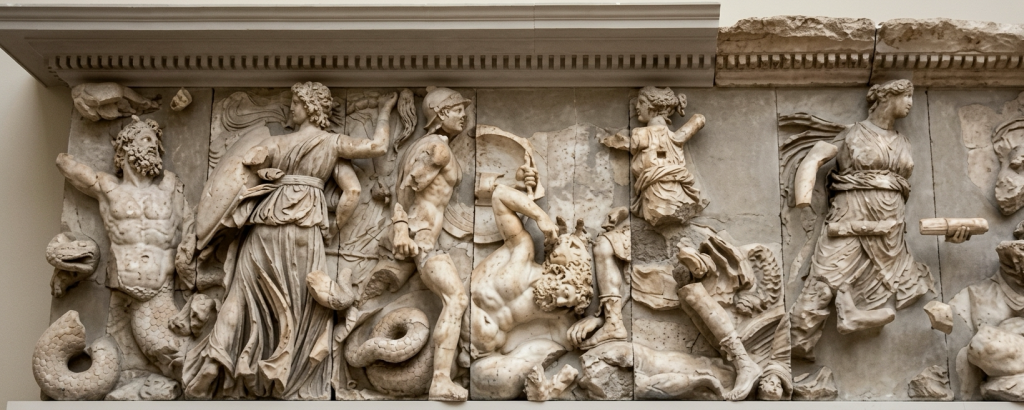
Hekate in the Gigantomachy (second left), western frieze of the Temple of Hekate at Lagina, 2nd century BC. Istanbul Archaeological Museums
Today, visitors can encounter a more tangible connection at the Istanbul Archaeological Museums, where sculptural remains from the Temple of Hekate at Lagina, in ancient Caria, are preserved.
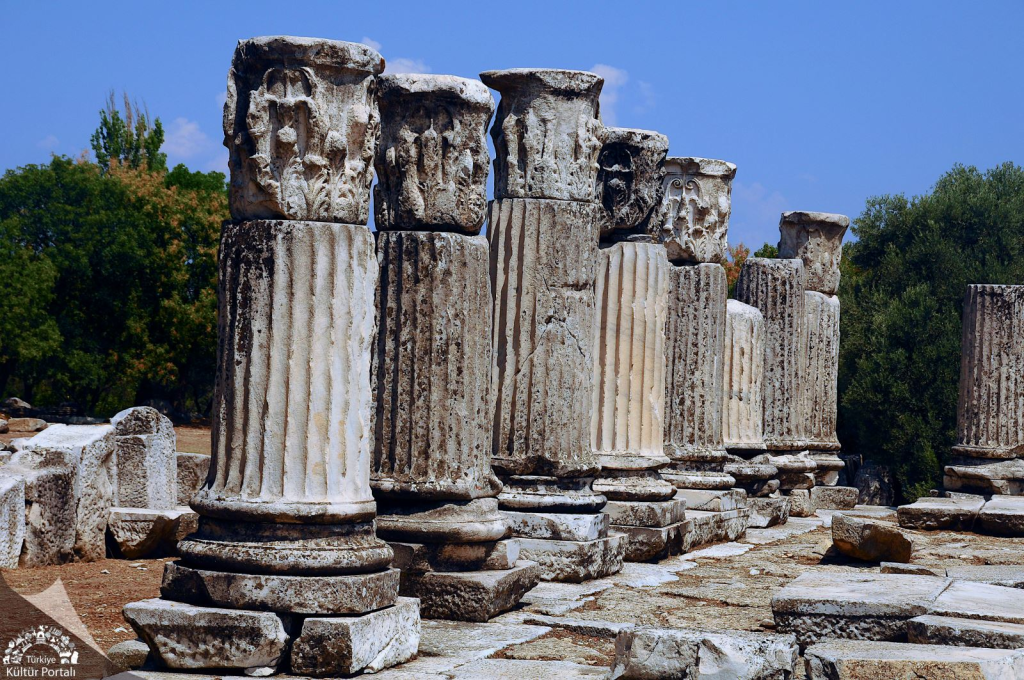
The Temple of Hecate at Lagina, located in Muğla, Turkey, is the largest and most significant sanctuary dedicated to the goddess Hecate in the ancient world. Built in the 1st century BCE, this Corinthian-style temple served as a major religious and ceremonial center.
These fragments do not come from Byzantion itself, but they offer a glimpse into the wider world in which the goddess was worshipped. And perhaps this is the most fitting way to remember Hekate in Istanbul: not through a surviving temple, but through the ancient stories, fragments and symbols that still illuminate the city’s distant past.


