
I had recently been watching The Empress on Netflix and found myself rather captivated by it. The series, with its sumptuous costumes, court intrigues and the fascinating personality of Elisabeth of Austria — better known as Sisi — had drawn me into the world of the Habsburg court.
Sisi was an intriguing woman: unconventional, restless, intellectually curious and, above all, a passionate traveller. She was never entirely at ease with the restrictions of imperial life and often sought refuge in travel, escaping the suffocating formality of the Viennese court whenever she could.
As I watched the series, a thought occurred to me: had Sisi ever visited my magnificent city, Istanbul? Surely, with her love of travel and her fascination with distant places, she might have been tempted by a city that had enchanted generations of European travellers.
I began looking for an answer. And what I discovered was not quite what I had expected.
It was not Sisi who came to Istanbul, but her husband, Emperor Franz Joseph I of Austria, who visited the Ottoman capital in October 1869, during the reign of Sultan Abdülaziz.
And what a visit it was!
An Encounter Between Two Empires
Franz Joseph’s journey to the East in 1869 was officially undertaken to attend the opening ceremonies of the Suez Canal. His visit to Istanbul, however, also carried considerable diplomatic significance. It was, in a sense, a return gesture following Sultan Abdülaziz’s European tour in 1867, during which the Ottoman ruler had visited Paris, London and Vienna.
The emperor’s visit was particularly significant: it was the first official visit to Istanbul by an Austrian emperor and a European sovereign, as well as the first journey to Istanbul and Suez by a Habsburg ruler.
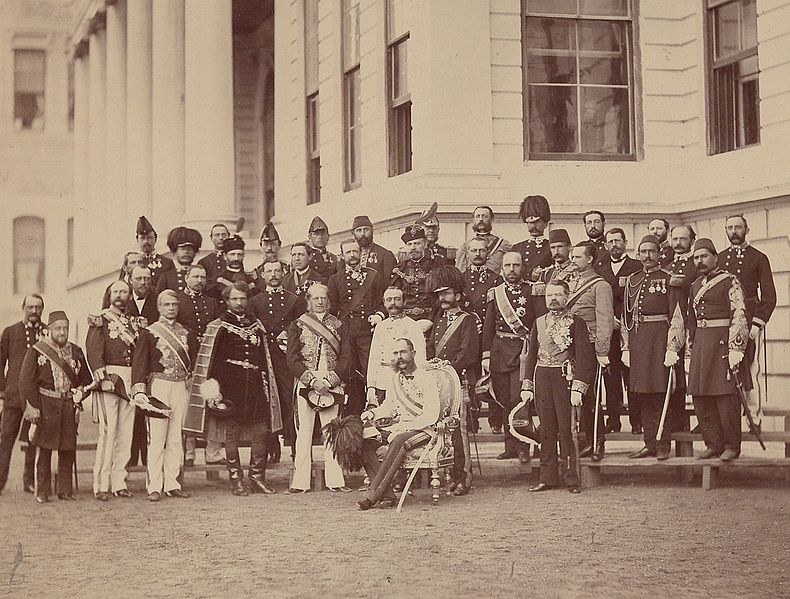
Franz Joseph I with his entourage and Ottoman officials in Constantinople, 1869
The two empires had spent centuries confronting one another on the battlefield. By the second half of the nineteenth century, however, both were navigating a changing European political landscape, increasingly relying on diplomacy to preserve their positions among the great powers.
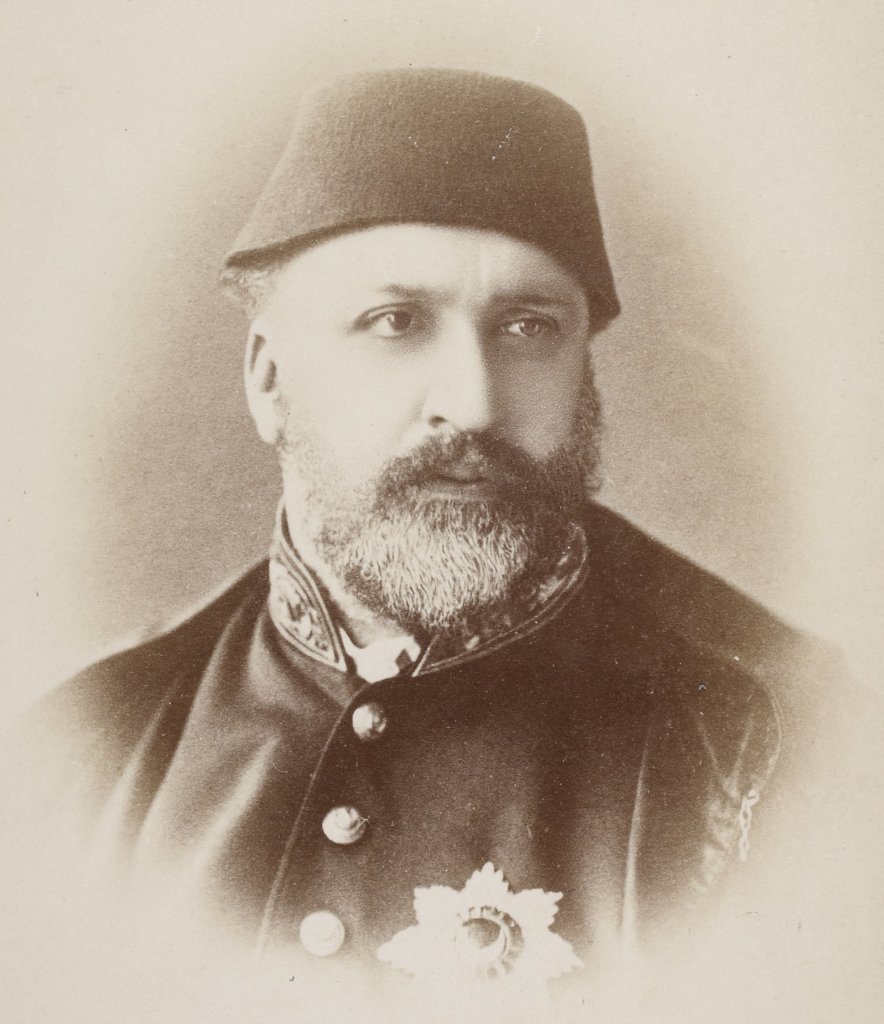
Sultan Abdülaziz
Franz Joseph arrived in Istanbul on 29 October 1869. Sultan Abdülaziz personally welcomed him aboard a magnificent imperial boat rowed by twenty-four oarsmen dressed in red. The Bosphorus was filled with vessels, while soldiers lined the route from Büyükdere to Dolmabahçe Palace.
One can only imagine the spectacle of the Bosphorus on those autumn days, with imperial vessels, military ceremonies and the flags of two empires fluttering above the water.
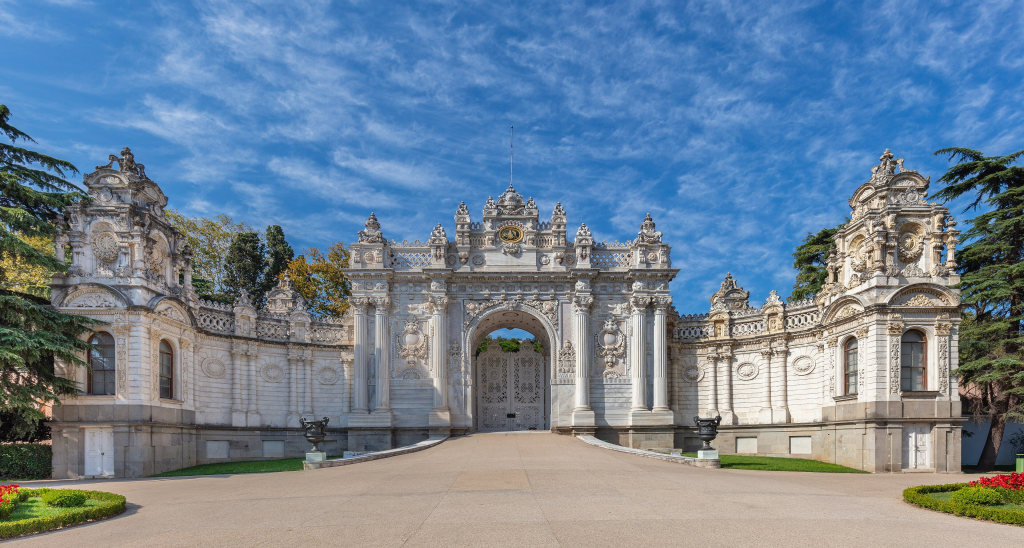
Dolmabahçe Palace
Dolmabahçe Palace was made available to the emperor, while Abdülaziz and his household moved elsewhere during his stay. Even the arrangements for the imperial kitchens were remarkable: special bakers were brought from Vienna to cater to the emperor’s needs. He wrote to his beloved empress saying:
The palace is as beautiful as something out of a fairy tale and outrageously luxurious.
A Habsburg Emperor Discovers Istanbul
Fortunately, Franz Joseph did not restrict his visit to diplomatic ceremonies and palace receptions. He explored the city and recorded his impressions in letters to his wife, Elisabeth.
These letters offer a fascinating glimpse of nineteenth-century Istanbul through the eyes of a European monarch. They also reveal something of the emperor’s personality, his curiosity and his occasionally rather unexpected observations.
we saw a notably remarkable treasure and a lovely small library. The Prophet’s standard and cloak were kept here, but we were not permitted to see them because we are Christians.
from Franz Joseph’s letter to Empress Elisabeth
At Topkapı Palace, he was impressed by the treasures and the small library. He also learned about the sacred relics preserved there, including the Prophet Muhammad’s cloak and standard, although he was not permitted to see them.
He was particularly interested in the Baghdad Pavilion, with its beautiful tiles and Persian carpets.
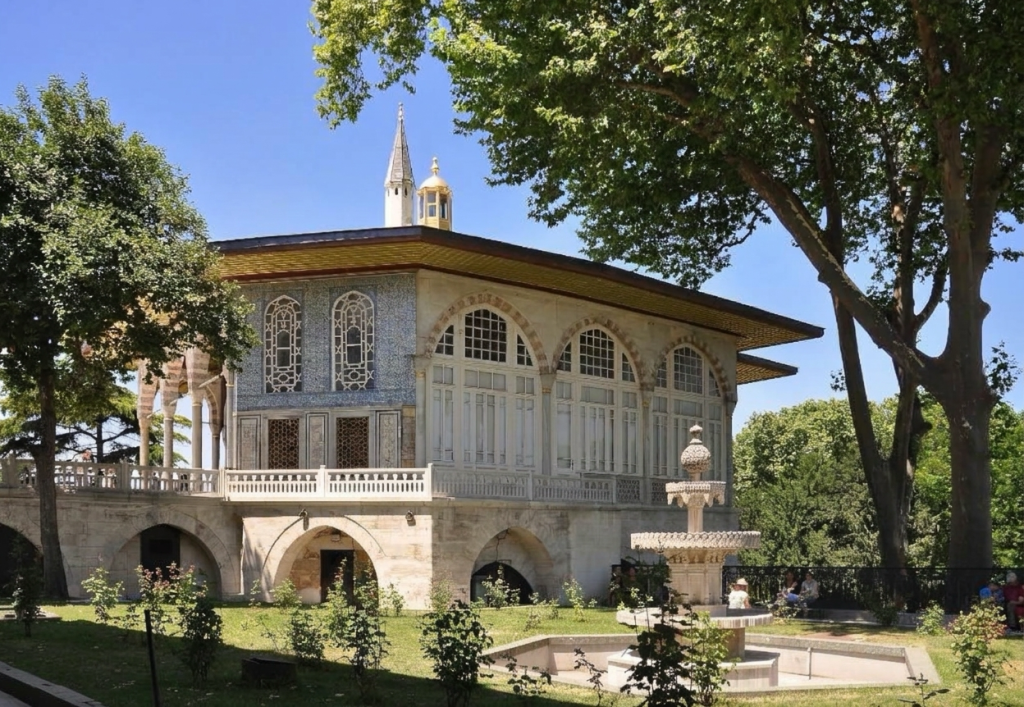
Baghdad Pavilion
There was also a remarkable historical connection waiting for him in the palace library. Among the manuscripts he encountered were volumes associated with the collection of Matthias Corvinus, the fifteenth-century King of Hungary. These manuscripts had been brought from Buda to Istanbul in 1540, on the orders of Sultan Süleyman.
For a Habsburg emperor, the encounter must have carried a particular historical resonance. The manuscripts represented a meeting between the histories of Hungary, the Ottoman Empire and the Habsburg world.
Sultan Abdülaziz presented Franz Joseph with four Latin manuscripts, which the emperor intended to donate to the Hungarian Academy of Sciences.
From the Fire Tower to the Streets of Pera
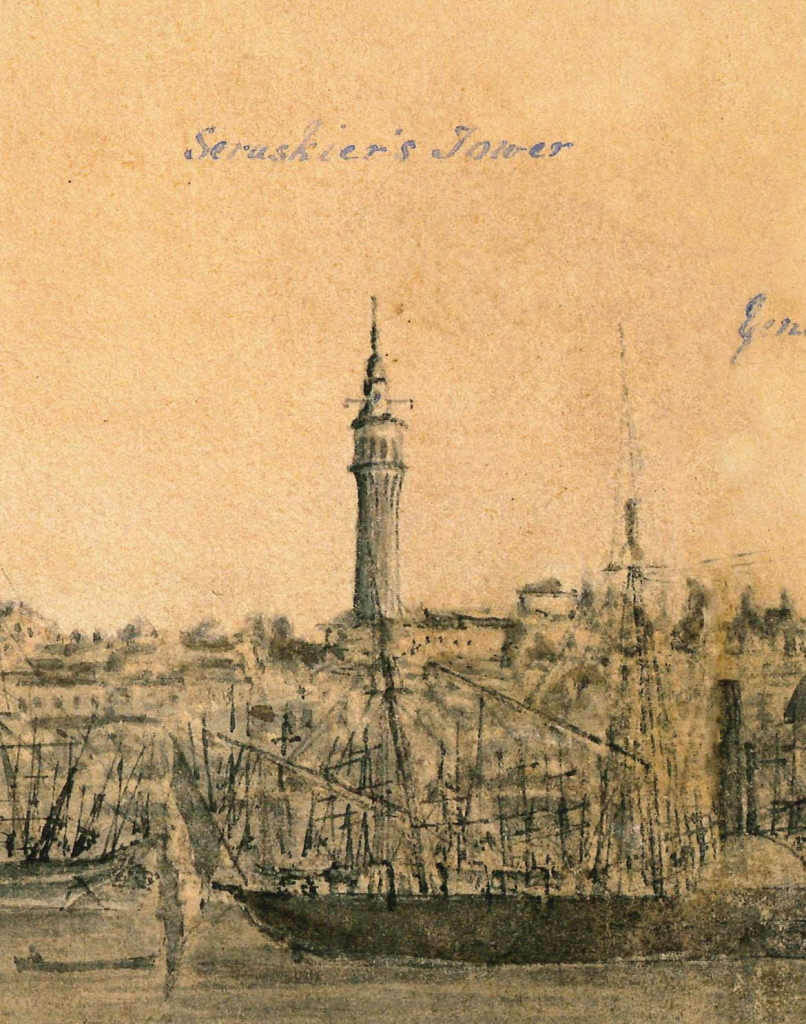
Franz Joseph also climbed the fire tower of the Seraskerate, from where he could admire the extraordinary panorama of Istanbul. From this vantage point, he observed the city, its dense neighbourhoods and the great expanse of its historic peninsula.
He visited the mausoleum of Süleyman the Magnificent, a particularly symbolic moment given the long and often turbulent history between the Ottomans and the Habsburgs. Süleyman had famously besieged Vienna in 1529. Nearly three and a half centuries later, a Habsburg emperor was paying his respects at the tomb of the Ottoman sultan.
Interestingly, Franz Joseph noted that this particular visit had been arranged in honour of his wife, Empress Elisabeth. Even though Sisi was not travelling with him, she was present in the gestures and courtesies extended to the emperor. It is a lovely detail that connects the historical journey back to the woman who inspired my curiosity in the first place.
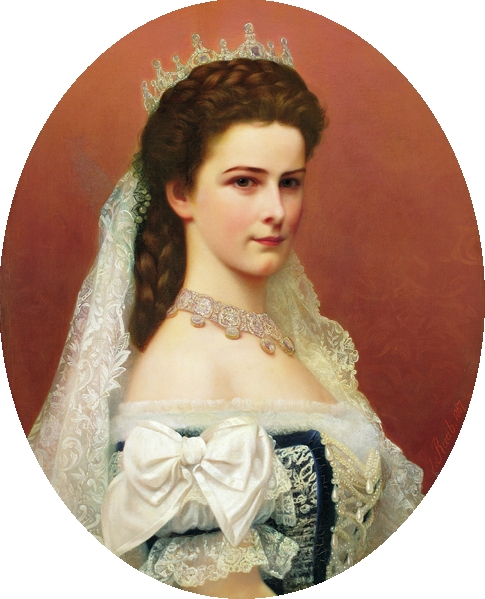
Empress Elisabeth
He also visited the Austrian diplomatic premises in Pera, including the Venetian Palace, and attended a performance of Donizetti’s opera La Favorita.
The performance, however, did not entirely impress him. He apparently found the theatre rather small and the production mediocre, leaving after only one act.
The streets of Pera, meanwhile, had been illuminated in his honour, and crowds gathered to catch a glimpse of the distinguished visitor. One can imagine the excitement in this cosmopolitan neighbourhood, where European diplomatic life, commerce, culture and the Ottoman capital’s social world intersected.
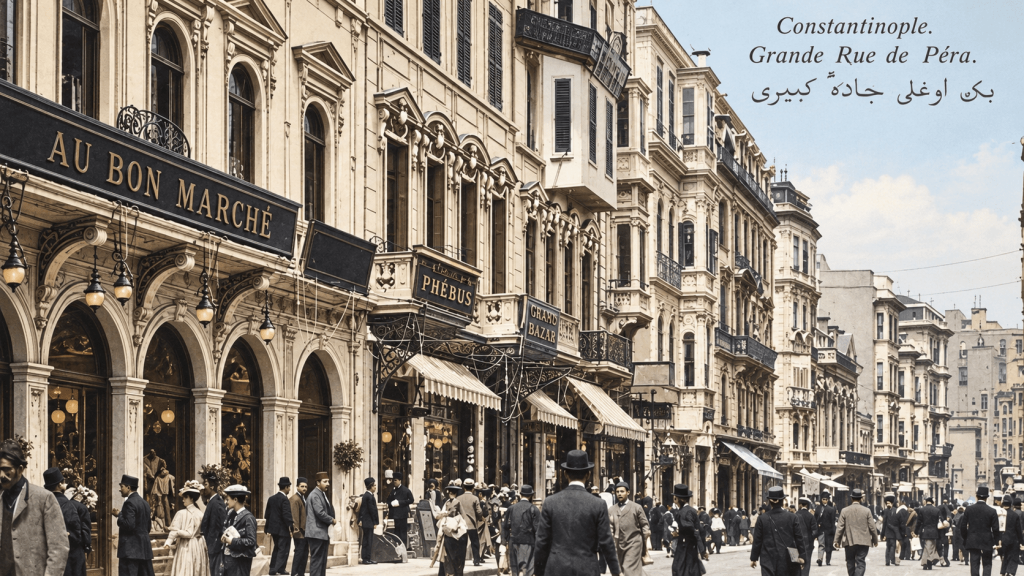
The Bosphorus Through Imperial Eyes
Franz Joseph’s letters also reveal his personal observations of the Bosphorus. Interestingly, he thought it would be wider than it actually was, comparing it with the Danube.
Sultan Abdülaziz arranged excursions along the strait, and the imperial guest was treated to an evening spectacle in which naval vessels were illuminated and fireworks lit up the night sky.
The Sultan also presented four horses as gifts to the imperial party. They were distributed among Franz Joseph and three members of his entourage: Count Friedrich Ferdinand von Beust, Prince Konstantin zu Hohenlohe-Schillingsfürst and Count Heinrich von Bellegarde.
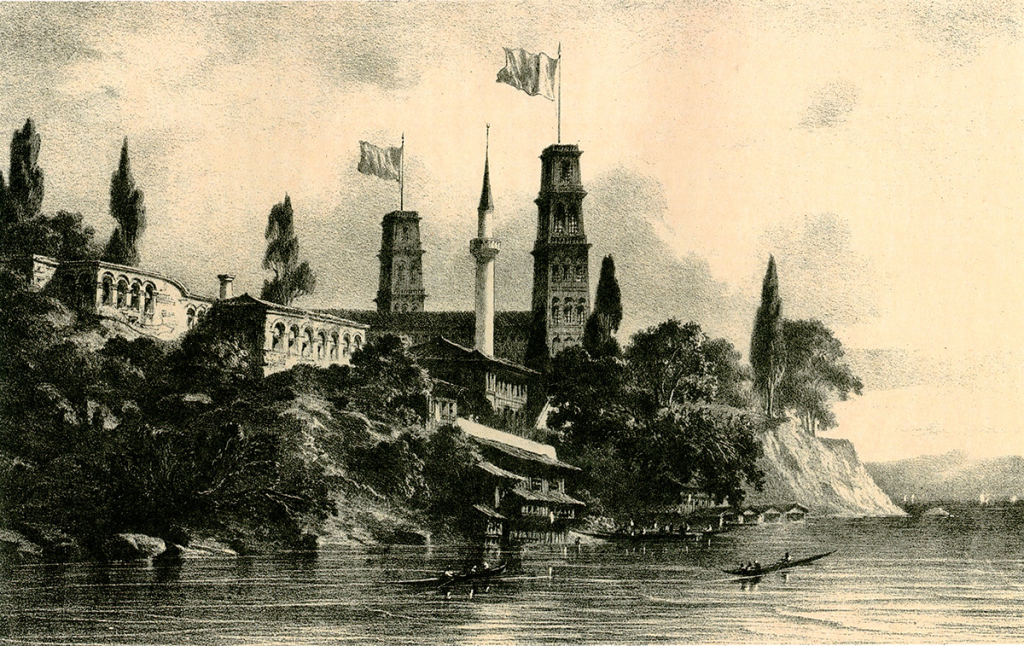
Selimiye Barracks by Eugène Flandin, 1844 (taken from sinangenim.com)
The emperor also visited Haydarpaşa, the military hospital and Selimiye Barracks, as well as Beylerbeyi Palace, discovering different aspects of the city beyond its imperial residences.
One wonders what Sisi would have thought of these excursions and, more importantly, of the city her husband was describing in his letters.
An Imperial Farewell
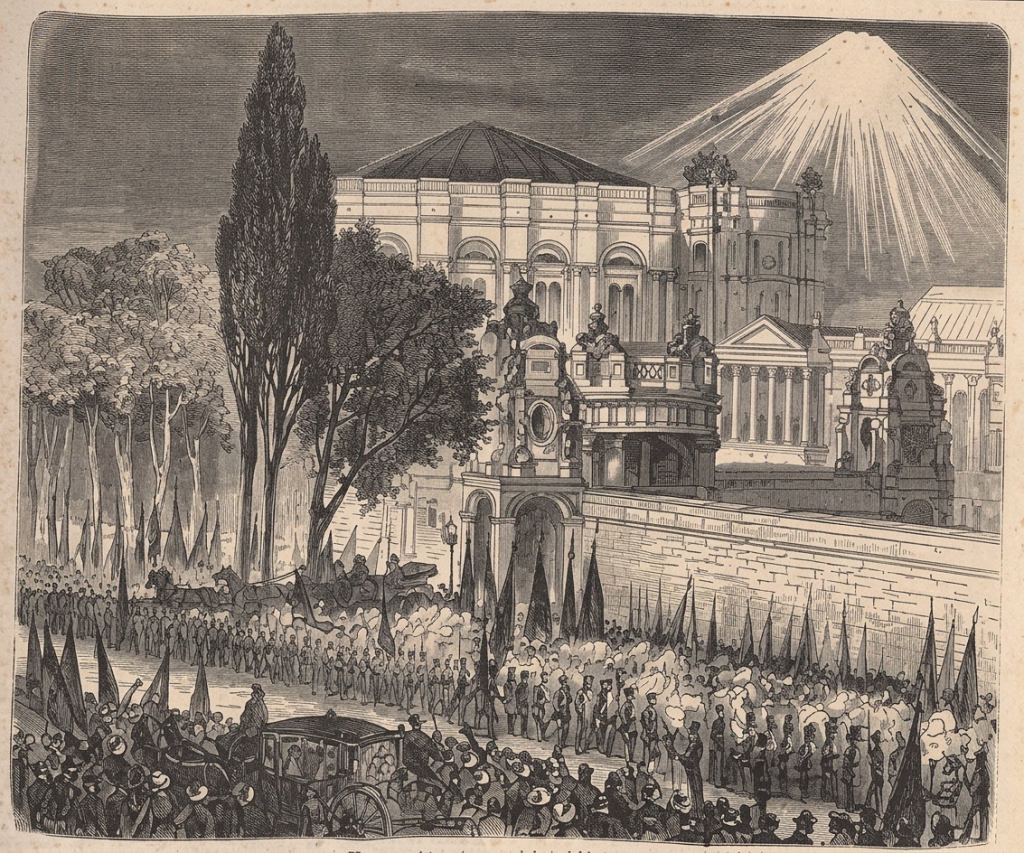
The torch procession held for Franz Joseph’s departure from Dolmabahçe Palace on
the evening of 31 October (Le Monde Illustré, 1869, November 20)
Franz Joseph’s visit concluded on 1 November 1869. Before his departure, the two sovereigns exchanged honours. Franz Joseph presented Sultan Abdülaziz with the Order of St. Stephen, while the Sultan bestowed the Order of the Medjidie upon the Austrian emperor.
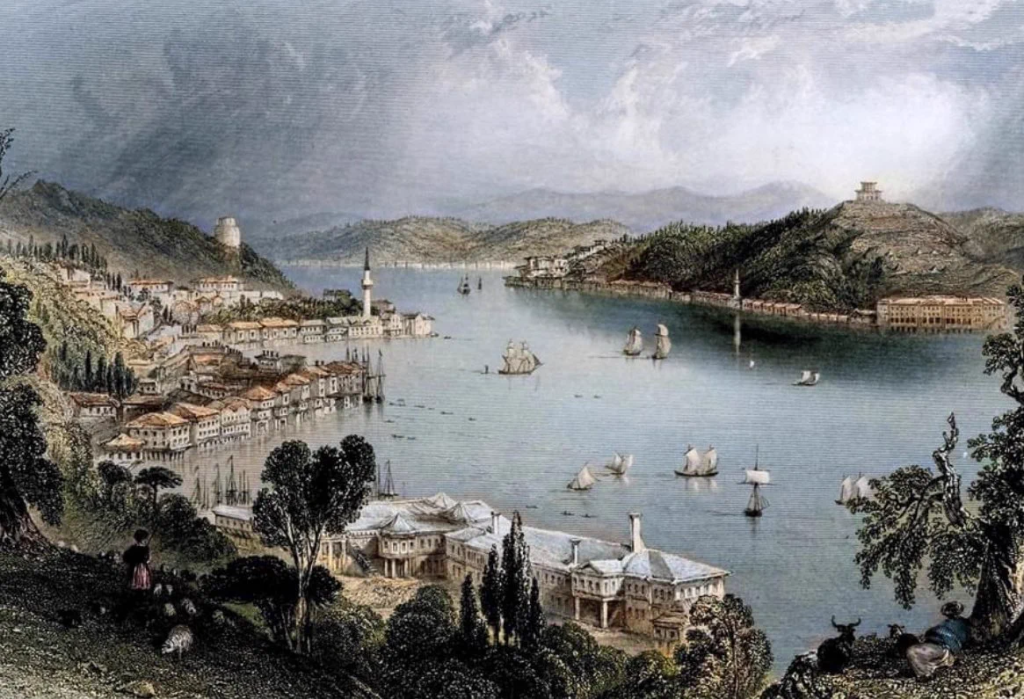
Bosphorus by William Henry Barlett in 1800s
The farewell was as magnificent as the reception. The Bosphorus was illuminated, and ships gathered to salute the departing monarch. Sultan Abdülaziz personally accompanied his guest to the point of departure.
It was a fitting conclusion to a visit that had brought together two imperial worlds with centuries of shared conflict, rivalry and, increasingly, diplomatic engagement.
The Journey That Inspired My Curiosity
I began this little historical journey with a rather romantic question about Sisi and her travels. I had imagined her wandering through the streets of Istanbul, perhaps exploring the bazaars, admiring the palaces or watching the sunset over the Bosphorus.
Instead, I discovered that it was her husband who had experienced this extraordinary city, and that he had left us a personal account of his impressions.
There is something rather poignant about this discovery. Sisi, who spent so much of her life travelling in search of freedom, was not part of this particular journey. Yet, through Franz Joseph’s letters, we can catch a glimpse of the Istanbul she might have encountered. And the fact that the visit to Süleyman the Magnificent’s tomb was arranged in her honour makes the connection all the more touching.
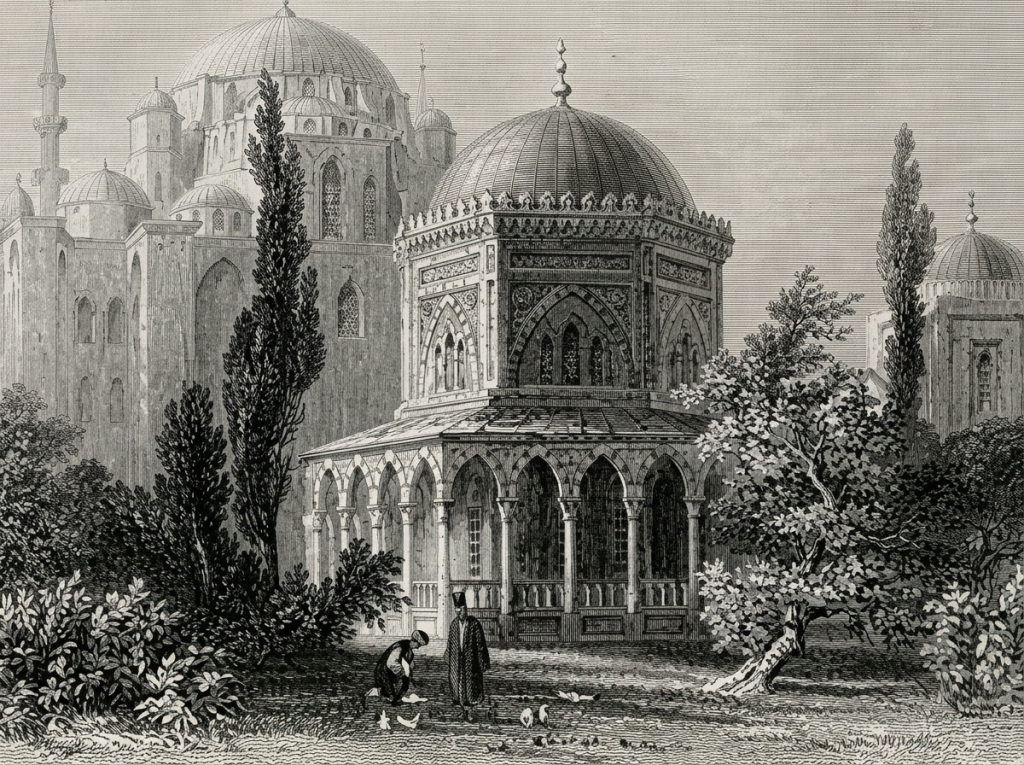
An old engraving of Süleyman the Magnificent’s tomb
Historical source: Osman Kara, “The Visit of the Austro-Hungarian Emperor Franz Joseph to İstanbul in 1869,” Dumlupınar University Journal of Social Sciences, No. 88 (2026), pp. 55–70.
Note that the videos are embedded via YouTube and all rights belong to the respective rights holders.