
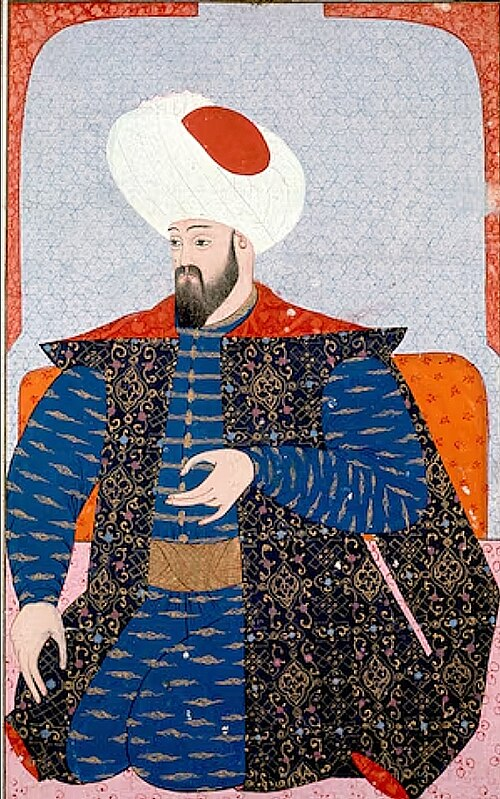
Osman I, founder of the Ottoman dynasty. Ottoman miniature, c. 1580, created more than two centuries after his lifetime.
In Osman’s Dream, historian Caroline Finkel tells the remarkable story of how a small frontier principality on the margins of the Byzantine world grew into one of history’s great empires.
The title evokes the legendary dream of Osman Gazi, founder of the Ottoman dynasty. According to later Ottoman tradition, Osman dreamed that a moon rose from the breast of the holy man Sheikh Edebali and entered his own. From Osman’s body then sprang a great tree, its branches spreading across the world and its shadow falling over mountains, rivers, cities and distant lands. Centuries later, Ottoman chroniclers would present the dream as a prophecy of the dynasty’s extraordinary destiny.
From a modest uç beyliği in north-western Anatolia in 1280s, the Ottomans gradually expanded into former Byzantine territories. Bursa became their first great capital; they crossed into Europe and established themselves in the Balkans. Then, in 1453, less than a century and a half after Osman’s death, his descendant Mehmed II conquered Constantinople. The ancient imperial city became the heart of a new empire that would eventually stretch across three continents and endure for six centuries.
Whether Osman ever actually dreamed this dream is perhaps less important than what the story came to mean. Looking backwards from Istanbul, the Ottomans imagined the origins of their empire not simply as a succession of conquests, but as the fulfilment of a destiny: a tree growing from one man and casting its shadow across the world.
Perhaps empires, like so many human things, begin twice: first in imagination, and only then in history.
After all, everything begins with a dream.
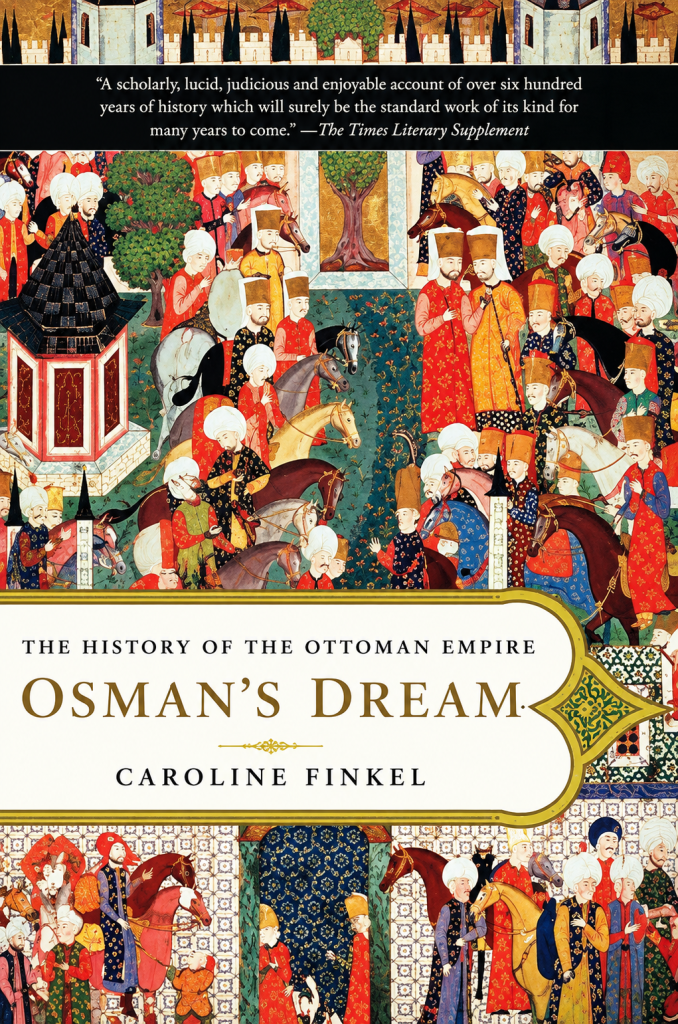
Make sure to read Finkel’s masterpiece to understand how a dream became an empire.
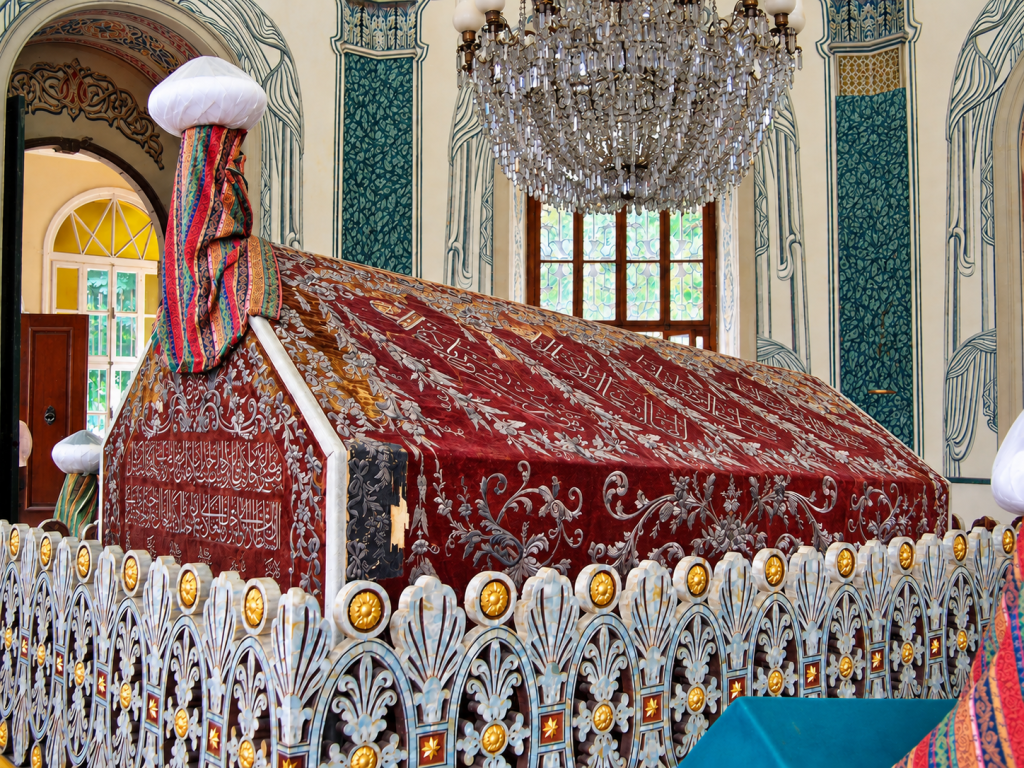
Osman’s tomb in Bursa