

Eastern Roman Empire did not only construct above the ground, it also constructed a city of its own below the ground. A city that had the shortage of water was in need of large cisterns that could help the city to survive for long periods of siege by enemy armies and thus the Romans built one of the rare examples of cisterns below the city of Constantinople. It is estimated that there are thousands of them below the current city of Istanbul and the good news is that you can visit some of them. The ones you are about to hear have been fully renovated and open to public.
The most famous one of course is the “yerebatan sarayı” literally meaning the sunken palace. The cistern was no palace and it was not even meant to be visited or inhabited. All throughout its history during the Roman period, it was full of water and was hidden from the public gaze. The current cistern looks amazing due to its glorious columns and lightening. The magic takes you away. You might be surprised by how elegant the columns are. The columns were never originally meant to be a part of the construction of a cistern. They were simply parts of palaces, temples and public buildings of ancient civilisations that were conquered by the Romans. They were looted and were taken to Constantinople for the construction of the city. A column you see might have been a part of a temple of Apollo or Artemis in the Asia Minor in antiquity.
If you follow the columns on the left-hand corner and go all the way, you shall come across Medusa’s head turned upside down. There are legends around this stone. Some say that it was turned upside down deliberately to avoid the curse of looking into Medusa’s eyes and others say that it is just another stone taken from a Greek temple and used as a regular construction material and there is no “magic” behind it! Whatever was/is the reality, it is quite a delight to look at this beautiful piece of ancient art.
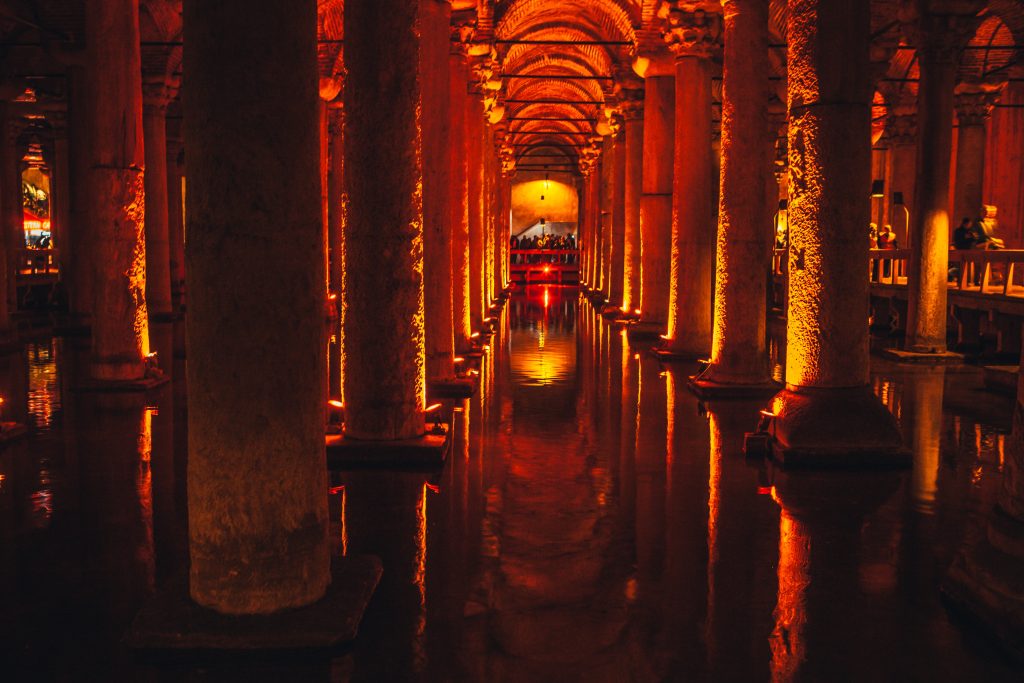
The Sunken Palace
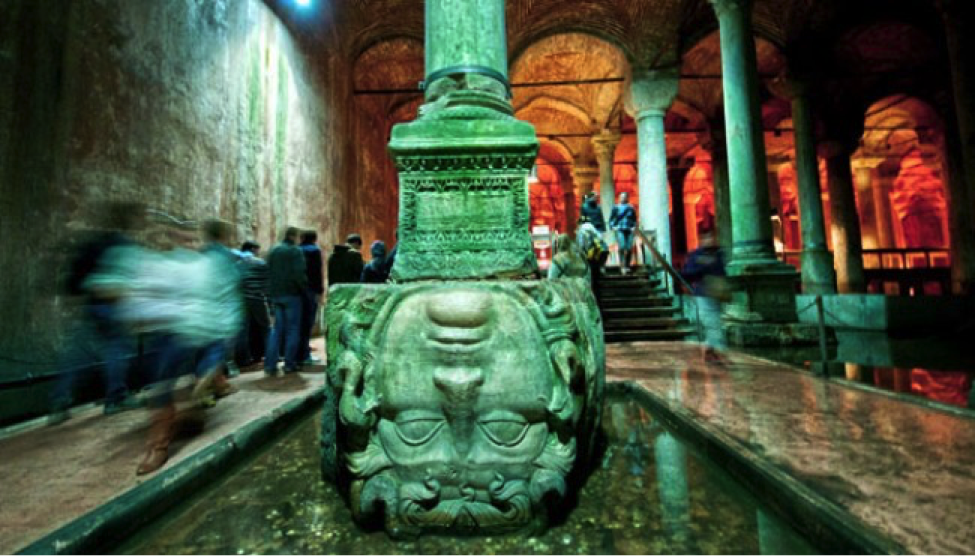
Medusas Head below one of the columns of the Sunken Palace
Very close to the “sunken palace”, consider visiting the secret cistern under Nakkas Halı which is a famous carpet shop. Its owners came across this cistern purely by coincidence when they were renovating the building and decided to renovate it and open to public. It is now a free museum that gives you a glimpse of how Sultanahmet looked a thousand years ago when the Romans ruled the world! You will get a chance to see everything that once were and is gone forever like the hippodrome and the Bucheleon Palace by the sea (in walking distance from Sultanahmet. You can only see few remaining ruins).

The cistern museum below Nakkas Halı
And maybe you might want to take a bath and then dine in a Roman cistern. Close to the sunken palace, on the side street to Hagia Sophia is the Hagia Sophia Mansions Hotel which hosts two very interesting cisterns. One of them is the ‘oldest Jacuzzi in the world’. Hagia Sophia Mansions has turned a remaining part of a Roman cistern that lies below its property into a Jacuzzi. It has a humble fee for those who are staying at the hotel and it is a delight to be in it. Purely relaxing.
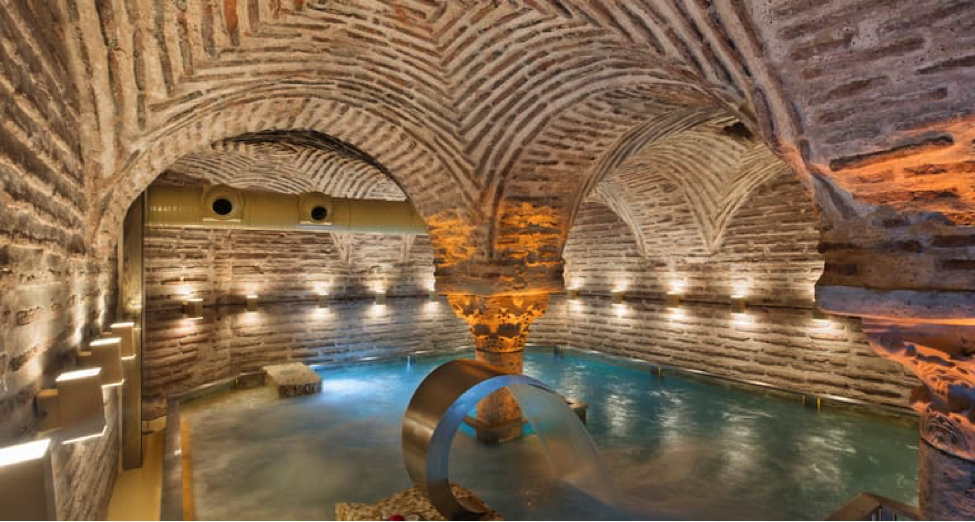
The Oldest Jacuzzi in the World

Sarnıç Restaurant
After the jacuzzi, consider dining inside an old Roman Cistern which will take you away at least a thousand years right across from the oldest jacuzzi in the world. It is called Sarnıç Restaurant which serves you two menu alternatives of delicious Turkish cuisine.
And there is one last place to visit which you can spare for another day which is the Serefiye Sarnıcı. It is in fact the cistern of II. Theodosius that was built during 428-443 AD. It is also a home to many art exhibitions and concerts. It is a once in a lifetime experience.

Serefiye Cistern – Cistern of II. Theodosius

concert inside the Serefiye Cistern. It is quite a humid atmosphere for concerts, but the atmosphere feels amazing and the acoustics is incredible.
Music notes from the underground – Serefiye Sarnici hosts a British violinist: Fenella Humphreys


