
“The veil? you might ask. If you look around a little, you’ll see that we have already removed it. We need to be able to look forward.”
from Kadınlar Dünyası Dergisi (Women’s World Magazine) published in İstanbul between 1913-1921
Tradition of veiling has a long history in Istanbul. Although it is the topic of heated arguments in contemporary Turkish society and politics, Byzantine and Ottoman women have had their fair share of tension around this issue.
In Byzantine society, veiling was primarily a Christian tradition tied to ideas of modesty, status, and respectability. It drew on Greco-Roman customs where respectable women often covered their heads in public and on early Christian teachings, especially St. Paul’s letters who instructed women to cover their heads when praying. Urban elite women were more strictly veiled than rural or working women. A well-born Byzantine woman in Constantinople would often cover her hair and sometimes her face outside the home. Veiling symbolized piety and modesty in front of God, social status which meant that the wealthy could afford seclusion and strict modesty, while poorer women needed to work outside. Byzantine icons and mosaics often show the Virgin Mary with a maphorion (a veil-like mantle), which became a powerful model of female modesty.
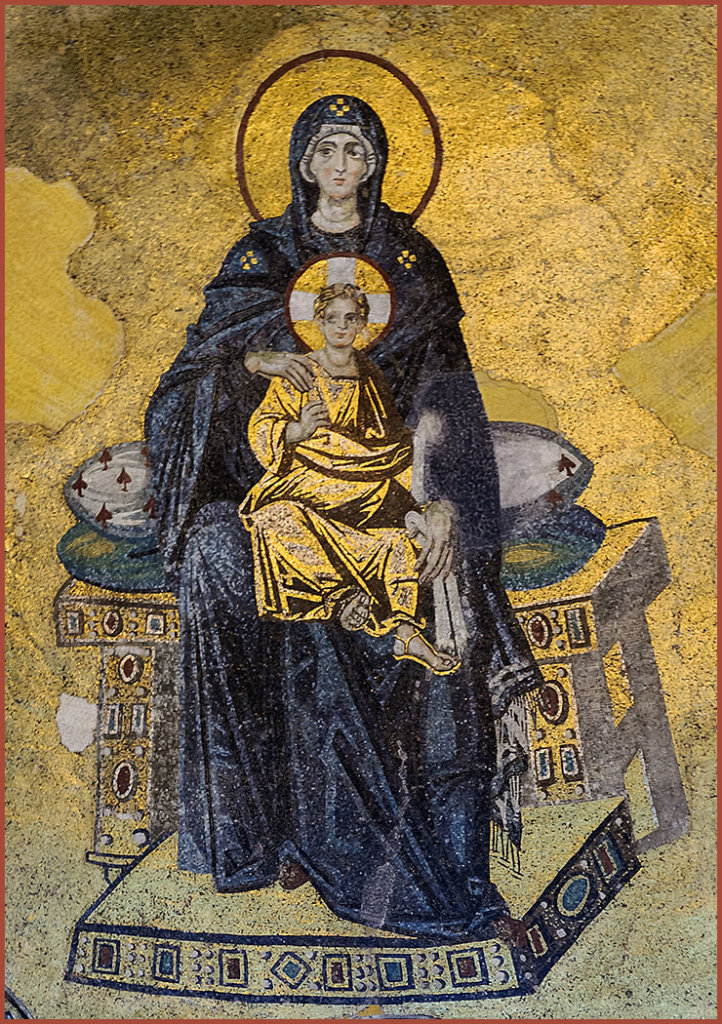
Virgin Mary and Baby Jesus in the apse of Haghia Sophia
We know that Christian veiling influenced Islam. When Islam spread in the 7th century, it emerged in a region already influenced by Byzantine (Christian) and Sasanian (Persian) customs. In the Qur’an and Hadith, modest dress is encouraged, but the specifics of veiling developed gradually, often shaped by the cultural practices Muslims encountered. Scholars generally agree that in cities like Damascus which was a former Byzantine territory, Muslim women saw Christian women veiling, and the custom was reinforced as an Islamic norm of modesty. The Byzantine Christian practice of elite women veiling influenced the Islamic hijab tradition in the early caliphates.

Black dominates Orthodox monastic life in İstanbul. Here is a photo of the Greek Orthodox Patriarche and other leading Orthodox religious figures in İstanbul
In the Byzantine Christian tradition, colors carried symbolic meaning. Byzantine clergy developed the tradition of black robes, which is still visible today in Eastern Orthodox monasticism. Black was associated with asceticism, humility, and renunciation of worldly life. Monks, nuns, and penitents often wore black or very dark clothing as a sign of their devotion. Virgin Mary is often shown in dark blue or purple, colors of dignity and modesty, which overlapped with the symbolic weight of black. When Islam expanded into Byzantine and Persian lands (7th–8th centuries), Muslims encountered these traditions of dark-colored religious dress. Women’s veiling in Islam was not originally color-specific — early Muslim women in Arabia likely used practical, light-colored coverings suitable for desert heat. Some historians argue that the black veiling of women in Abbasid society was influenced by Byzantine and Eastern Christian associations of dark dress with piety and seclusion.
This is in fact in sharp contrast to the dominance of white in the Islamic tradition. In Sufism, white garments including veils often symbolized inner purity and closeness to God. In Islamic funeral tradition, the deceased is wrapped in a white shroud (kafan) — linking white with the afterlife, humility, and the return to God. In Ottoman Turkey, upper-class women sometimes wore white face veils (yaşmak) along with colored cloaks.
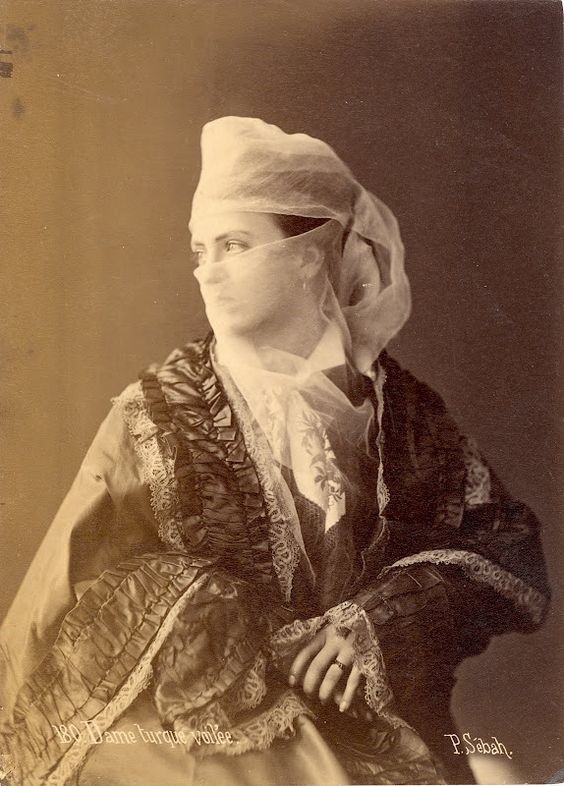
Upper-class Ottoman woman with white face veil (yaşmak)
Ottoman women in Istanbul all through out the centuries experimented with the veil especially in the 19th century when the winds of modernisation have reached the shores of the Empire. Upper class women experimented with bright colours and thinner face veils to show their liberation as can be seen in Osman Hamdi Bey’s paintings. Elite and educated women tried to personalise and modernise their black veils through various shapes and details.
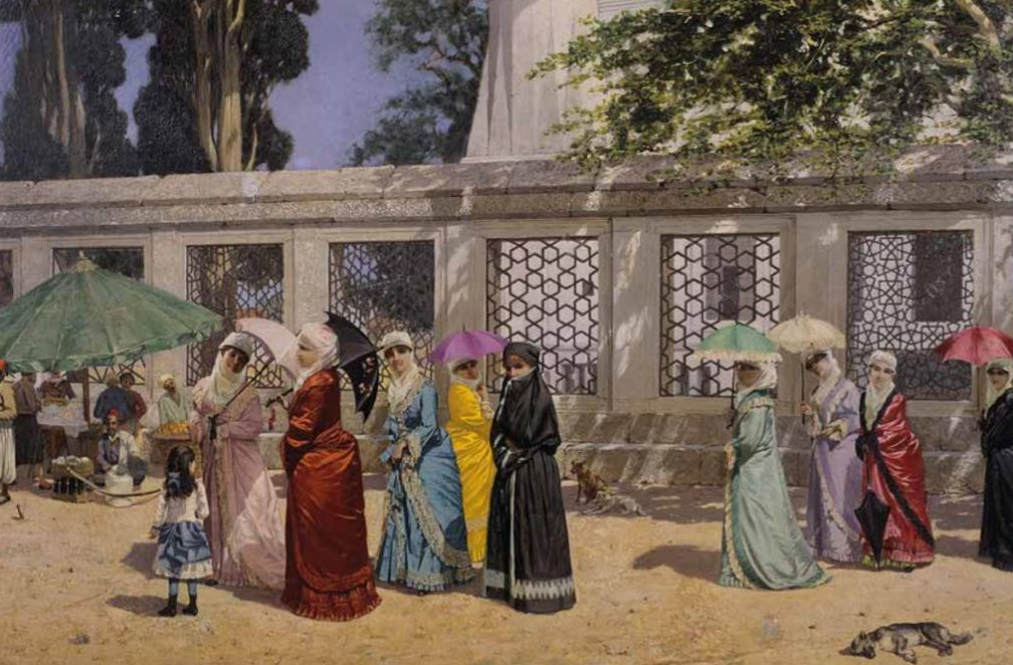
Women on the Promenade by Osman Hamdi Bey, 19th century
Glance through this photo and illustration to see how early 20th century Ottoman women in Istanbul wanted to personalise the veil and liberate themselves from the anonymity of black veiling that erased all individuality!
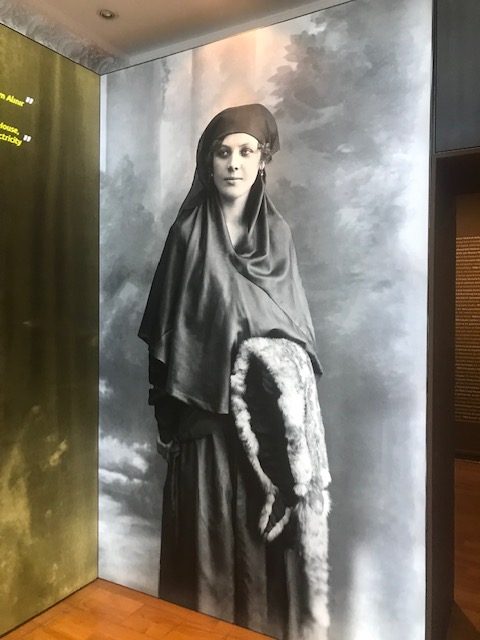
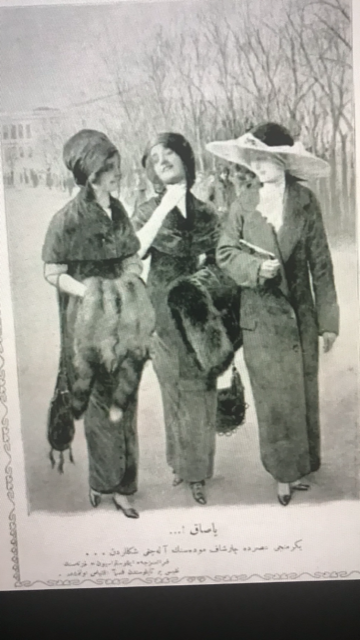
Note that these women were already a part of the young Turk revolution in 1908 that was keen on modernising the country and culture.
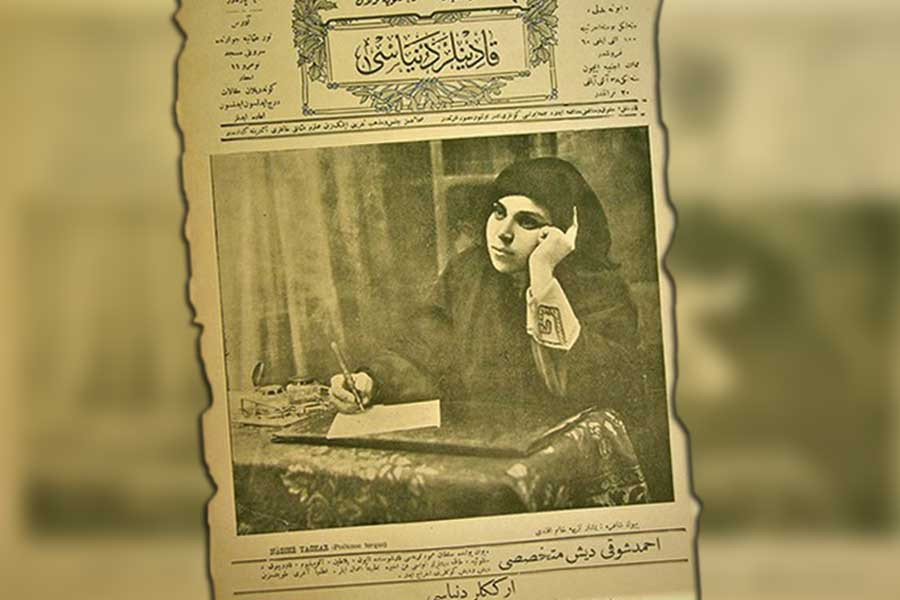
A cover page of the Women’s World Magazine published between 1913-1821
Women in contemporary Istanbul are still experimenting as well as rebelling against the veil which makes me think that we might not be all that different from our female ancestors!