
‘Come to me, all you who are weary and burdened, and I will give you rest.’ Matthew 11:28

Chora Church
In a city as hectic and chaotic as Istanbul, one needs places of refuge that gives one a sense of tranquility and the Church of Chora was one of them. Historically, Chora was the last Monastery of the Byzantine Empire before it fell and it was located on the outskirts of Constantinople. A monastery restored by the Emperor of the time Theodoros Metohitis in the 14th Century. Art historians define him as a progressive Emperor who was an astronomer, a poet, mathematician and a man of belief. He was aware that he was one of the last Emperors of a declining empire and an epoch that was about to end and he wanted to leave a legacy behind him.
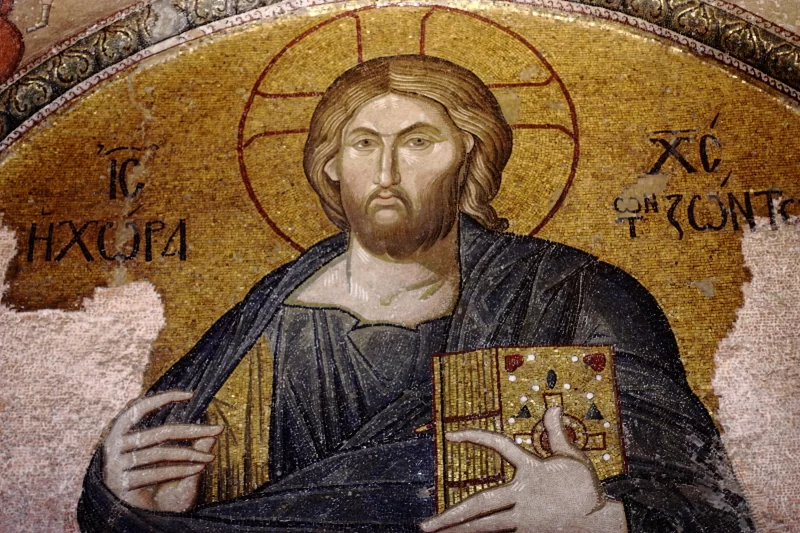
Jesus mosaic above the entrance of the inner narthex in the Chora Church
Chora comes from the the Greek word Hora which has two meanings. One is the ‘country’ referring to Jesus symbolically becoming the ‘country’ of all the living beings. The other is ‘the womb’ referring to Virgin Mary as the mother of Jesus.

Jesus depicted ‘inside’ Virgin Mary

Virgin Mary and Joseph in front of Roman Officials after the birth of Jesus

What makes Chora Church so unique in art history is that there is an emphasis on Virgin Mary as the ‘mother’ of Jesus and as a flesh and blood woman. It is like a church dedicated to Virgin Mary and her humanness. Art historians say that Chora is where the divine meets the human. That is where the illuminated divine country of Jesus for all living beings meet the flesh and blood human Virgin Mary.
All throughout my life, Chora was a church, a church in a far away location, a place few locals knew and visited. It also felt like the house of the Virgin Mary as there were so many frescos of her showing different scenes of her life. Art historians I had listened to have always described Chora as an unconventional church as the story of Jesus began with the birth of Mary as depicted in the frescos. The Church was like a dedication to Virgin Mary (the womb) that had ‘created’ Jesus.

Scene depicting the assumption of Virgin Mary
I was fascinated by the mosaic of Jesus accompanied by her mother Virgin Mary welcoming as one enters the Church. I felt peaceful inside the cosiness of the Church. There was nothing colossal, Everything felt human size.
Chora was like a secret gem only few locals knew and few tourists took the time to visit so it was usually quiet when I visited it.

Spirit of the times have significantly changed in Turkey and in 2020, Chora Church which was a museum was turned into a mosque. I was one of the last visitors to see Chora in its original glory before frescos were covered and a ‘mimber’ (pulpit) was brought for Muslim clergyman to deliver their sermons.
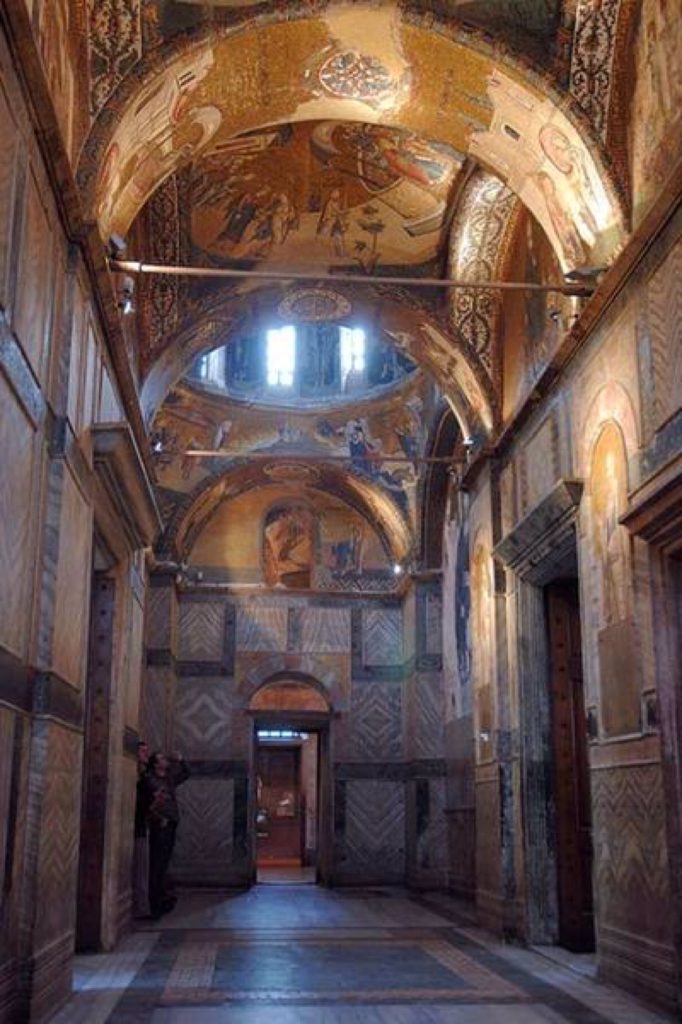
Chora Church when it was a Museum before 2020
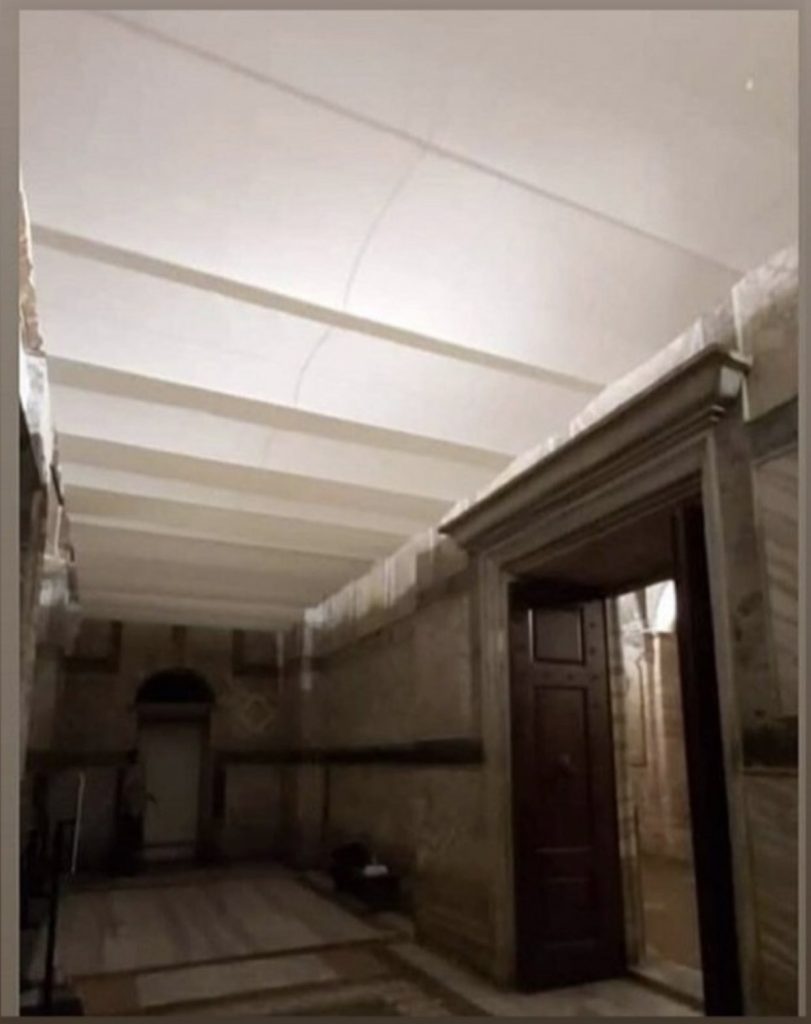
Chora Church with covered frescos after it was turned into a Mosque
I never had the courage to visit Chora after its transformation as I want to remember it with its original beauty and as the Church it was meant to be.
If and when the ‘tide turns’ and Chora is restored to its original beauty, I suggest you visit it to find rest and peace!
Let me end with the words of Salman Rushdie: ‘We must emulate Orpheus and sing on in the face of horror and not stop singing until the tide turns and a better day begins.’