
As a woman, I have never felt fully at home and at peace in mosques. All throughout the Ottoman history, women have been unwelcomed in mosques as mosques were mainly built for the prayer of men. I have recently learnt from Ugur Tanyeli who is a professor of architectural history that in the history of Ottoman mosques, there had never been a women’s section and women’s willingness to visit mosques during the holy month of Ramadan were protested by leading Islamic clergy and the ‘laymen’. Tanyeli notes that the women’s section we see in historical mosques of today were later additions to mosques after the role of women in modern society has changed and partially progressed. But still women’s section is behind the main prayer area, somewhere that is hidden in the back alleys or in the ‘shadows’ separated from the ‘male section’ which makes me feel invisible.
Now, there are two unconventional mosques in Istanbul that feel like a breath of fresh air to free spirited women like me. One is the Sakirin Mosque in Uskudar which is the first and the only mosque designed by a woman in the Islamic world. Zeynep Fadillioglu designed a spacious upper chamber for women who want to pray in the Sakirin Mosque; a chamber with space and sunlight overlooking the whole mosque. Therefore, she has created a mosque enveloping female believers as strongly as it does male believers. I feel proud of Fadillioglu for her courage to create a mosque with feminine aesthetics as well as a sense of equality.
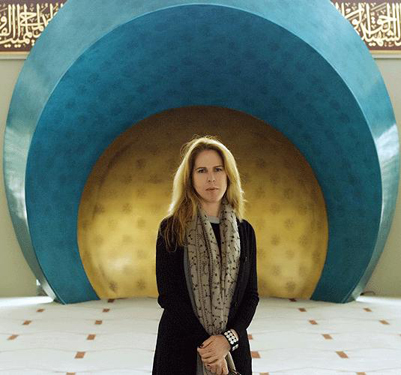
Zeynep Fadillioglu

Detail from Sakirin Mosque
The other unconventional mosque is the Sancaklar Mosque in Buyukcekmece. The exterior as well as the interior design of the mosque is fully unorthodox. It is an underground mosque that gives one a sense of isolation from the world and transcends one to the heavens. Emre Arolat has created a space of tranquility in which one can introspect, meditate and pray.
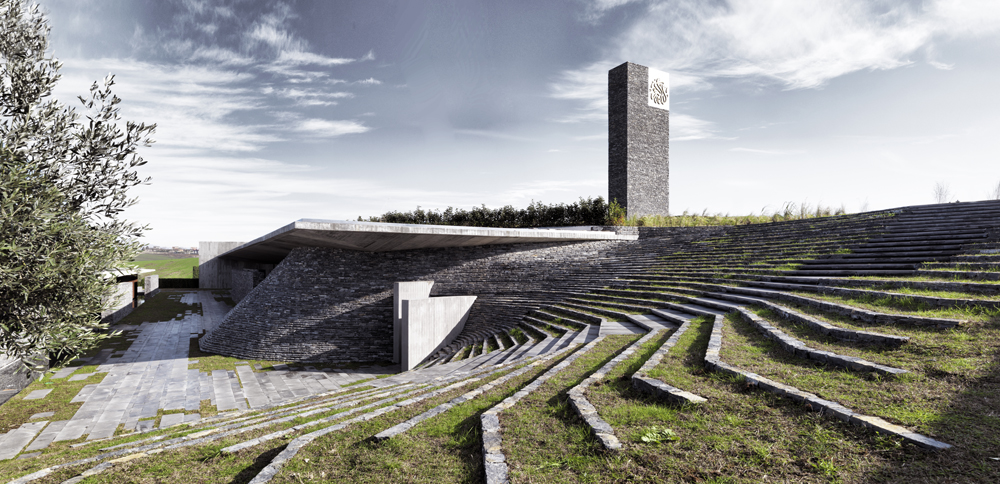
Sancaklar Mosque
But one thing that fascinates me is that the design of the interior allows women to pray next to men. Men and women are only separated by a semi- transparent separator that turn each other into silhouettes. One neither feels left behind nor invisible in the space that envelopes both men and women.

We owe both of these creative people a deep gratitude for having given us spiritual spaces where women as well as men feel welcomed and at ‘home’ and women do not have to feel like ‘children of a lesser God’.