

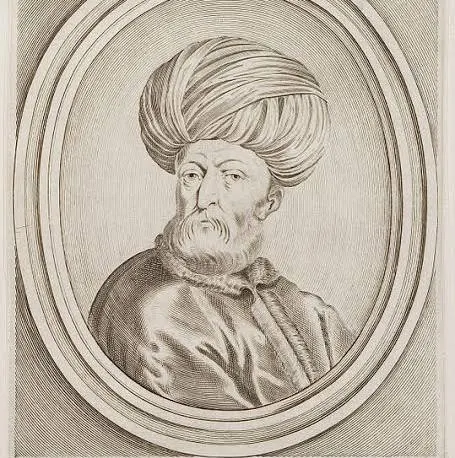
Few stories in Ottoman history illustrate the seduction and danger of power as vividly as the rise and fall of Pargalı İbrahim Paşa.
As a young man, İbrahim became the closest companion of the future Sultan Süleyman. Their friendship began long before one became ruler of an empire and the other its most powerful statesman. When Süleyman ascended the throne in 1520, he rewarded that loyalty beyond all precedent. İbrahim rose with breathtaking speed, becoming grand vizier, commander, diplomat, and eventually the most influential figure in the Ottoman Empire after the sultan himself. Contemporary observers repeatedly noted that almost nothing of importance occurred without his approval. Foreign ambassadors often sought his audience before that of the ruler.
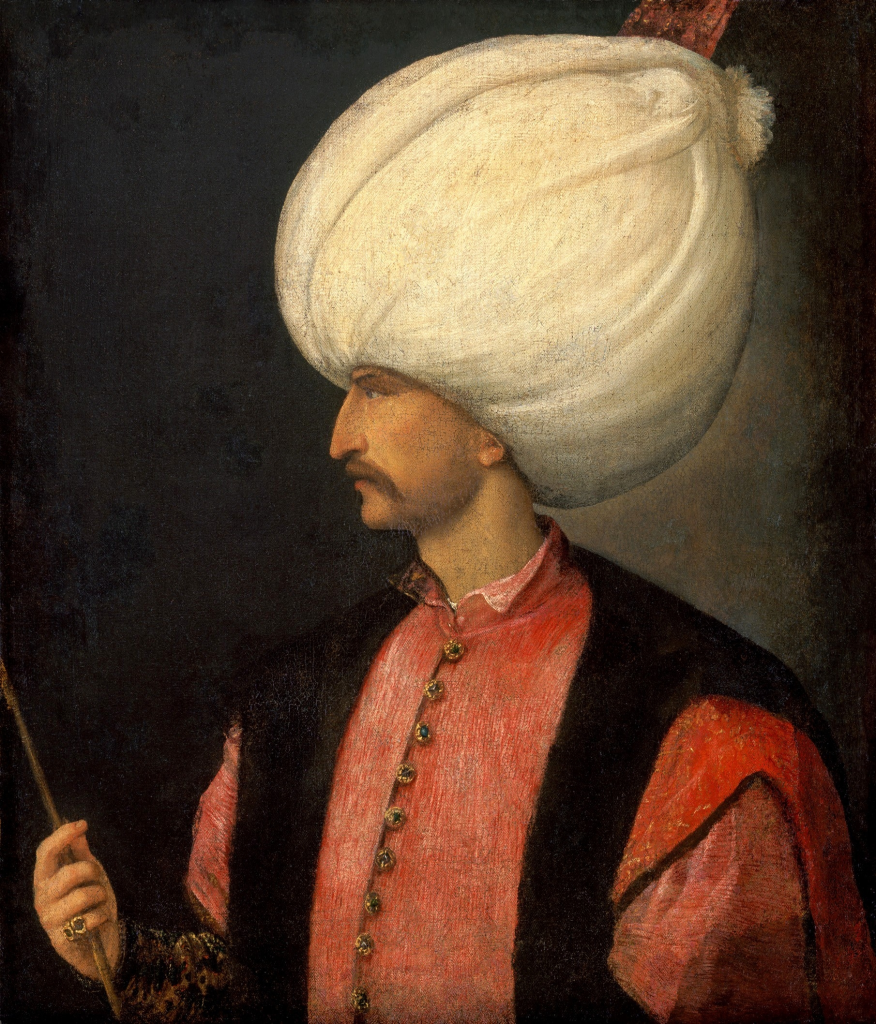
Sultan Süleyman
Yet the very success that made him indispensable may also have sealed his fate.
According to contemporary reports, İbrahim increasingly spoke and acted as if the machinery of the empire rested in his hands. During diplomatic negotiations he reportedly declared that appointments, provinces, war, peace, wealth, and power all flowed through him. Whether these statements were exaggerations intended to impress foreign envoys or reflections of genuine self-belief, they reveal how extraordinary his position had become.
During this same period, İbrahim also cultivated an unusual artistic and cultural display at his palace. After the 1526 campaign in Hungary, he brought back several classical bronze statues—figures from Greco-Roman mythology—and placed them in the gardens of his Istanbul residence. In a world where figural sculpture was often viewed with suspicion, this was highly unconventional. Contemporary poets and critics seized on the episode, interpreting the statues not merely as art, but as symbols of excess and ambition. What may have been an expression of Renaissance-influenced taste or diplomatic prestige later became part of the moral narrative constructed around his downfall.
The decisive turning point came during the Persian campaign of 1534–35. Operating far from the direct supervision of the sultan, İbrahim adopted the title “Serasker Sultan,” an unprecedented designation that many contemporaries regarded as a dangerous encroachment upon the sovereign authority of the ruler. Ottoman chroniclers who had once admired him began to describe a man transformed by success, increasingly deaf to criticism and intoxicated by his own importance.
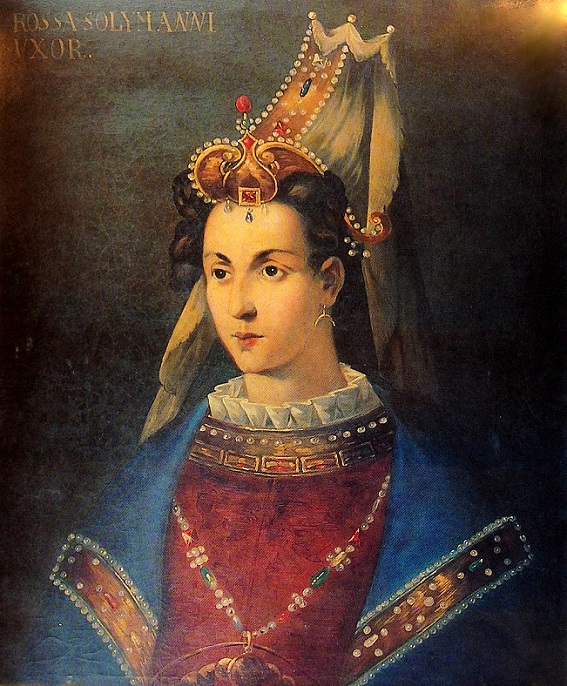
Hürrem Sultan
Was Hürrem Sultan responsible for his downfall? The popular imagination has long embraced that explanation. Certainly, political rivalries surrounding the succession placed Hürrem and İbrahim on opposing sides. Yet most historians today see her as only one element in a much larger drama. The final decision was Süleyman’s alone. More fundamentally, the problem was that the grand vizier’s immense authority had begun to overshadow the very source from which it derived: the sultan himself.
In March 1536, after sharing an evening meal with Süleyman in Topkapı Palace, İbrahim Paşa was executed on the sultan’s orders. The man known as Makbul İbrahim—İbrahim the Favoured—became Maktul İbrahim—İbrahim the Executed. His burial was carried out quietly, and even his grave would eventually disappear from history.
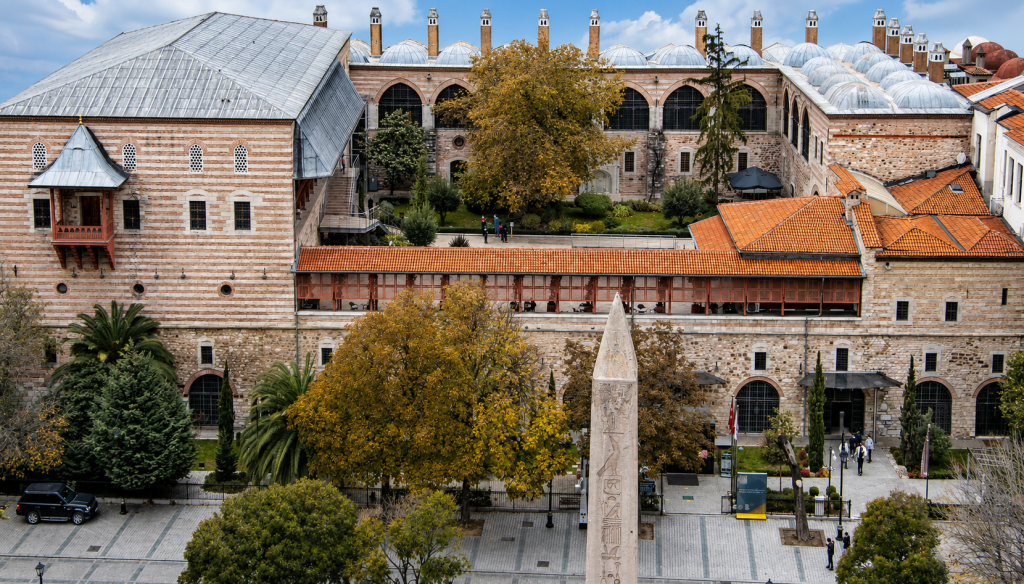
İbrahim Paşa Palace
Yet one remarkable reminder of his life remains. Facing Istanbul’s ancient Hippodrome stands the İbrahim Paşa Palace, now home to the Turkish and Islamic Arts Museum. Compared with the imperial monuments of the city, it may appear almost modest. But these walls once belonged to the most powerful man in the Ottoman Empire. Five centuries later, the palace still stands the test of time, while the man who inhabited it survives largely as a historical warning.
And perhaps that is why the story continues to resonate.
Pargalı İbrahim Paşa’s tragedy is not merely an Ottoman tale. It is a universal one. A young man rises through talent, friendship, and brilliance. He reaches heights no one thought possible. Then, somewhere along the way, he begins to mistake borrowed power for his own. The friendship that elevated him cannot save him from the consequences of his ambition.
Five hundred years later, the palace remains. The empire is gone. The friendship is gone. But the temptation that destroyed him is still with us. Every age produces its own Pargalı İbrahims—gifted individuals who forget that influence, however vast, is never entirely their own.
That is why his story feels so modern. It is not ultimately about the Ottoman Empire. It is about the eternal human struggle between loyalty and ambition, gratitude and pride, friendship and power.


