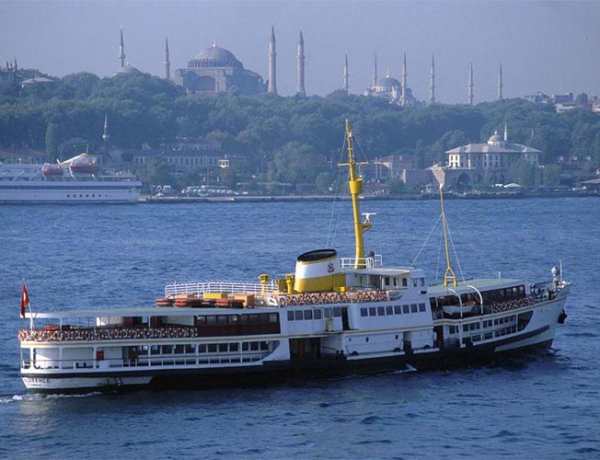

Night after night, we would drift out from Heybeli to meet the moonlight.
— from an old Turkish song by Yesârî Âsım Arsoy
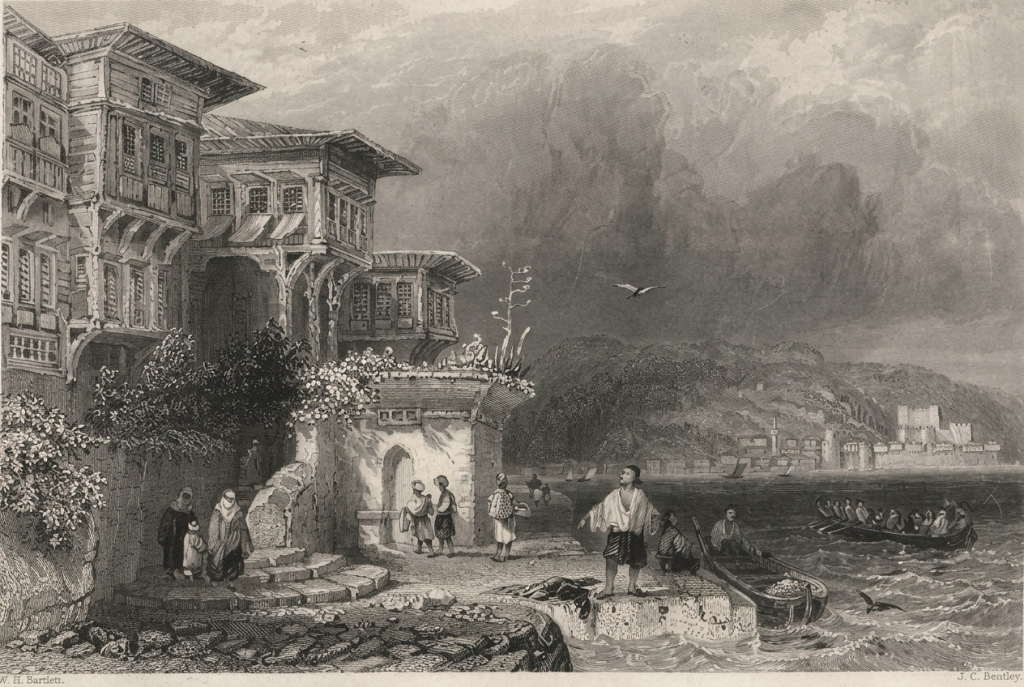
Along the Bosphorus Shore, 1830s — W. H. Bartlett & J. C. Bentley
There was a time when Istanbul did not simply face the sea. It lived upon it. The Bosphorus was not merely a beautiful view or a natural boundary between two continents; it was a vital part of the city’s everyday life, shaping its rhythms, its social customs and its imagination.
For centuries, the sea provided Istanbul with its principal means of communication. Before bridges and modern roads transformed the city, boats connected neighbourhoods, carried passengers and goods, and linked the shores of the Bosphorus. Among the most characteristic sights of Ottoman Istanbul were the elegant kayıklar — traditional rowing boats, ranging from modest working vessels to elaborately decorated boats belonging to the wealthy and the imperial household. To travel by water was not simply a practical necessity. It was also a social experience, and, for some, a display of status and refinement.
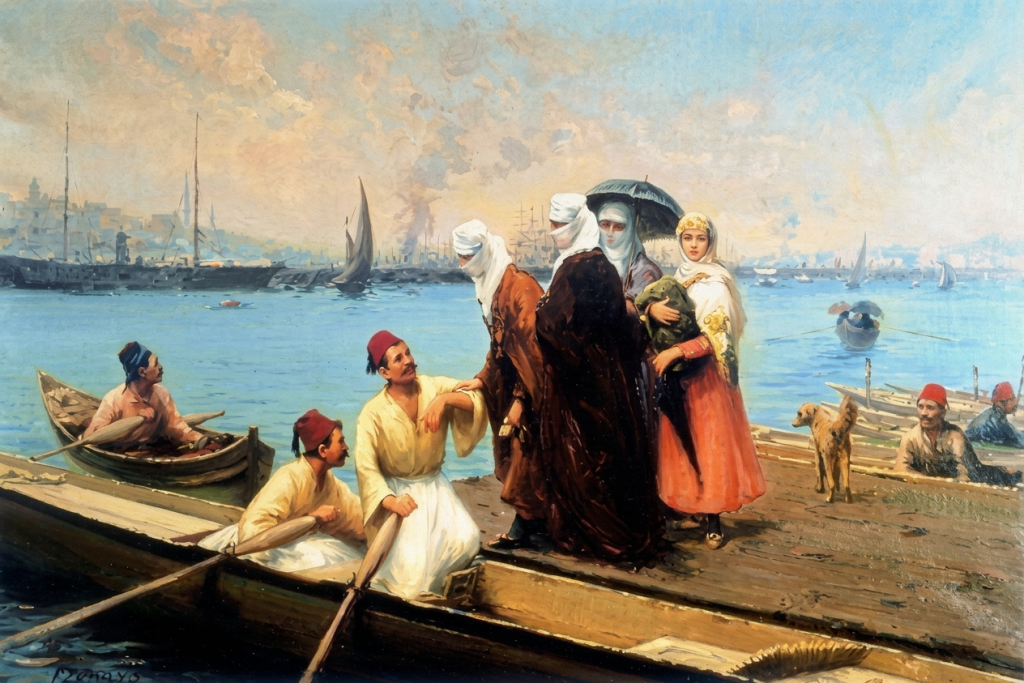
Painting by Fausto Zonaro displaying the Ottoman rowing boats
The Bosphorus itself was a world of its own. During the summer months, the waterfront mansions known as yalı became centres of social life. Families moved between their residences, gardens and neighbouring villages by boat. Places such as Göksu, Küçüksu, Kanlıca, Çubuklu and Beykoz were popular destinations for excursions and summer gatherings. The shoreline was not a distant landscape to be admired; it was an inhabited, animated space, woven into the daily lives of the city’s residents.
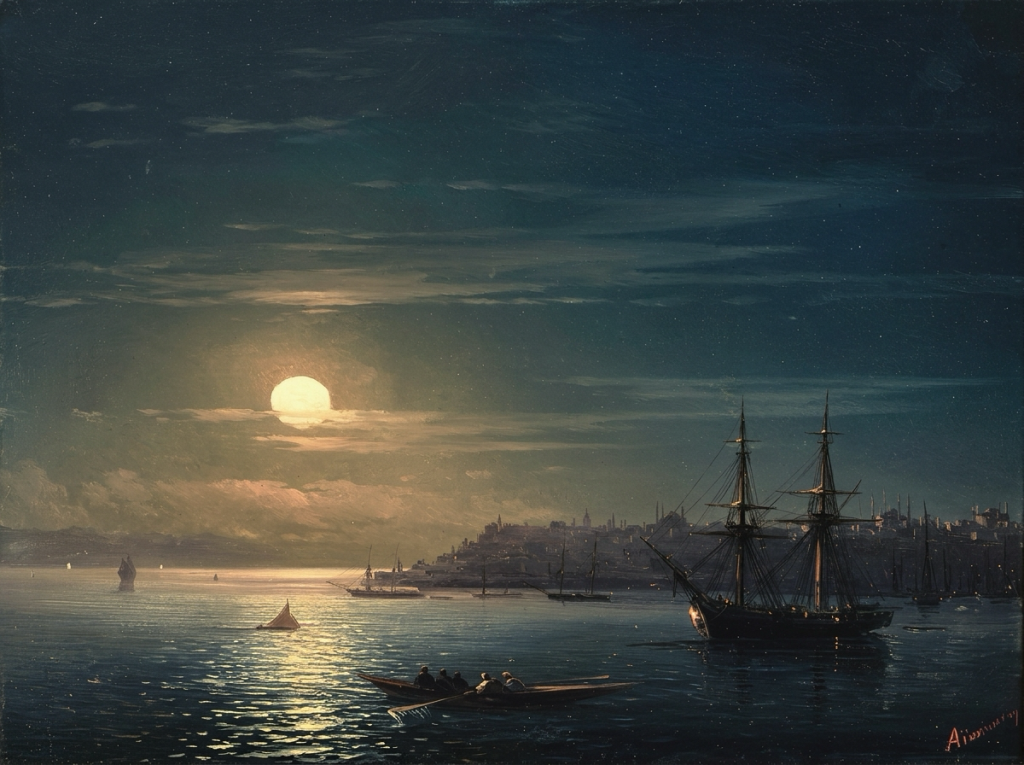
Painting by Ivan Aivazovsky displaying the beauty of the moonlit Bosphorus in the 19th century
One of the most enchanting traditions of this maritime culture was the mehtap âlemi, or moonlight excursion. On clear summer nights, groups would set out in boats to enjoy the moonlit Bosphorus. Music, conversation, refreshments and the gentle movement of the water formed part of these gatherings. Sometimes musicians accompanied the boats, and the sounds of traditional music travelled across the dark surface of the strait. These evenings were not simply leisure activities. They expressed a particular sensibility: an appreciation of nature, music and companionship, shaped by the unique setting of the Bosphorus.
The song Biz Heybeli’de Her Gece Mehtaba Çıkardık (Night after night, we would drift out from Heybeli to meet the moonlight) continues to evoke the moonlit boat excursions and traditional mehtap gatherings of old Istanbul for us, the modern-day Istanbulites.
The sea also provided one of Istanbul’s most cherished seasonal pleasures: fishing. Among the many fish found in the Bosphorus, lüfer (bluefish) held a special place. Its autumn migration brought fishermen out in search of a catch, and fishing became both an occupation and a social ritual. Moonlit nights, quiet shores and the anticipation of the fish’s arrival were all part of this culture. Historical accounts and memoirs from the Ottoman period occasionally describe sultans themselves taking an interest in fishing, reminding us that the pleasures of the Bosphorus crossed the boundaries of court and ordinary life.
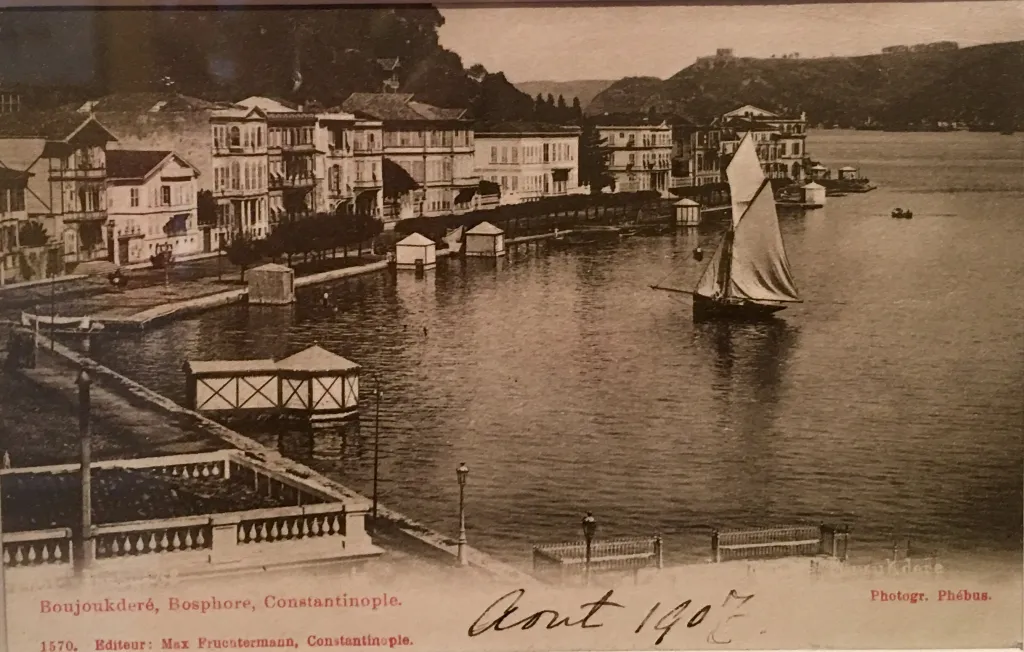
A private ‘sea hammam’, as it was known in Ottoman times, dating from 1907.
The relationship with the sea extended beyond travel and fishing. During the eighteenth and especially the nineteenth centuries, sea bathing became an increasingly visible part of urban life. Special bathing structures, known as deniz hamamları, were established along the shores. These were generally organised separately for men and women and offered a degree of privacy in an era when public bathing was governed by different social conventions. They provided an opportunity to swim, enjoy the water and escape the heat of the city. In time, they became part of a broader culture of summer recreation along the Bosphorus and the Marmara coast.
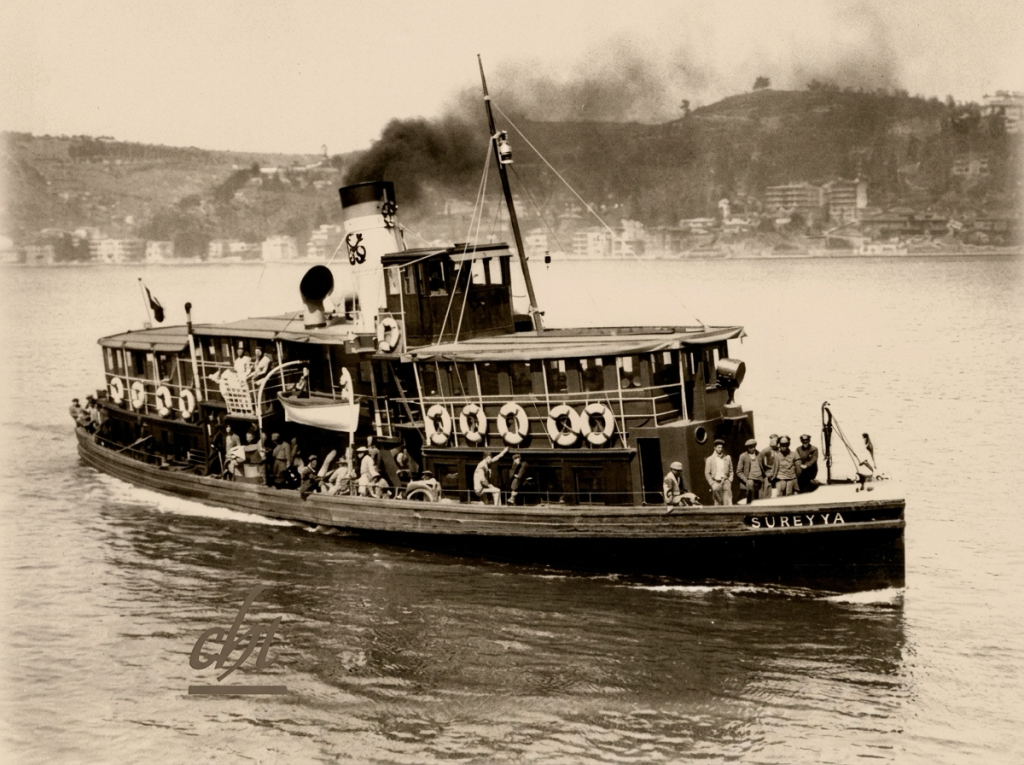
A Şirket-i Hayriye boat
The nineteenth century brought new dimensions to Istanbul’s maritime landscape. During the reigns of Abdülmecid, Abdülaziz and Abdülhamid II, the imperial presence along the Bosphorus became particularly prominent. Dolmabahçe, Çırağan and Beylerbeyi palaces gave the waterfront a new architectural splendour. Yet the sea remained more than a setting for imperial display. It continued to serve as a public thoroughfare and a place of encounter. The establishment of the Şirket-i Hayriye in 1851, with its regular steamship services, gradually transformed transportation between the shores, making the Bosphorus more accessible to a wider public.
What made Ottoman Istanbul distinctive was not simply the presence of the sea, but the variety of ways in which people inhabited it. Fishermen, boatmen, palace residents, merchants, musicians and families all contributed to a maritime culture shared across the city’s many communities. The Bosphorus connected different neighbourhoods and social worlds, while giving Istanbul a rhythm unlike that of any other imperial capital.
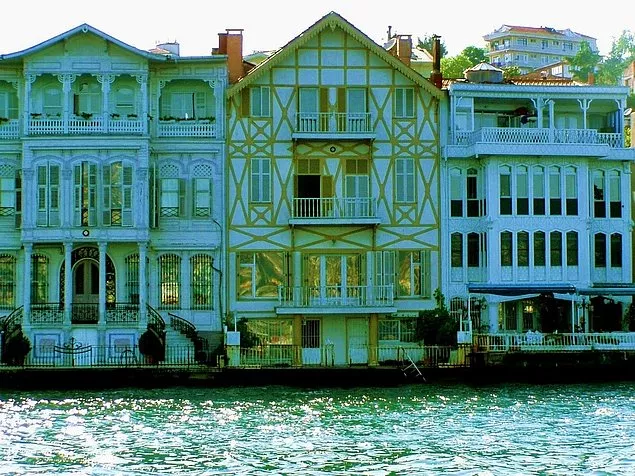
A glimpse at waterfront mansions by the Bosphorus
The old waterfront still offers glimpses of that world. A passing ferry, a fisherman waiting patiently by the shore, or the silhouette of a yalı at dusk can briefly bring its atmosphere to mind. But the relationship between the city and the sea was once far more intimate. The water was a road, a meeting place and a source of pleasure.
Today, we are left with songs to remind us that so much of Istanbul’s history unfolded on the water, beneath the moonlight, among fishing boats and along the ever-changing shores of the Bosphorus.
Note that the videos are embedded via YouTube and all rights belong to the respective rights holders.