
Dedicated to the loving memory of Prof. Selma Germaner
For centuries, the imperial harem of Istanbul occupied a peculiar place in the European imagination. Hidden behind the walls of Topkapı Palace, it represented a mysterious world that European travellers, writers and artists were intensely curious about but rarely had the opportunity to witness. This distance between curiosity and actual knowledge would eventually give birth to one of the most enduring fantasies in Western art: the eroticized Ottoman woman.
The origins of this fascination can be traced to early European accounts of the Ottoman court. Ambassadors and travellers brought back stories of the Sultan’s household, its beautiful women, eunuchs, rivalries and elaborate hierarchies. Yet much of what circulated in Europe was based on hearsay, speculation and literary invention. The harem gradually became less a historical institution than an imaginary space onto which Europeans projected their desires and anxieties.
During the eighteenth century, the fashion for Turquerie brought Ottoman costumes, textiles and interiors into European aristocratic culture. Turkish dress became fashionable, while the Orient increasingly represented an alluring alternative to European conventions of modesty and respectability. The harem, with its associations of privacy, luxury and forbidden sensuality, became the perfect setting for this fascination.
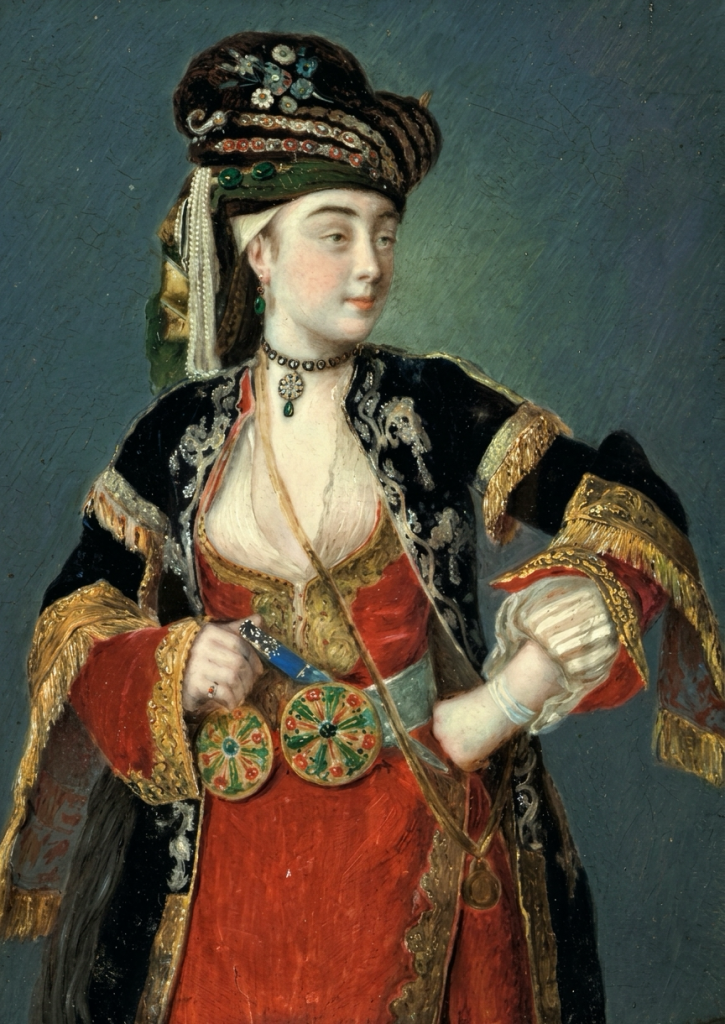
Lady Mary Wortley Montagu dressed as an Ottoman lady
One of the most revealing witnesses to the actual world of Ottoman women was Lady Mary Wortley Montagu, who lived in Istanbul, then commonly referred to in European writing as Constantinople, in 1717–1718. Unlike male European travellers, she gained access to women’s domestic quarters and bathing spaces. Her Turkish Embassy Letters, published in 1763, described Ottoman women as socially active individuals, possessing property, maintaining relationships and enjoying forms of freedom that challenged European assumptions. Her account of the Turkish bath would later acquire an unexpected artistic afterlife: Ingres copied Montagu’s description into his notebooks and drew upon it when developing his imaginary vision of the harem in The Turkish Bath (1862). An account rooted in firsthand observation thus became material for one of the most celebrated erotic fantasies in European painting.
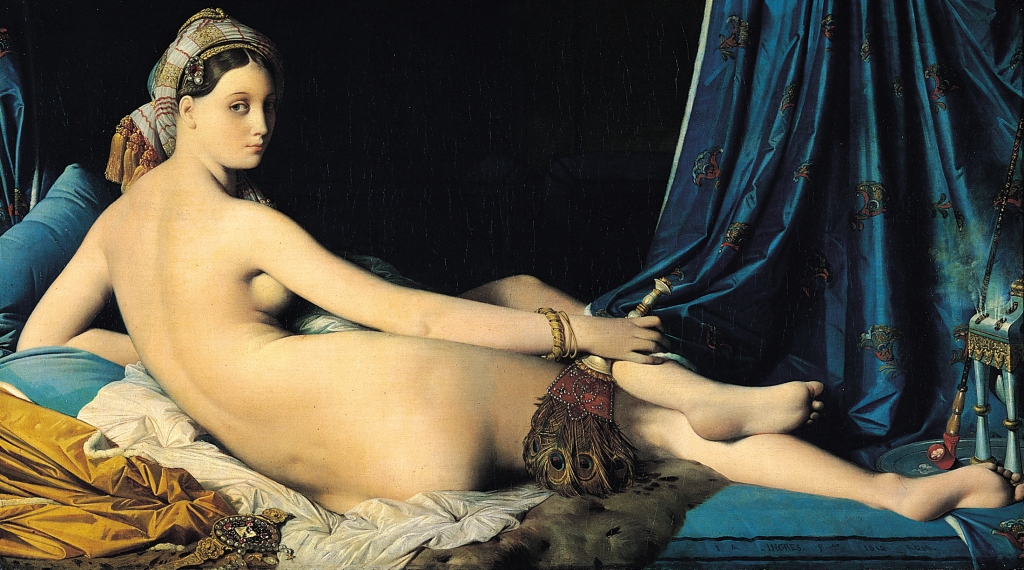
La Grande Odalisque (1814)
One of the most celebrated embodiments of this fantasy was the odalisque. The word itself derives from the Ottoman Turkish odalık, from oda (“room”), denoting a female servant attending to the chambers of the harem. In European art, however, the term lost its original meaning and came to signify an eroticized, reclining nude. Ingres’s La Grande Odalisque (1814) presented an idealized nude reclining amid luxurious fabrics and exotic accessories. Initially criticized, the painting later became one of the defining images of Orientalism, although Ingres had never visited the Ottoman Empire. His harem was largely a product of artistic imagination, travel literature and European conventions of the female nude.
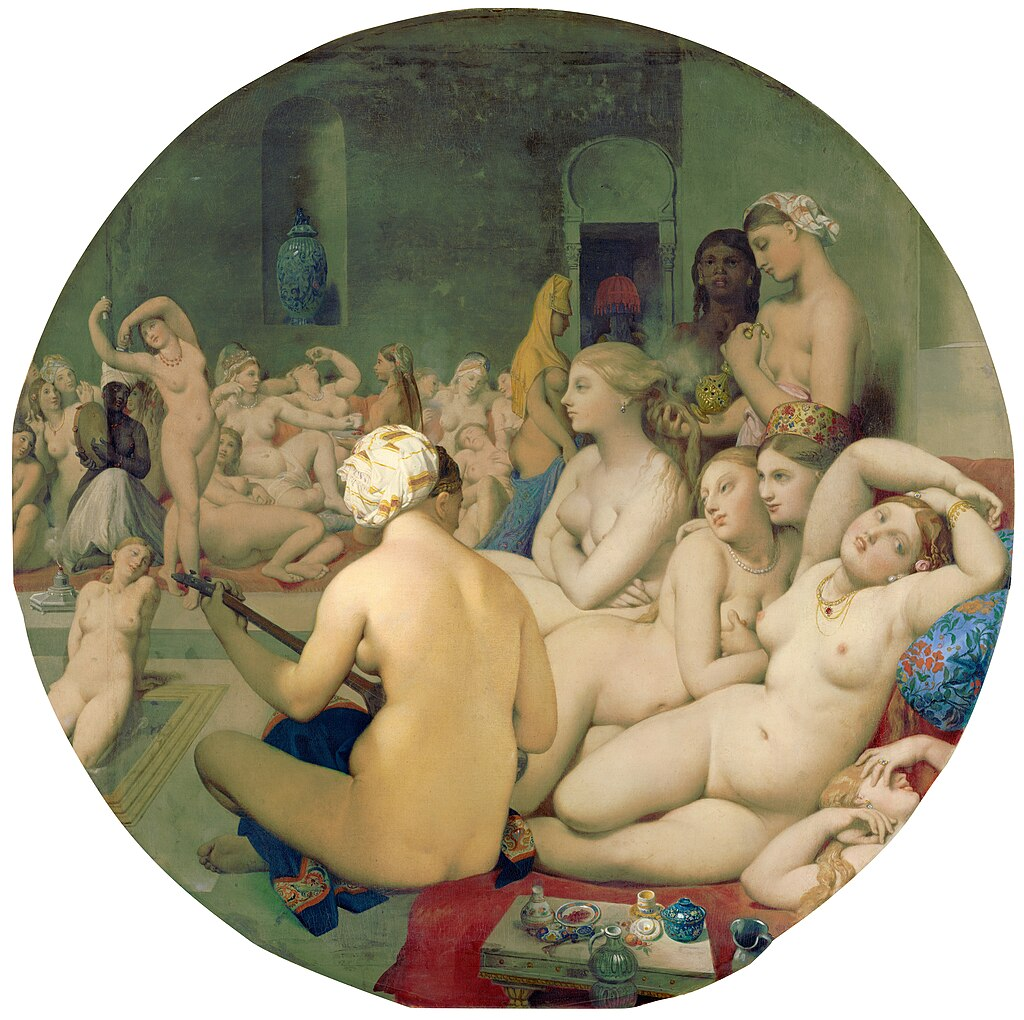
Le Bain Turc (1862)
This fantasy reached its most elaborate expression in Ingres’s The Turkish Bath (1862), a circular composition populated by nude women reclining, playing music and embracing in an imagined harem interior. The spectator appears to be looking into a forbidden world, where female sensuality exists beyond the restrictions of European society.
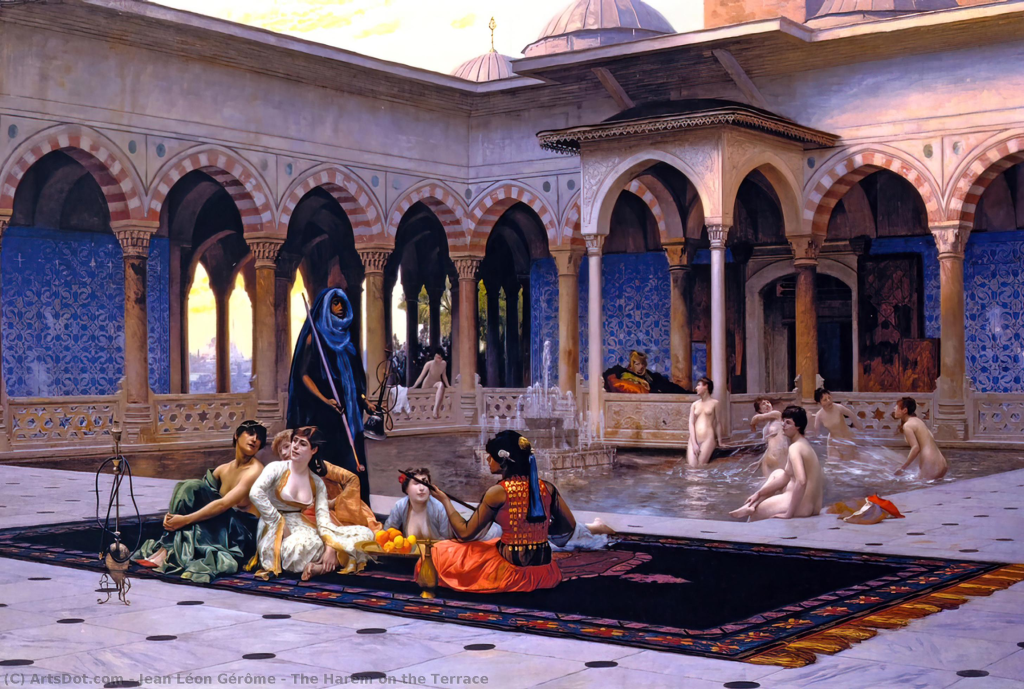
The Harem on the Terrace (1886) by Jean-Léon Gérôme
Later, Jean-Léon Gérôme brought an almost archaeological precision to his Orientalist paintings. Unlike Ingres, he had travelled to Istanbul and Egypt, observing architecture, costumes and local customs. Yet his journeys did not give him access to the secluded world of the imperial harem. His marble baths, fountains, elaborate costumes and architectural details therefore combined elements of actual observation with imagined scenes. This gave his paintings an appearance of documentary authenticity while concealing the imaginative reconstruction at their heart.
The historical harem of Imperial Istanbul was considerably more complex. It was a structured household with its own hierarchy, education, responsibilities and political relationships. The Valide Sultan, the Sultan’s consorts, princesses, female attendants and other members of the imperial household occupied different positions within this institution. Some women, such as Kösem Sultan, Turhan Sultan and Bezmialem Sultan, exercised considerable influence through political networks, architectural patronage and charitable foundations.
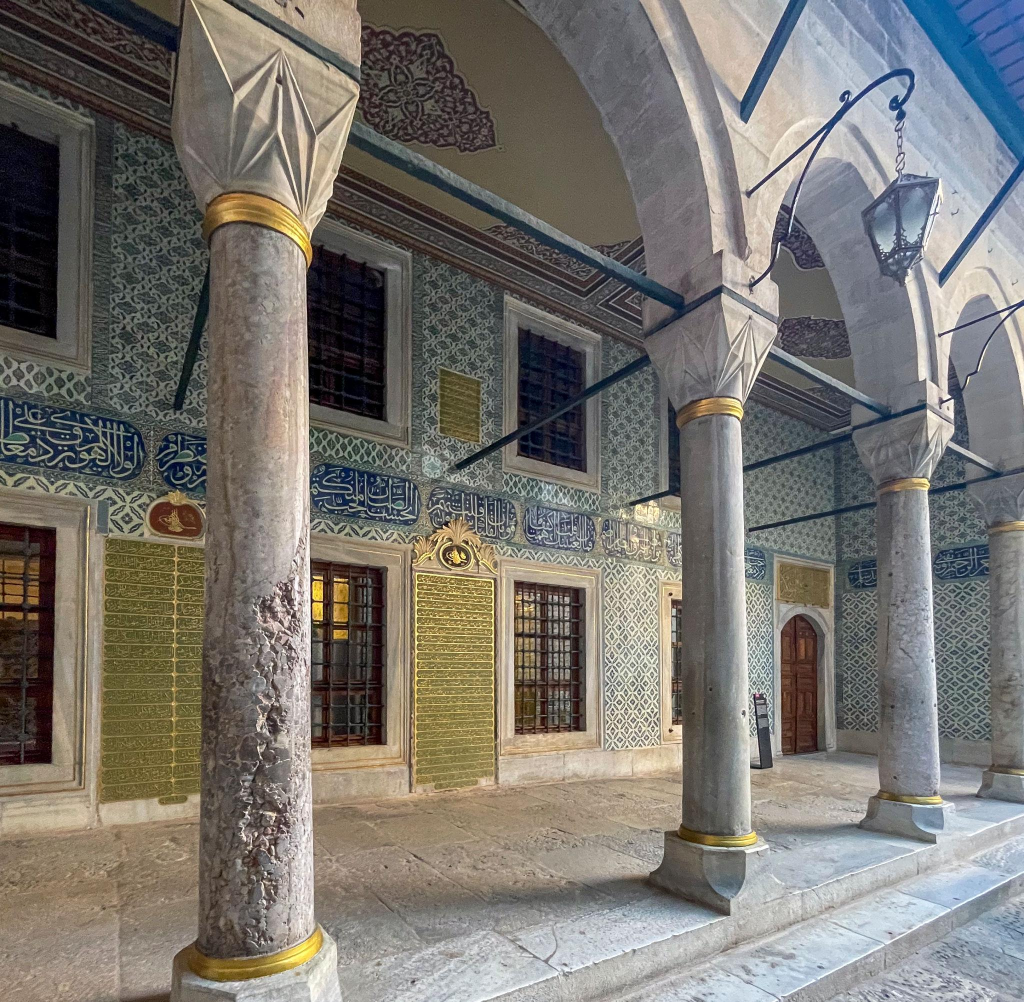
Topkapı Palace, detail from the harem courtyard
Nor were Ottoman women simply confined to the imperial palace. Women in Istanbul’s wealthy households participated in commercial transactions, owned property, managed family affairs and maintained extensive social networks. Their lives were shaped by class, wealth, religion and circumstance, but they were far removed from the passive, anonymous figures of Orientalist painting.
The erotic harem fantasy nevertheless endured because it served a purpose beyond artistic fascination. It offered nineteenth-century Europe an imagined contrast to its own social and sexual conventions. The Ottoman woman was simultaneously portrayed as oppressed and sexually liberated, inaccessible and available, submissive and dangerously sensual. These contradictions revealed more about European anxieties and desires than about the women of Istanbul.
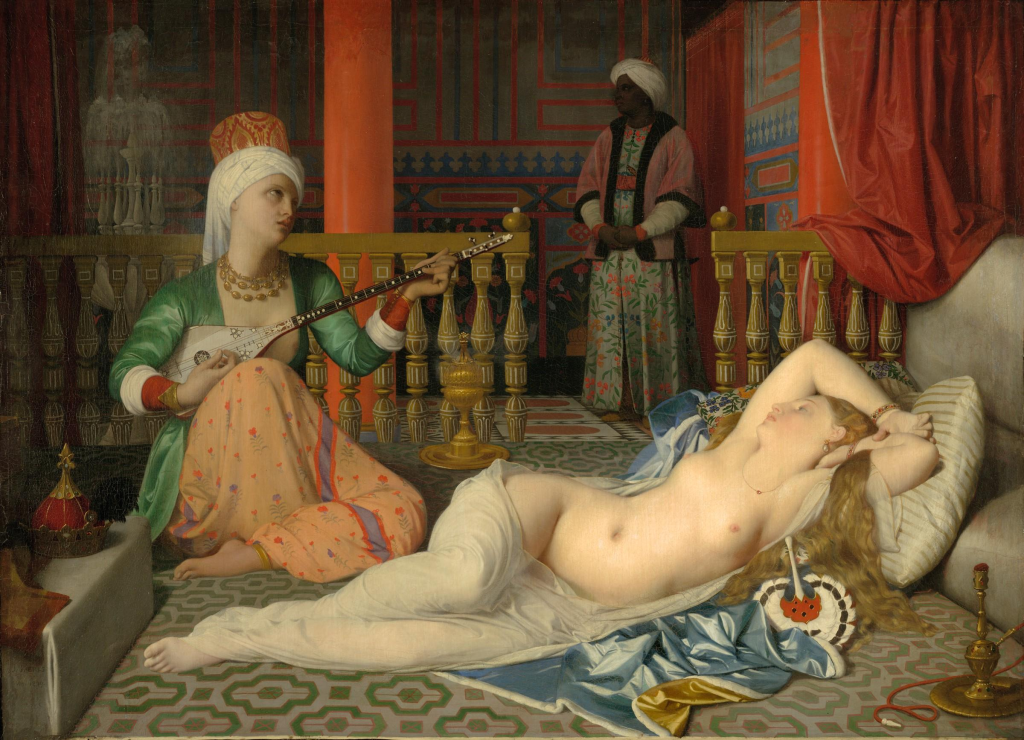
Odalisque with a Slave (1839) by Jean-Auguste-Dominique Ingres
Perhaps the greatest irony of Orientalist art is that, in its attempt to unveil the mysterious woman of the East, it often concealed the historical woman herself. Behind the imagined odalisques and luxurious interiors of European painting existed real women with their own ambitions, relationships, cultural lives and forms of influence.
The harem was real. The erotic world that Europe constructed around it was largely a fantasy.
And it is precisely in the distance between these two worlds that the story of the Orientalist imagination becomes so fascinating.
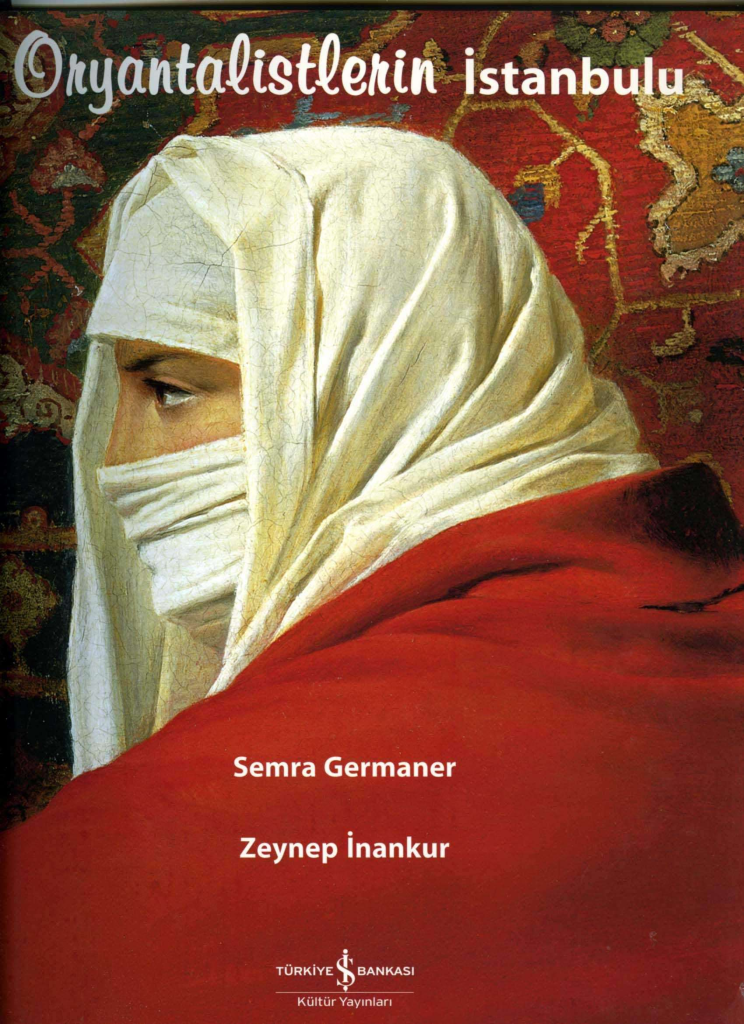
If you are curious about Orientalism, make sure to read Istanbul of the Orientalists by Semra Germaner and Zeynep İnankur.
Let me end with Mozart’s Ruhe sanft, mein holdes Leben, from his unfinished opera Zaide (1780)—a tender aria set within an imagined Ottoman world, where desire, captivity and the European fascination with the harem meet in music.
Note that the video is embedded via YouTube and all rights belong to the respective rights holders.